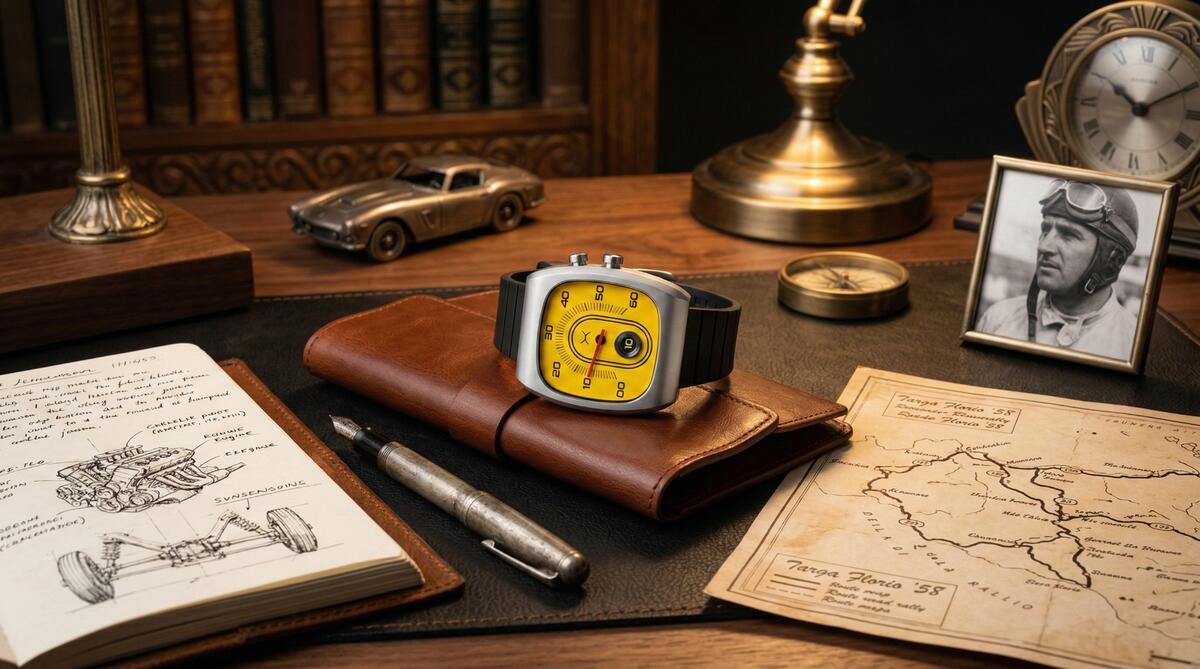
How to Care for and Maintain Your Microbrand Watch: Complete Owner's Guide
Your microbrand watch requires more proactive care than mass-market brands. This comprehensive guide covers daily handling, cleaning, water resistance maintenance, movement-specific care, storage, service intervals, common problems, and finding qualified watchmakers.
Steven Thompson
Independent Watchmaker · 10 Years Experience
Reviewed by Indie Watches
Editorially reviewed for accuracy
⚡ Key Takeaways
- ✓✅ Unclasp or unbuckle completely before putting on
- ✓✅ Support the watch head with one hand while fastening
- ✓✅ Ensure clasp/buckle clicks securely
- ✓✅ Check that spring bars are properly seated
- ✓✅ Remove watch before sleeping (extends lifespan)
📑 Table of Contents
Why Microbrand Watches Require Different Care #
You just unboxed your new microbrand watch. The excitement is real. You've been tracking the shipping for days. You carefully remove it from the box, admire the finishing, feel the weight on your wrist, and check the time against your phone. Perfect. It's running beautifully.
📚 Explore our full watches guide →
Then reality hits: This isn't a Rolex with service centers in every major city. It's not a Seiko you can get serviced at any mall jewelry store. This is a limited-production microbrand watch from an independent watchmaker—maybe a one-person operation running out of a garage in California or a small team in Hong Kong.
What happens when it needs maintenance? Where do you even take it for service?
Here's the uncomfortable truth about microbrand watches: They require more proactive care and knowledge from owners than mass-market brands. Not because they're lower quality—many microbrands use the same Swiss or Japanese movements as luxury brands. But because the service infrastructure is different. You can't just walk into any watch shop and expect them to know your specific model, have parts in stock, or even be willing to work on an unfamiliar brand.
This makes prevention absolutely critical. Proper care, regular maintenance, and knowing what NOT to do can keep your microbrand watch running perfectly for decades. Neglect or improper handling can turn a $500 watch into a $200 repair bill at best—or a paperweight at worst.
Limited Service Networks #
Major brands (Rolex, Omega, Seiko, Citizen) have hundreds or thousands of authorized service centers worldwide. Any authorized dealer can handle service, independent watchmakers are familiar with their movements, and parts are readily available.
Microbrands may only service through the brand directly, have no authorized service network, and many independent watchmakers are unfamiliar with specific models. Parts availability is limited and wait times for service are longer.
What this means: You need to be more proactive about preventative care since getting service is harder.
Smaller Parts Inventory #
Mass-market brands manufacture parts in large quantities with wide supply chain availability. Microbrands often use custom cases, crystals, hands, or dials in small production runs. Parts may not be readily available, and replacing custom components can be expensive or impossible.
What this means: Protecting original components (especially custom parts like dials or hands) is critical.
Movement Variations #
Many microbrands use Swiss movements (ETA, Sellita, SW200), Japanese movements (Seiko NH35, Miyota 9015), Chinese movements (Seagull, Hangzhou), or modified/decorated movements. Watchmakers may be familiar with the base movement but unfamiliar with brand-specific modifications, hesitant to work on unfamiliar brands, or unwilling to take liability for custom pieces.
Daily Care and Handling Best Practices #
How you handle your watch every day matters more than you think.
1. Putting On and Taking Off #
Proper technique prevents damage:
DO:
- ✅ Unclasp or unbuckle completely before putting on
- ✅ Support the watch head with one hand while fastening
- ✅ Ensure clasp/buckle clicks securely
- ✅ Check that spring bars are properly seated
- ✅ Remove watch before sleeping (extends lifespan)
DON'T:
- ❌ Force clasp closed if it's not aligning
- ❌ Pull watch over your hand without unclasping (stretches bracelet)
- ❌ Let watch dangle by one spring bar
- ❌ Yank watch off aggressively
Why it matters: Most spring bar failures and clasp damage come from improper removal.
2. Crown Interaction #
The crown is the most vulnerable component. Unscrew crown gently for screw-down crowns, pull to the correct position for date/time setting, and turn slowly and deliberately. Always screw down crown completely after adjusting—this is the number one cause of water damage.
3. Impact Protection #
Watches are delicate instruments. Remove your watch for high-impact activities (basketball, tennis, chopping wood), be aware of it when moving through tight spaces, and take it off before working with tools or machinery. Don't assume "shock resistant" means "indestructible"—shock can affect movement accuracy, damage the balance spring, or break delicate components.
4. Magnetic Fields #
Modern life is full of magnetic hazards: smartphones, tablets, laptop computers, magnetic clasps on purses and bags, speakers, and MRI machines. Keep your watch at least a few inches from these sources. If your watch suddenly runs fast, it may be magnetized—a watchmaker can demagnetize it quickly for $20–50.
5. Temperature Extremes #
Extreme cold thickens lubricants and can stop the movement. Extreme heat thins lubricants and accelerates wear. Rapid temperature changes can affect seals and water resistance. Remove your watch in saunas or hot tubs, protect it from extended direct sunlight, and keep it at room temperature when stored.
Cleaning Your Microbrand Watch #
Regular cleaning maintains appearance and longevity.
Case and Crystal Cleaning #
What you need: Microfiber cloth, warm water, mild soap (hand soap or dish soap), soft toothbrush, and cotton swabs.
Step-by-step process:
- Ensure water resistance: Only clean with water if watch is water resistant (at least 30M/3ATM). Verify crown is fully screwed in. If not water resistant, use dry microfiber cloth only.
- Rinse and brush: Run warm (not hot) water over case. Apply a small amount of mild soap. Gently brush case, bezel, and bracelet with soft toothbrush. Pay attention to case back, lugs, and between bracelet links.
- Clean crystal: Wipe crystal with damp microfiber cloth. Remove fingerprints, smudges, and oils. Check for scratches or damage.
- Rinse thoroughly: Remove all soap residue with clean water. Ensure no soap remains in crevices.
- Dry completely: Pat dry with clean microfiber cloth. Let air dry for 15–30 minutes. Use cotton swabs for hard-to-reach areas.
Frequency: Weekly for daily wearers, monthly for occasional wearers.
Deep Cleaning #
For stubborn dirt and grime, consider using an ultrasonic cleaner (optional but effective). Remove the strap or bracelet if possible for more thorough cleaning. Run the ultrasonic cleaner for 3–5 minutes—but avoid using one for vintage watches or those with unknown water resistance. Deep clean every 3–6 months or when visibly dirty.
Bracelet and Strap Care #
Stainless steel bracelets: Soak in warm soapy water for 10–15 minutes, brush between links with a soft toothbrush, rinse thoroughly, and dry completely. Don't use abrasive cleaners or harsh chemicals.
Leather straps: Wipe with a damp cloth (not soaking wet), let dry naturally, and use leather conditioner occasionally. Never submerge leather in water or dry with heat. Leather straps typically last 6 months to 2 years depending on use—this is normal wear.
NATO/nylon straps: Remove from watch, hand wash with mild soap, rinse thoroughly, and air dry completely. Can be machine washed in a mesh bag on cold, gentle cycle. Clean monthly or when dirty.
Rubber/silicone straps: The easiest to maintain—wash with soap and water, brush if textured, and rinse. Watch for degradation, cracking, or discoloration and replace when needed.
Understanding and Maintaining Water Resistance #
Water resistance is NOT permanent. This is one of the most misunderstood aspects of watch ownership.
Water Resistance Ratings Explained #
- 30M / 3ATM: Splash resistant only. Do NOT swim or shower. Can handle rain and handwashing.
- 50M / 5ATM: Light swimming (pool) okay. NOT for diving. Brief immersion acceptable. Remove for showering (soap affects seals).
- 100M / 10ATM: Swimming and snorkeling. Suitable for water sports. Most common for everyday watches. Still NOT for scuba diving.
- 200M / 20ATM: Scuba diving, serious water sports, professional use. Requires regular seal testing.
- 300M+ / 30ATM+: Professional and saturation diving, extreme conditions.
Why Water Resistance Decreases Over Time #
Gaskets dry out and crack, rubber O-rings lose elasticity, and temperature cycles accelerate aging. Gaskets typically need replacement every 2–3 years. Impact damage can unseat the case back, crown impacts can damage the crown tube, and crystal impacts can compromise the seal. The crown is the most common water ingress point.
Maintaining Water Resistance #
DO:
- ✅ Have water resistance tested annually (if you swim with your watch)
- ✅ Replace gaskets every 2–3 years during service
- ✅ Ensure crown is fully screwed in before water exposure
- ✅ Rinse with fresh water after ocean/pool exposure (chlorine and salt damage seals)
- ✅ Have seals replaced after battery change (quartz)
DON'T:
- ❌ Operate crown or pushers underwater
- ❌ Shower with watch (hot water + soap damages seals)
- ❌ Trust water resistance indefinitely
- ❌ Assume "water resistant" means "waterproof"
What to Do If Water Gets Inside #
Time is critical. Act fast: remove from water immediately, do NOT try to operate the watch, and do NOT shake it. Unscrew the crown and pull it to the open position to allow moisture to escape. Get professional help within 24–48 hours—corrosion starts immediately. What might be a $100 repair if addressed quickly can become a $300+ disaster if you wait.
Movement-Specific Care #
Different movements require different care approaches.
Automatic Movements #
Automatic movements wind from wrist motion via a spinning rotor, requiring no battery and typically providing 38–80 hours of power reserve.
Care requirements:
- Wear regularly: Ideally 8+ hours every few days. Keeps the movement lubricated and prevents oils from congealing.
- Hand winding: Most modern automatics can be hand-wound. Wind 20–30 turns when putting on after sitting. Stop when you feel resistance.
- Let movement run: Full power reserve discharge/recharge cycles are healthy. Modern automatics don't need to run continuously.
Service interval: Every 3–5 years for routine maintenance.
Manual Wind Movements #
Must be wound by hand daily with typically 35–50 hours of power reserve.
Care requirements:
- Wind at the same time daily (morning is common). Wind fully each day with slow, steady motion.
- Stop when you feel resistance—don't force past it. Forcing damages the mainspring, crown gearing, and winding mechanism.
- Handle the crown gently as it sees more use than on automatics.
Service interval: Every 3–5 years.
Quartz Movements #
Battery-powered with electronic oscillator. Very accurate and low maintenance.
Care requirements:
- Replace battery promptly: When the watch stops, replace within a few weeks. Dead batteries can leak and damage the movement permanently.
- Service during battery replacement: Good time to replace gaskets and test water resistance.
- Battery warning: Some quartz movements "jump" every few seconds when battery is low—replace immediately when you see this.
Service interval: Battery replacement every 1–2 years, full service every 5–10 years.
Proper Watch Storage #
Daily Storage #
Use a watch box or stand with cushioned interior. Store in a stable, room temperature location with low humidity, away from magnetic sources and out of direct sunlight. Don't throw watches in a drawer with other items, leave on bathroom counters (humidity), stack watches on top of each other, or store near electronics.
Long-Term Storage #
For automatic watches: You have two options. A watch winder keeps the watch running and prevents lubricants from settling, but can cause unnecessary wear (this is debated among collectors). Alternatively, let it stop—perfectly fine for modern movements. Wind and set when you want to wear again.
For quartz watches: Pull the crown to stop the movement for long-term storage. This extends battery life significantly.
Ideal storage conditions: Cool, dry location at 40–60% humidity, stable temperature, original box preferred.
Travel Storage #
Use a padded watch travel case with individual compartments. Watches can go through airport X-ray safely. Use room safes at hotels and keep your travel case with you.
Service Intervals and Maintenance Schedule #
Regular Maintenance Timeline #
- Every 6–12 months: Visual inspection for damage, check water resistance if you swim, clean case and bracelet, replace battery (quartz), check bracelet screws for tightness.
- Every 2–3 years: Replace gaskets, professional cleaning, water resistance test.
- Every 3–5 years (automatic/mechanical): Full service—clean, lubricate, regulate. Replace worn parts, gaskets, and adjust timing.
- Every 5–10 years (quartz): Full service, movement cleaning, lubrication if needed.
What "Full Service" Means #
Professional watch service includes complete movement disassembly, ultrasonic cleaning of all parts, inspection for worn components, parts replacement (mainspring, gaskets, seals), reassembly with fresh lubricants, timing and regulation in multiple positions, optional case refinishing, and water resistance testing.
Cost: $150–500+ depending on movement complexity and brand.
Common Problems and DIY Solutions #
Problems You Can Fix #
Watch running fast or slow (minor): A few seconds per day is normal for mechanical watches and can be adjusted during service. If suddenly very fast or slow, it may indicate magnetization or impact damage—see a professional.
Bracelet sizing: Many bracelets have removable links. You'll need a spring bar tool or pin pusher. Identify removable links (look for arrows on the bracelet), push out pins or unscrew, remove desired links, reconnect, and test fit.
Strap replacement: You can do this yourself with a spring bar tool ($5–15). Insert the tool between lug and strap, compress the spring bar, slide the strap off, install the new strap, and ensure both sides of the spring bar click fully into the lug holes.
Scratched acrylic crystal: Use Polywatch or similar plastic polish. Apply a small amount and buff in circular motion to remove light scratches. For sapphire crystals, scratches require professional replacement—don't attempt DIY.
Problems Requiring Professional Help #
- ❌ Movement issues (stopping, erratic running, broken parts)
- ❌ Water ingress (urgently get to a watchmaker)
- ❌ Broken crown (requires case work)
- ❌ Cracked crystal (replacement needed)
- ❌ Date wheel issues (movement problem)
- ❌ Magnetization (requires demagnetizer)
- ❌ Timing regulation (precision work)
Finding Watchmakers for Microbrand Service #
The biggest challenge for microbrand owners is finding qualified service.
Service Options #
1. Direct to brand: The brand knows the watch intimately, has parts available, and handles warranty work. However, you must ship the watch, turnaround can be 2–8 weeks, and international shipping adds complexity and cost.
2. Independent watchmaker: Local, often cheaper, and faster. But they may be unfamiliar with your brand, lack custom parts, or decline unfamiliar brands. Find them through the AWCI directory, local jewelry stores, watch forum recommendations, or other collectors. Ask: Have you worked on this brand? Are you familiar with this movement? Do you have parts access?
3. Movement specialist: For common movements (ETA, Miyota, NH35), any competent watchmaker can service. Movement parts are widely available. For custom or modified movements, brand service may be the only option.
Microbrand-Specific Challenges #
Limited Parts Availability #
Custom dials, hands, or cases made in small batches may not have replacements if damaged. Brands may not have kept extras, and you can't just order parts from a supplier. Protect original parts carefully—consider them irreplaceable.
Brand Discontinuation #
Some microbrands don't survive long-term. If a brand closes, your warranty becomes void and service becomes challenging. Protect yourself by buying from established microbrands, checking brand history and stability, and purchasing through platforms that vet brands. For common movements, independent watchmakers can still service the watch regardless.
International Shipping for Service #
Many microbrands are overseas, meaning expensive shipping, customs duties, risk of transit damage, and longer turnaround. Always fully insure shipments, use tracked signature-required shipping, pack extremely carefully, and document condition before shipping.
What NOT to Do: Common Mistakes #
- ❌ Ignoring water damage: Water gets in, owner hopes it dries out. Corrosion starts immediately. Always get to a watchmaker within 24–48 hours.
- ❌ Changing date between 9 PM – 3 AM: The date change mechanism engages during this period. Forcing it can damage date wheel teeth and break the mechanism. Always change date between 6 AM and 9 PM.
- ❌ Overwinding manual movements: Wind smoothly until you feel resistance, then stop.
- ❌ Wearing leather straps in water: Leather absorbs water, swells, deforms, develops odor, and cracks. Switch to rubber or NATO for water activities.
- ❌ Using abrasive cleaners: Harsh chemicals damage finishing, AR coatings, seals, and can discolor metals. Use mild soap and soft cloths only.
- ❌ Leaving dead battery in quartz watch: Old batteries leak corrosive chemicals that can destroy the movement permanently. Replace within 2–3 weeks.
- ❌ DIY movement work: Movements are incredibly delicate. Fingerprints cause corrosion, dust contaminates, and tiny components break easily. Leave movement work to professionals.
Extending Your Watch's Lifespan #
Rotation is healthy: Don't wear the same watch every day. Rotating gives each piece rest, reduces wear, and extends time between services.
Proper storage: Watch box, controlled environment, away from magnets, room temperature.
Regular cleaning: Prevents dirt from accumulating in the movement through the crown, grime from damaging seals, and corrosion from sweat and oils.
Timely service: Old lubricants damage the movement, worn parts accelerate wear, and dried gaskets fail. Think of it like oil changes for your car—skip them, and you'll pay later.
Document everything: Keep records of purchase date, serial number, service history, warranty info, and condition photos. This helps with insurance, resale, and service continuity.
Frequently Asked Questions #
How often should I service my microbrand watch? #
Automatic and mechanical movements should be serviced every 3–5 years. Quartz movements need battery replacement every 1–2 years and full service every 5–10 years. If your watch shows symptoms like losing significant time, stopping frequently, or not holding power reserve, get service immediately regardless of schedule.
Can any watchmaker service my microbrand watch? #
It depends on the movement. If your microbrand uses a common Swiss (ETA, Sellita) or Japanese (NH35, Miyota) movement, most competent watchmakers can service it. For custom parts or uncommon movements, you may need to send it back to the brand.
What should I do if water gets inside my watch? #
Act immediately. Unscrew the crown and pull to open position to allow moisture to escape. Dry the exterior and take the watch to a watchmaker within 24–48 hours. Do NOT wait for it to dry out—corrosion starts immediately.
Is it okay to wear my automatic watch every day? #
Yes, daily wear is fine and keeps it wound and running. However, rotation is healthier long-term. If you only own one watch, daily wear is perfectly acceptable for modern automatic movements.
How do I know if my watch is magnetized? #
Symptoms include suddenly running very fast, erratic timekeeping, or the seconds hand stuttering. Test with a compass app—if the compass needle moves dramatically near your watch, it's magnetized. Demagnetization is a quick, cheap procedure ($20–50).
Should I use a watch winder? #
Watch winders are optional and debated. They keep watches running and ready to wear, but cause unnecessary continuous wear. For most owners, letting the watch stop when not wearing and winding when needed is perfectly fine.
Can I replace the strap myself? #
Yes—strap replacement is one of the few things owners should do themselves. You need a spring bar tool ($5–15) and patience. Ensure both sides of the spring bar are fully seated in the lug holes before wearing.
How much does microbrand watch service cost? #
Basic service for common movements: $150–300. Full service for complex movements: $300–500+. Battery replacement: $20–40. Water resistance testing: $20–40. Crystal replacement: $50–150.
What happens if my microbrand goes out of business? #
Your warranty becomes void and service becomes challenging. However, if your watch uses a common movement (ETA, Sellita, Miyota, NH35), independent watchmakers can still service it. Custom components become harder to replace.
Conclusion: Protecting Your Microbrand Investment #
Microbrand watches represent more than just timekeeping—they're wearable art from independent creators, limited production pieces, and investments in the community you love.
Unlike mass-market brands with service centers on every corner, microbrands require more active care and knowledge from owners. But this isn't a burden—it's part of the joy of ownership.
The fundamentals are simple:
- Handle with care — Protect from impacts, magnets, and water
- Clean regularly — Weekly wipe-downs, monthly deep cleaning
- Service on schedule — Every 3–5 years for mechanical, promptly for quartz batteries
- Store properly — Watch boxes, controlled environment, away from hazards
- Know your limits — DIY strap changes, but leave movement work to professionals
A well-maintained microbrand watch will run beautifully for decades. A neglected one becomes an expensive repair or total loss. The choice is yours—but the effort is minimal compared to the reward.
So clean that crystal. Wind that movement. Replace those gaskets. Service on schedule. Your microbrand watch is a piece of independent watchmaking history—treat it accordingly, and it'll serve you faithfully for a lifetime. ⌚
❓ Frequently Asked Questions
Q:How often should I service my microbrand watch?
Automatic and mechanical movements should be serviced every 3–5 years. Quartz movements need battery replacement every 1–2 years and full service every 5–10 years. If your watch shows symptoms like losing significant time, stopping frequently, or not holding power reserve, get service immediately regardless of schedule.
Q:Can any watchmaker service my microbrand watch?
It depends on the movement. If your microbrand uses a common Swiss (ETA, Sellita) or Japanese (NH35, Miyota) movement, most competent watchmakers can service it. For custom parts or uncommon movements, you may need to send it back to the brand.
Q:What should I do if water gets inside my watch?
Act immediately. Unscrew the crown and pull to open position to allow moisture to escape. Dry the exterior and take the watch to a watchmaker within 24–48 hours. Do NOT wait for it to dry out—corrosion starts immediately.
Q:Is it okay to wear my automatic watch every day?
Yes, daily wear is fine and keeps it wound and running. However, rotation is healthier long-term. If you only own one watch, daily wear is perfectly acceptable for modern automatic movements.
Q:How do I know if my watch is magnetized?
Symptoms include suddenly running very fast, erratic timekeeping, or the seconds hand stuttering. Test with a compass app—if the compass needle moves dramatically near your watch, it's magnetized. Demagnetization is a quick, cheap procedure ($20–50).
Q:Should I use a watch winder?
Watch winders are optional and debated. They keep watches running and ready to wear, but cause unnecessary continuous wear. For most owners, letting the watch stop when not wearing and winding when needed is perfectly fine.
Q:Can I replace the strap myself?
Yes—strap replacement is one of the few things owners should do themselves. You need a spring bar tool ($5–15) and patience. Ensure both sides of the spring bar are fully seated in the lug holes before wearing.
Q:How much does microbrand watch service cost?
Basic service for common movements: $150–300. Full service for complex movements: $300–500+. Battery replacement: $20–40. Water resistance testing: $20–40. Crystal replacement: $50–150.
Q:What happens if my microbrand goes out of business?
Your warranty becomes void and service becomes challenging. However, if your watch uses a common movement (ETA, Sellita, Miyota, NH35), independent watchmakers can still service it. Custom components become harder to replace.
Find Your Perfect Watch
Browse our curated collection of indie and microbrand timepieces.
📚 Related Reading
Handpicked articles from the same topic