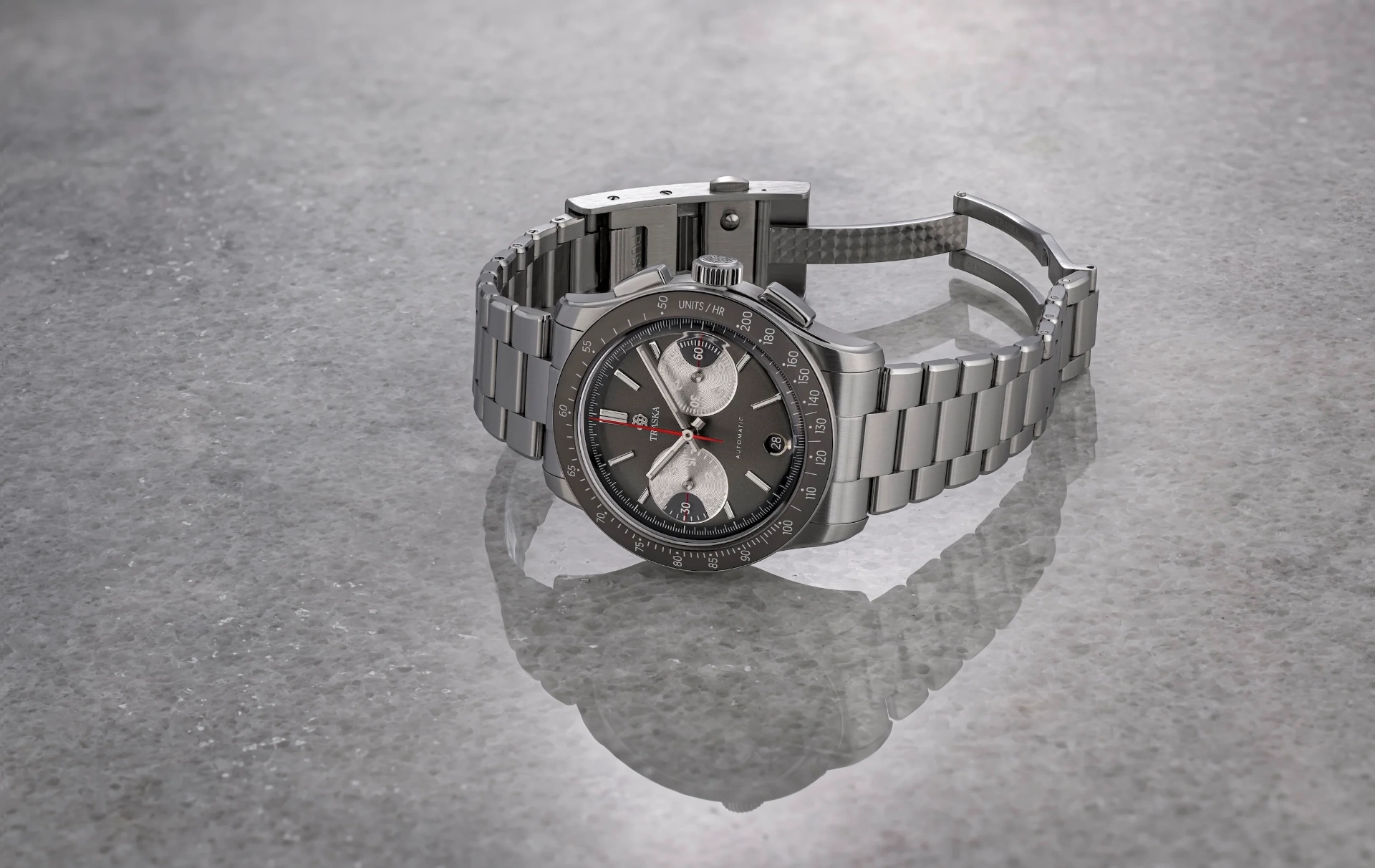
Best Titanium Watches: From $500 Microbrands to $100,000 Haute Horology
Why titanium defines modern watchmaking—and which brands execute it best across every budget, from Nodus at $500 to A. Lange & Söhne at $53,500.
Steven Thompson
Independent Watchmaker · 10 Years Experience
Reviewed by Indie Watches
Editorially reviewed for accuracy
⚡ Key Takeaways
- ✓Harder to machine than steel (expensive manufacturing)
- ✓Scratches more easily than steel despite superior strength
- ✓Requires specialized coatings (DLC, Cerakote, hardening) for scratch resistance
- ✓Difficult to polish to mirror finish (most brands use brushed/sandblasted)
- ✓Different "grades" (Grade 2, Grade 5) offer varying properties
📑 Table of Contents
Most watch materials represent compromise. Stainless steel offers affordability and durability but weighs heavily. Gold provides luxury appeal but scratches easily and demands premium pricing. Bronze delivers character through patina but oxidizes inconsistently. Ceramic resists scratches but shatters on impact.
📚 Explore our full watches guide →
Titanium transcends compromise.
Lighter than steel by 45%, stronger than aluminum, corrosion-resistant in saltwater, hypoallergenic for sensitive skin, and non-magnetic for technical environments—titanium represents watchmaking's most advanced material solution. Yet titanium's advantages create unique challenges requiring specialized manufacturing expertise.
The titanium paradox:
- Harder to machine than steel (expensive manufacturing)
- Scratches more easily than steel despite superior strength
- Requires specialized coatings (DLC, Cerakote, hardening) for scratch resistance
- Difficult to polish to mirror finish (most brands use brushed/sandblasted)
- Different "grades" (Grade 2, Grade 5) offer varying properties
The result: Titanium watches separate technically competent manufacturers from amateur operations.
Brands executing titanium well understand material science, surface treatment technology, and appropriate finishing techniques. Brands that fail produce watches that scratch immediately, feel cheap despite pricing premiums, or showcase poor case shaping revealing manufacturing shortcuts.
From accessible Los Angeles microbrands like Nodus ($500) to Swiss dive watch specialists like Tudor Pelagos ($4,900) to German haute horology like A. Lange & Söhne Odysseus ($53,500), this comprehensive guide examines the best titanium watches demonstrating material mastery at every price point.
Why Titanium Matters in Modern Watchmaking #
Material Science: Understanding Titanium Advantages #
Titanium's unique properties make it ideal for watches:
- Weight: 45% lighter than stainless steel — A 38mm steel watch head weighs ~65–75 grams; a 38mm titanium watch head weighs ~35–45 grams. Dramatic comfort improvement for all-day wear, reduces wrist fatigue, and allows larger case sizes without weight penalty.
- Strength: Superior strength-to-weight ratio — Stronger than steel at equivalent weight, withstands impacts without deformation. Ideal for tool watches, sports watches, adventure applications.
- Corrosion resistance: Immune to saltwater — Perfect for dive watches and maritime use. Won't rust or corrode in ocean environments. Ideal for swimmers, sailors, divers.
- Hypoallergenic: Safe for sensitive skin — No nickel content (common steel allergen). Medical-grade titanium used in implants. Won't cause skin reactions or irritation.
- Non-magnetic: Technical advantage — Unaffected by magnetic fields. Crucial for certain professional applications. Maintains accuracy near electronic equipment.
Titanium isn't premium for branding—it's genuinely superior material for watches worn daily in demanding conditions.
The Titanium Challenge: Why It's Difficult to Work With #
1. Machining difficulty = Higher costs: Titanium is harder to cut than steel, requires specialized tooling, slower production speeds. This is why titanium watches cost 30–50% more than equivalent steel versions.
2. Scratch susceptibility = Requires surface treatments: Pure titanium scratches more easily than hardened steel. Surface coatings essential for durability.
3. Finishing challenges: Extremely difficult to polish titanium to mirror finish. Most brands use brushed, bead-blasted, or sandblasted finishes. Polished titanium is rare and expensive.
4. Grade selection matters:
- Grade 2 (Commercially Pure): Most common, easier to work, less expensive
- Grade 5 (Ti-6Al-4V alloy): 6% aluminum, 4% vanadium, harder, more scratch-resistant, more expensive
The expertise required: Working titanium well requires understanding metallurgy, specialized equipment, and years of experience.
Surface Treatments: The Key to Titanium Durability #
DLC (Diamond-Like Carbon) Coating
Carbon-based coating applied via plasma deposition, creating incredibly hard surface (1,500–3,000 Vickers vs. ~200 Vickers for regular titanium).
- Advantages: Extremely scratch-resistant, black aesthetic (tactical/stealth appearance), adds minimal thickness, very durable
- Disadvantages: Can chip if impacted (exposes titanium beneath), difficult to repair, adds $100–300 typically
- Examples: Nodus Sector II Field Titanium DLC LE, Tudor Pelagos (optional DLC historically)
Cerakote Coating
Ceramic-based coating originally developed for firearms, applied via spray/cure process.
- Advantages: Excellent scratch resistance, available in multiple colors (olive, tan, black), chemical resistant, matte finish
- Disadvantages: Thicker than DLC (can soften case lines), can wear at sharp edges over time
- Examples: Nodus Sector II Field Titanium Tropical LE (olive Cerakote)
Hardening Treatments
Surface hardening process increasing titanium's natural hardness without coating.
- Advantages: Maintains titanium's natural appearance, no coating to chip or wear off, more scratch-resistant than untreated titanium
- Disadvantages: Not as hard as DLC or Cerakote, still more scratch-prone than hardened steel
- Examples: Nodus Sector II Field Titanium standard colorways, Citizen Super Titanium (Duratect)
No Treatment (Grade 5 Titanium)
Use Grade 5 titanium's naturally higher hardness, accept some scratching as titanium character. Scratches tell story of watch's adventures, creating unique patina over time (similar to bronze philosophy). Used by brands confident in titanium quality and watches targeting tool/adventure aesthetic.
Affordable Excellence: Microbrands ($500–1,000) #
Nodus Sector II Field Titanium (Los Angeles, USA) — $500–575 #
Los Angeles microbrand proving titanium quality exists at accessible pricing. Most brands introduce titanium on premium models at $1,500+. Nodus debuts titanium on its entry-level Sector collection at $500—revolutionary value proposition.
Specifications:
- Case: Grade 2 titanium with hard coating (standard) or DLC/Cerakote (limited editions)
- Diameter: 38mm
- Thickness: 11.7mm (one of slimmest Seiko NH-based designs)
- Lug-to-lug: 47mm
- Weight: 45 grams (watch head only—remarkably light)
- Movement: TMI NH38 automatic (Seiko-made, 24 jewels, 41-hour power reserve)
- Accuracy: +/- 10 seconds/day (regulated by Nodus)
- Water resistance: 100m
- Crystal: Box sapphire with blue AR coating
- Crown: Screw-down
- Lume: Swiss SuperLuminova BGW9 Grade A
Standard colorways ($500): Marina (blue-gray dial), Shale (gray dial), Sequoia (green dial) — all feature hard-coated Grade 2 titanium, 100m WR, gray Hybrid TecTuff rubber strap with titanium buckle.
Limited editions ($575, 75 pieces each):
- Tropical LE: Olive Cerakote case, brown/gray dial, DPM camo hybrid strap
- DLC LE: Black DLC coating, cool gray/blue dial, DPM camo hybrid strap, red-tipped seconds hand
"The DLC-coated titanium case and impressively regulated automatic movement alone should land somewhere closer to $1,000. And the blue AR-coated sapphire crystal, dynamic strap and high-legibility dial are just icing on the cake." — Gear Patrol
"Nodus has never aimed to produce bottom-dollar offerings, and the Sector II Field Titanium represents a very well-executed overall package that introduces titanium to the brand's catalog at the affordable price point of its entry-level collection." — aBlogtoWatch
The achievement: Grade 2 titanium with protective coating, box sapphire crystal, regulated NH38 movement, Los Angeles assembly, multi-layer sector dial — only $500.
Buy: noduswatches.com | indiewatches.store
Hamilton Khaki Field Titanium Auto — $695–795 #
Swiss-made titanium field watch from established brand. Hamilton brings 100+ years watchmaking heritage to accessible titanium—brand credibility at microbrand pricing.
Specifications:
- Case: Titanium, 38–42mm (varies by reference)
- Movement: H-10 automatic (ETA-based, 80-hour power reserve)
- Water resistance: 100m
- Crystal: Sapphire
- Strap: NATO or leather typically
Swiss Made designation, established brand service network, ETA-based movement with extensive power reserve, titanium execution at under $800.
Citizen Promaster Dive Super Titanium — $400–650 #
Japanese brand pioneering titanium with Duratect hardening. Citizen has used titanium longer than most Swiss brands, developing proprietary Duratect surface hardening technology making titanium 5x harder than stainless steel.
Super Titanium features: Duratect coating (proprietary hardening), ~5x harder than regular titanium, scratch-resistant, lightweight, hypoallergenic.
Eco-Drive advantage: Many Citizen titanium watches feature Eco-Drive (solar-powered)—never need battery changes, perfect for set-and-forget wearing. 200m+ dive capability, ISO 6425 compliance, sapphire crystal — all under $650.
Mid-Range Swiss: Proven Quality ($1,800–3,500) #
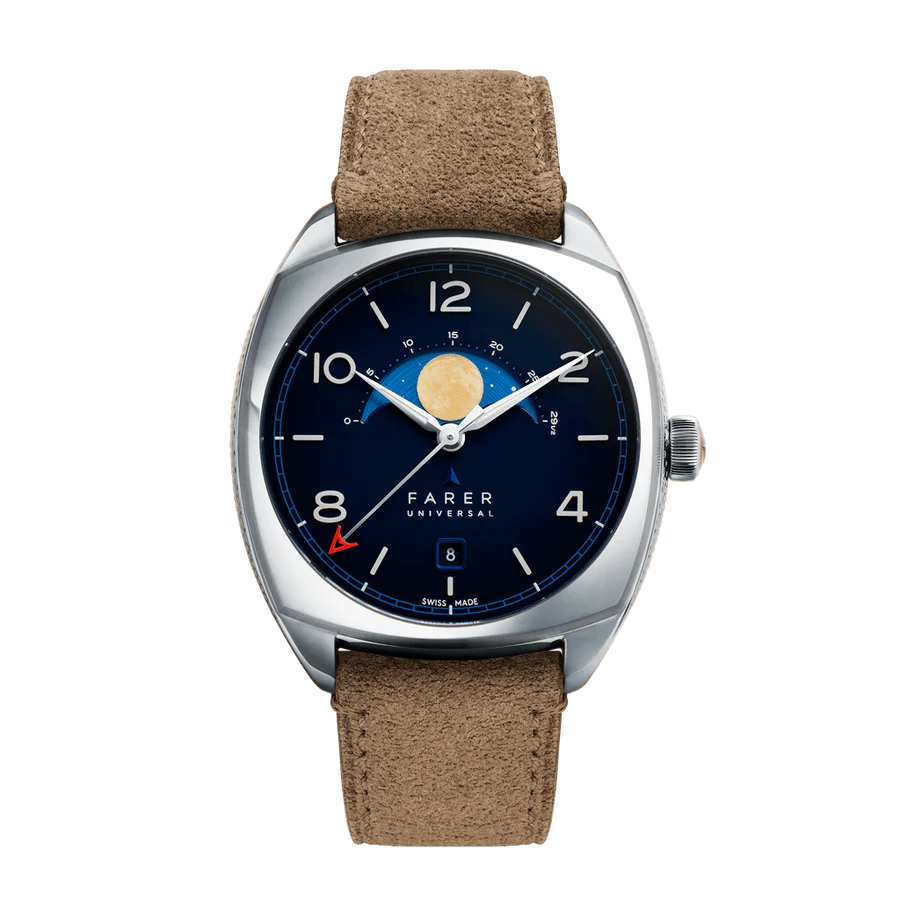
Farer Carnegie/Moritz/Bernina Titanium Chronographs (UK) — $1,800–2,000 #
British microbrand bringing bold color to titanium chronographs. Most titanium watches lean tactical/conservative. Farer applies brand's signature adventurous color palettes to lightweight titanium chronographs—unique proposition.
Specifications:
- Case: Grade 2 titanium, 41mm
- Movement: Automatic chronograph (typically Sellita SW510 or similar)
- Dial: Farer's distinctive color treatments
- Water resistance: 100m, sapphire crystal
Notable features: Mixed Roman/Arabic numeral configurations, vintage-sport aesthetic, lightweight chronograph (titanium reduces typical chronograph heft), hypoallergenic for all-day chronograph wearing.
Mido Ocean Star 200C Titanium — $1,200–1,500 #
Swiss dive watch in titanium at accessible pricing. Part of Swatch Group, Mido accesses manufacturing resources enabling quality titanium at pricing below independent Swiss brands.
Features: 200m dive capability, titanium case and bracelet, Swiss automatic movement (Caliber 80—80-hour power reserve), sapphire crystal, helium escape valve (on some versions), ISO-compliant dive watch. Complete titanium package (case + bracelet) with serious dive capability under $1,500.
Oris Aquis ProDiver Date Titanium — $3,400–3,800 #
Serious dive watch with titanium construction from independent Swiss manufacturer. 500m water resistance, titanium case + bracelet, unidirectional dive bezel, sapphire with AR coating, titanium bracelet with extension/diver clasp. Professional diving specifications from Swiss independent manufacture.
Premium Dive Watches: Titanium for Serious Use ($4,000–7,000) #
Tudor Pelagos — $4,900 #
Modern dive watch icon in titanium. When Tudor relaunched Pelagos (2012), choosing titanium for flagship dive watch signaled serious tool watch intent. Pelagos became modern dive watch benchmark.
Specifications:
- Case: Satin-brushed titanium, 42mm
- Movement: Tudor Caliber MT5612 (COSC-certified, 70-hour power reserve, silicon balance spring)
- Water resistance: 500m
- Bezel: Ceramic insert, luminous markers
- Crystal: Sapphire with AR coating
- Bracelet: Titanium with self-adjusting spring-loaded clasp
- Helium escape valve: Yes
The innovation: Spring-loaded clasp automatically adjusts to wetsuit expansion/contraction—brilliant practical feature.
Available versions: Standard blue dial/blue bezel ($4,900), LHD (Left-Hand Drive) black dial with crown on left, and the 39mm version for those preferring vintage sizing.
Pelagos established titanium as serious dive watch material for the modern era—no longer exotic premium, but optimal material choice for professional diving.
IWC Mark XVIII Heritage Titanium — $5,200–5,800 #
Pilot's watch in lightweight titanium. IWC used titanium extensively for pilot/military watches—material's lightweight and non-magnetic properties ideal for aviation.
Specifications:
- Case: Titanium, 40mm
- Movement: IWC Caliber 35111 automatic (ETA-based, modified)
- Water resistance: 60m
- Crystal: Sapphire with AR coating on both sides
- Soft iron inner case: Anti-magnetic protection
Lightweight reduces pilot fatigue, non-magnetic crucial for cockpit instruments, comfortable under flight suit, with deep historical aviation precedent.
Luxury Sports Watches: Titanium Refinement ($10,000–20,000) #
Chopard Alpine Eagle Cadence 8HF — $14,800–16,500 #
Luxury sports watch with high-frequency titanium movement. Chopard's Alpine Eagle uses proprietary "Lucent Steel" alloy for steel versions. Titanium Cadence 8HF adds high-frequency (8Hz) movement—unusual combination.
Specifications:
- Case: Titanium, 41mm
- Movement: Chopard Caliber 01.01-C (in-house automatic, 8Hz frequency)
- Power reserve: 60 hours despite 8Hz frequency
- Water resistance: 100m
- Bracelet: Integrated titanium bracelet
Higher frequency improves shock resistance and precision. Few manufacturers produce 8Hz movements due to power reserve challenges. Chopard's 60-hour reserve despite 8Hz is impressive engineering.
Bulgari Octo Finissimo Titanium — $18,000–25,000+ #
Ultra-thin titanium creating record-breaking watches. Bulgari's Octo Finissimo holds multiple world records for thinness across various complications. Titanium essential for achieving these dimensions while maintaining wearability.
Specifications:
- Case: Sandblasted titanium, 40mm
- Thickness: 5–6mm depending on complication (world-record territory)
- Movement: Bulgari ultra-thin manufacture calibers
- Bracelet: Titanium integrated
Available complications: Time-only (thinnest), GMT, chronograph, minute repeater, perpetual calendar, tourbillon — each pushing boundaries of thinness.
Haute Horology: Titanium Excellence ($29,000–100,000+) #
Rolex Yacht-Master 42 RLX Titanium — $29,000–31,000 #
Rolex's first titanium watch. Until Yacht-Master 42 (2023), Rolex never produced a titanium watch. This represents a major material shift for the conservative manufacturer.
Specifications:
- Case: Brushed titanium (RLX Titanium designation), 42mm
- Movement: Rolex Caliber 3230 automatic, 70-hour power reserve
- Water resistance: 100m
- Bezel: Black Cerachrom (ceramic) insert
- Bracelet: Titanium Oyster bracelet with Oysterlock clasp
Rolex developed proprietary titanium grade/treatment (RLX Titanium). Rolex embracing titanium validates the material for conservative collectors—no longer experimental but accepted luxury watch material.
A. Lange & Söhne Odysseus Titanium — $53,500 #
German haute horology sports watch in titanium. A. Lange & Söhne historically focused on precious metals (gold, platinum). Odysseus represents the brand's first sports watch and first titanium watch—dramatic departure from tradition.
Specifications:
- Case: Titanium (sandblasted/polished mixed finishing), 40.5mm
- Thickness: 11.1mm
- Movement: Lange Caliber L155.1 Datomatic (in-house automatic with full calendar)
- Complications: Day, date, week display
- Power reserve: 50 hours
- Water resistance: 120m
- Bracelet: Integrated titanium bracelet
Even in a titanium sports watch, Lange maintains manufacture standards—German silver plates, hand-finishing, exceptional decoration visible through sapphire caseback. Proves haute horology and titanium are compatible.
F.P. Journe Centigraphe Sport Titanium — $80,000–100,000+ #
Independent watchmaker's titanium sports chronograph. Legendary independent watchmaker François-Paul Journe creates highly complicated watches in small quantities.
Specifications:
- Case: Titanium with rubber crown protectors, 44mm
- Movement: F.P. Journe manufacture chronograph (mechanical with digital seconds display)
- Complications: 1/100th second chronograph (revolutionary)
- Power reserve: 24 hours (chronograph running), 100 hours (stopped)
Mechanical chronograph measuring to 1/100th second via patented mechanism—F.P. Journe's engineering genius applied to sports watch. F.P. Journe makes ~900 watches/year total.
Titanium Buying Guide: How to Choose #
Consider Your Primary Use Case #
Daily office wear: Lightweight comfort crucial for all-day wearing. Brushed/sandblasted finish hides scratches better. Consider: Nomos, IWC Mark XVIII, Lange Odysseus.
Diving/maritime: Corrosion resistance paramount. Need proper dive specifications (200m+). Integrated bracelet with extension clasp ideal. Consider: Tudor Pelagos, Oris Aquis ProDiver.
Sports/adventure: Scratch resistance important (DLC/Cerakote/hardening). Field watch proportions (38–40mm) comfortable. Lightweight reduces fatigue. Consider: Nodus Sector II, Hamilton Khaki Field.
Dress/formal: Polished titanium rare but possible. Ultra-thin profiles leverage titanium strength. Subtle presence despite technical material. Consider: Bulgari Octo Finissimo.
Surface Treatment Selection #
- No Coating (Raw Titanium): Authentic appearance, no coating to chip. Will scratch — requires acceptance of patina. Best for tool/adventure aesthetic.
- DLC Coating: Extreme scratch resistance, sleek black aesthetic. Can chip at edges, difficult to repair. Best for tactical aesthetic, maximum durability.
- Cerakote: Excellent protection, color options. Slightly thick (can soften case lines). Best for adventurous colors, robust protection.
- Hard Coating/Hardening: Protects without coating appearance, maintains titanium look. Not as protective as DLC/Cerakote. Best for balancing protection with authentic aesthetic.
- Grade 5 Titanium (No Treatment): Naturally more scratch-resistant, premium material. More expensive but still scratches (just less). Best for higher-end pieces.
Grade 2 vs. Grade 5: Does It Matter? #
Grade 2 (Commercially Pure Titanium): 98.9–99.5% pure titanium, easier to machine, lower cost, softer (scratches easier), requires protective coatings. Used by most microbrands, mid-range Swiss.
Grade 5 (Ti-6Al-4V): 90% titanium, 6% aluminum, 4% vanadium, harder to machine, more scratch-resistant, stronger. Used by echo/neutra Rivanera, premium Swiss, haute horology.
Practical difference: For daily wearing with protective coatings, Grade 2 vs. 5 matters less. For uncoated titanium, Grade 5 is significantly more durable. Grade 2 with good coating often better value than Grade 5 without coating.
Where to Buy Titanium Watches #
Microbrands: Direct from manufacturer websites, authorized retailers (Teddy Baldassarre, WatchGecko), and physical boutiques where available.
Established brands: Authorized dealers (warranty protection crucial), brand boutiques for full selection. Avoid grey market (titanium coating warranties important).
IndieWatches.store: Curated microbrand marketplace featuring Nodus Sector II Field Titanium and other quality titanium microbrands — vetted authenticity, customer protection, expert curation. Visit indiewatches.store/marketplace.
The Verdict: Titanium Represents Modern Watchmaking's Optimal Material #
Titanium has evolved from exotic premium to optimal material choice for modern watches—offering superior strength-to-weight ratio, corrosion resistance, hypoallergenic properties, and wearing comfort unmatched by traditional steel.
The execution separates exceptional from mediocre:
- Surface treatments matter — DLC, Cerakote, hardening protect titanium's scratch vulnerability
- Grade selection significant — Grade 5 naturally more durable than Grade 2
- Finishing quality reveals — Proper brushed/sandblasted titanium feels premium; cheap titanium feels hollow
- Appropriate pricing honest — Titanium manufacturing genuinely costs more; brands charging steel prices are cutting corners
Across every price point, titanium delivers:
- $500–1,000 (microbrands): Nodus, Hamilton prove accessible titanium quality exists
- $1,800–3,500 (mid-range Swiss): Farer, Mido, Oris demonstrate titanium value from established makers
- $4,000–7,000 (premium dive): Tudor Pelagos, IWC Mark XVIII show professional capability
- $10,000–20,000 (luxury sports): Chopard, Bulgari prove titanium belongs in haute design
- $29,000–100,000+ (haute horology): Rolex, Lange, F.P. Journe validate titanium for ultimate watchmaking
For collectors seeking watches offering superior wearing comfort, maritime durability, hypoallergenic safety, and modern material excellence, titanium represents the optimal choice. The question isn't whether titanium is worth it—but which execution best matches your needs, aesthetics, and budget.
Titanium watches prove modern watchmaking should prioritize wearer experience over traditional material prejudices—and brands mastering titanium demonstrate technical competence separating leaders from followers.
❓ Frequently Asked Questions
Q:Grade 2 vs. Grade 5: Does It Matter?
Grade 2 (Commercially Pure Titanium): 98.9–99.5% pure titanium, easier to machine, lower cost, softer (scratches easier), requires protective coatings. Used by most microbrands, mid-range Swiss.
Find Your Perfect Watch
Browse our curated collection of indie and microbrand timepieces.
📚 Related Reading
Handpicked articles from the same topic