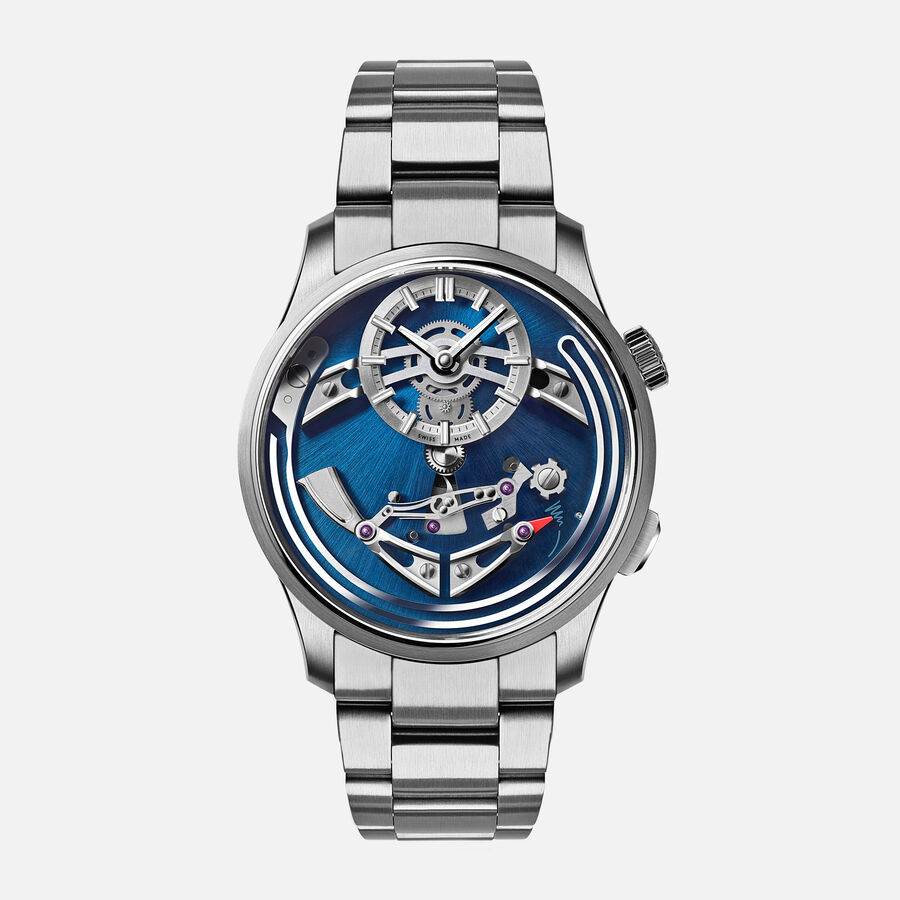
Christopher Ward Bel Canto Review: Microbrand Chiming Luxury
A $4,800 British independent watch with genuine chiming complication and stunning guilloché dials — but three of four variants are completely unreadable at night.
Steven Thompson
Independent Watchmaker · 10 Years Experience
Reviewed by Indie Watches
Editorially reviewed for accuracy
⚡ Key Takeaways
- ✓A microbrand (British independent, direct-to-consumer, no AD network)
- ✓A luxury watch ($4,800 pricing = Omega/Longines/Grand Seiko territory)
- ✓A technical achievement (mechanical chiming complication extremely rare)
- ✓A flawed daily wearer (legibility compromised on three of four dial variants)
📑 Table of Contents
A $4,800 British independent watch with genuine chiming complication and stunning guilloché dials — but three of four variants are completely unreadable at night.
📚 Explore our full watches guide →
Christopher Ward Bel Canto occupies fascinating, contradictory space in modern horology. It's simultaneously:
- A microbrand (British independent, direct-to-consumer, no AD network)
- A luxury watch ($4,800 pricing = Omega/Longines/Grand Seiko territory)
- A technical achievement (mechanical chiming complication extremely rare)
- A flawed daily wearer (legibility compromised on three of four dial variants)
The pitch: Why buy another standard automatic when you can have a genuinely chiming watch with hand-engine-turned guilloché dials?
The reality: It's one of the most interesting, frustrating, beautiful, impractical, technically impressive, and divisive watches a microbrand has ever produced.
Christopher Ward developed a genuine passing strike complication — hammer striking gong, automatic hourly chiming, acoustic engineering, mechanical module mounted on Sellita SW200-1. This technology typically lives in $20,000–80,000 watches from Jaeger-LeCoultre, Blancpain, and boutique independents. Bringing it to $4,800 = audacious.
But there's a problem: You can't read the time at night on three of the four dial variants.
Grande Tapisserie, Petit Tapisserie, and Enamel dials? Zero luminous material. Completely unreadable in darkness. And even in daylight, the ornate guilloché patterns demand concentration — low contrast, complex textures, dimensional depth that's stunning to admire but challenging for quick time checks.
The Lumière variant solves night legibility (full Super-LumiNova on indices and hands) but sacrifices the guilloché artistry that makes Bel Canto visually special. You get a nice sunburst dial. At $4,800.
So the fundamental question: Is a chiming complication worth $4,800 if reading the time requires good lighting and focus?
For most collectors? No.
For the small subset who've wanted a chiming watch for years but couldn't justify $20,000+? Maybe.
Let's explore why the Bel Canto is both brilliant and deeply flawed — and who should actually buy it.
The Complication: Why Chiming Matters #
The Hierarchy of Musical Complications #
Chiming watches date to the 16th century — pre-electric lighting when telling time in darkness required sound. The technology evolved into various complexity levels:
| Complication | Function | Typical Pricing |
|---|---|---|
| Minute Repeater (Most complex) | Chimes hours + quarter-hours + minutes on demand | $300,000+ (e.g. Patek Philippe 5374G) |
| Quarter Repeater | Chimes hours + quarter-hours on demand | $80,000–150,000 |
| Passing Strike / Petite Sonnerie ← Bel Canto | Automatically chimes every hour (no button pressing) | $20,000–80,000 |
Why Passing Strike Is Special #
- Additional gear train for chime timing
- Hammer mechanism (precise striking, controlled retraction)
- Gong design (resonance frequency, mounting points, acoustic properties)
- Power management (chiming drains mainspring)
- Silence mechanism (disable chiming when needed)
Christopher Ward's Engineering Achievement #
The challenge: Miniaturize passing strike complication into a modern wristwatch while maintaining acoustic quality, reliability, and attainable luxury pricing.
The solution:
- Base: Sellita SW200-1 Swiss automatic (proven workhorse)
- Module: Christopher Ward-designed chime complication mounted on SW200
How it works:
- Hour wheel rotates once per hour
- Cam on hour wheel triggers release mechanism
- Hammer strikes gong at precise hour moment
- Gong vibrates, creating musical tone
- Case amplifies resonance
- Single chime per hour (1 chime = 1 o'clock, 12 chimes = 12 o'clock)
Sound quality:
- Clear, bell-like tone (not tinny, not muffled)
- Audible 3–5 feet in quiet room
- Pleasant frequency (musical, not grating)
- ~2 second resonance per chime
Compared to haute horology repeaters: Obviously not Patek Philippe cathedral gong level ($300K watches have multi-tonal chimes, 10+ feet audibility). But impressive for $4,800 — clear tone, functional volume, musical character.
The Competitive Landscape #
| Price Range | Options |
|---|---|
| $300,000+ | Patek Philippe Minute Repeaters, Vacheron Constantin |
| $80,000–200,000 | Jaeger-LeCoultre, Blancpain Répétition |
| $20,000–80,000 | Entry-level repeaters, boutique independents |
| $5,000–15,000 | MASSIVE GAP — Almost nothing exists here |
| $4,800 | Christopher Ward Bel Canto ← Fills the void |
| Under $5,000 | Nothing else in chiming wristwatches |
The gap is real. If you want a chiming wristwatch for under $15,000, Bel Canto is literally your only option.
The Dials: Guilloché Beauty vs. Legibility Nightmare #
Christopher Ward offers four Bel Canto dials. Three prioritize aesthetics. One prioritizes function. You must choose.
1. Grande Tapisserie (Blue, Silver, Black) — ~$4,800 #
Large checkerboard guilloché pattern inspired by Audemars Piguet Royal Oak "Tapisserie" dials.
- Deep, dimensional checkerboard texture
- Hand-engine-turned guilloché (machine-engraved pattern)
- Sunburst finish overlaid on texture
- Applied polished indices (3, 6, 9, 12 o'clock)
- Polished dauphine hands
Lume: ZERO. No luminous material whatsoever.
Legibility:
- Daylight: Moderate difficulty. Checkerboard creates visual noise competing with hands/indices. Requires 2–3 seconds focused attention.
- Low light/dusk: Poor. Contrast disappears. Hands blend into dial.
- Night/darkness: IMPOSSIBLE. Completely unreadable.
Why you'd choose this: Most visually stunning dial. The tapisserie pattern is showstopping — depth, dimension, craftsmanship rivals haute horology.
2. Petit Tapisserie (Burgundy, Grey, Green) — ~$4,800 #
Smaller checkerboard guilloché — tighter squares, more refined texture.
- Miniature checkerboard pattern, more subtle than Grande
- Colors: Burgundy (dramatic), Grey (charcoal metallic), Green (forest, rare in dress watches)
Lume: ZERO. Same legibility issues as Grande.
Slightly better legibility than Grande due to tighter pattern, but still poor in low light and impossible at night.
3. Enamel (White) — ~$5,000–5,200 #
Porcelain enamel dial with glossy, glass-like surface. Clean, minimalist aesthetic.
Lume: ZERO.
Best daytime legibility of the non-lume variants — high contrast white dial with polished indices. Still impossible at night.
Price premium: ~$200–400 more than guilloché variants.
4. Lumière (Blue, Silver, Grey) — ~$4,800 #
Sunburst dial with full Super-LumiNova on indices and hands. NO guilloché.
Lume: YES. Full coverage. Night reading actually possible.
Legibility: EXCELLENT in all conditions — daylight, low light, and night.
The brutal trade-off: You lose the stunning guilloché texture that makes Bel Canto special. Lumière is a nice sunburst dial. At $4,800.
The Legibility Problem: Honest Assessment #
At $4,800, luxury watches should be readable. Omega Seamaster ($5,200)? Excellent lume. Grand Seiko ($5,800)? Perfect. Longines Master ($3,500)? No issues.
Christopher Ward achieved the beauty. Failed the functionality.
In practice:
- Daytime office: You'll squint occasionally. 2–3 seconds focused attention vs. instant glance on most watches.
- Outdoor sunlight: Actually easier. High light makes guilloché pop.
- Evening/restaurants: Difficult. Dim lighting + low contrast = struggling.
- Night: Keep phone nearby for flashlight. Or just count chimes (ironic — chiming complication becomes timekeeping method because dial unreadable).
Which Dial Should You Choose? #
- Grande Tapisserie: Maximum visual impact. Daytime-only acceptable. Blue dial safest choice.
- Petit Tapisserie: Refined subtlety. Unique colors (burgundy especially striking).
- Enamel: Artisan craftsmanship, best daytime legibility among showpieces. Worth $200–400 premium.
- Lumière: Functionality non-negotiable. But $4,800 for basic sunburst + chime = questionable value vs. Omega.
The Case: Light Catcher Excellence #
Dimensions & Wearability #
- Diameter: 40mm (ideal dress watch size)
- Thickness: 11.75mm (impressive given chime module)
- Lug-to-lug: 47.5mm (comfortable 6.5–7.5" wrists)
- Lug width: 20mm
- Water resistance: 50m (splash-resistant, not swim-safe)
40mm slides under dress shirt cuffs. 11.75mm thin considering the complication — standard SW200-1 is ~10mm, chime module adds only ~1.75mm (excellent engineering). Material: 316L stainless steel.
Light Catcher Case Architecture #
Christopher Ward's signature: faceted lugs creating dynamic light play. Multiple angled surfaces catch light differently — shadow lines, highlights, visual movement. Mixed finishing with brushed flats and polished bevels.
Quality assessment:
- Finishing excellent for $4,800 (rivals $5,000–7,000 Swiss watches)
- Sharp bevel transitions, consistent brushing, high-quality polishing
- Better than most $1,500–2,500 microbrands
- On par with mid-tier Omega finishing
- Below Grand Seiko Zaratsu level (but GS is $5,800–8,000)
Acoustic Chamber Engineering #
The case must amplify gong resonance without distortion. Specific internal volume, engineered mounting points, steel material chosen for sound conduction, caseback design contributing to projection.
Result: Clear, musical, bell-like tone. Audible 3–5 feet in quiet environments. ~2 second resonance per chime. Not Patek cathedral gong level, but impressive for $4,800.
Crown & Silence Mechanism #
Push-pull crown with onion shape (vintage-inspired). The silence slide at 8 o'clock is critical:
- Slide up = chime enabled
- Slide down = chime silenced
- Positive click engagement but somewhat fiddly
You'll use the silence slide frequently. Chiming every hour sounds romantic until you're in a silent library at 2 PM.
Exhibition Caseback #
Sapphire caseback showcases the chime mechanism — watching it work is half the appeal. Visible: SW200-1 base movement, chime hammer, custom rotor with Geneva stripes, 26 jewels, perlage, blued screws, and anglage on bridges. Good for price point, machine-applied (not hand-finished haute horology).
The Movement: Sellita SW200-1 + Chime Module #
Base Movement: Sellita SW200-1 #
- Swiss automatic, 26 jewels, 28,800 vph
- 38-hour power reserve
- Accuracy: ±12 sec/day (often better)
- Hacking seconds, manual wind, date (not displayed on Bel Canto)
Proven ETA 2824-2 clone with millions produced. Swiss Made legitimacy, globally serviceable, affordable wholesale (~$150–220) allowing room for the chime module.
The Chime Module #
Proprietary Christopher Ward engineering mounted atop SW200-1. Hour wheel cam triggers hammer release → hammer strikes coiled gong → musical tone → hammer retracts automatically.
Reliability concerns: Delicate hammer mechanism, gong can de-tension over time, shock sensitivity. Mitigated by modular design (if chime breaks, timekeeping continues) and SW200 base isolation.
Service intervals: Every 5–7 years. Base SW200 service: $200–350. With chime module: $400–600. Use an experienced watchmaker — not mall kiosk.
Wearing Experience: Living With the Chime #
Daily Reality #
- Morning: Put on watch, wind if needed (38-hour PR). Check silence slide position.
- Throughout day: Hourly chime marks time. Colleagues notice. Becomes background after novelty wears off (like grandfather clock).
- Evening: Silence before movies/theater. Leave enabled at home (pleasant hourly marker).
- Night: MUST silence before bed. Hourly chimes at 2–4 AM = zero sleep.
Social Dynamics #
Positive: "What was that sound?" — genuine surprise, fascination, conversation starter. Watch enthusiasts respect the rarity.
Negative: "That's annoying" — some people hate hourly interruptions. Forced silence in meetings and libraries.
After 3–6 months: Initial novelty fades. You'll use the silence slide more — enable during leisure, silence during work.
When It Shines vs. Frustrates #
Shines: Formal events, dinner parties, watch enthusiast gatherings, quiet home environments, leisurely weekends.
Frustrates: Fast-paced work, meetings, night activities, precision timing situations.
Most Bel Canto owners also own a dive watch for legibility, a simple dress watch for business, and a beater for daily use. Bel Canto becomes a special occasion piece — 5–10% of wearing time. At $4,800, that's expensive for occasional use.
Who Should Buy the Bel Canto? #
Perfect Buyer Profile #
Buy Bel Canto if ALL these apply:
- ✅ Established collector (10+ watches, $20,000+ invested)
- ✅ Chiming specifically desired — not just "nice dress watch"
- ✅ Comfortable $5,000 luxury spending
- ✅ Accept legibility trade-offs knowingly
- ✅ Dressy occasions regular part of life
- ✅ Appreciate British independent watchmaking
- ✅ Value uniqueness over brand prestige
Wrong Buyer Profile #
Skip Bel Canto if ANY of these apply:
- ❌ First luxury watch purchase (buy Omega, Longines, or Grand Seiko first)
- ❌ Collection under 5 watches (build versatile foundation first)
- ❌ Budget under $10,000 total invested
- ❌ Need night legibility
- ❌ Brand prestige important
- ❌ Investment mindset (buy Rolex/Omega instead)
- ❌ Active lifestyle primary
- ❌ One-watch collection philosophy
The Collection Context #
Bel Canto works as 7th–12th watch in a $25,000–40,000 collection where practical needs are already covered (dive, GMT, dress, casual, sports). At $4,800, it's 15–20% of a $25K+ collection — proportional for a specialty piece. If you only own 3–5 watches, Bel Canto is probably the wrong investment.
Value Assessment: Is It Worth $4,800? #
What You're Actually Paying For #
- Movement & complication: ~$2,000–2,500 (SW200 + custom chime module R&D)
- Case & finishing: ~$500–700 (Light Catcher machining, acoustic engineering)
- Dial: ~$400–900 (guilloché engine-turning, hand-applied indices; enamel adds $300–500)
- Sapphire crystals: ~$60–100
- R&D amortization: ~$1,000–1,500 (multi-million dollar development across limited production)
- Brand operations: ~$500–1,000
Total attributable cost: ~$4,500–6,500. Retail $4,800 = reasonable margin for specialty complication.
Competition Analysis at $4,000–6,000 #
- Omega Seamaster 300M (~$5,200): Superior brand, excellent lume, 300m WR, co-axial movement, high resale. Better overall watch for most buyers — but no chiming.
- Grand Seiko SBGA211 (~$5,800): Spring Drive, superior Zaratsu finishing, excellent dial artistry — but no chiming.
- Longines Master Moonphase (~$3,500): $1,300 less, excellent legibility, moon phase complication — more practical, better value.
- Oris Artelier (~$4,000–5,500): Swiss independent, various complications — but no chiming.
The Brutal Value Equation #
If chiming doesn't matter: $4,800 buys an Omega Seamaster (better brand, legibility, versatility, resale) or three excellent microbrands for the same money.
If chiming specifically appeals: Next cheapest chiming watch is ~$15,000+. Bel Canto saves $10,000+. It's literally the only accessible option.
For 95% of luxury watch buyers: Bel Canto is poor value. For the 5% who specifically want chiming: Bel Canto is the only option under $15,000.
Final Verdict: Brilliant Niche, Not Broad Appeal #
What Christopher Ward Achieved #
- ✅ Genuine chiming complication at $4,800 (fills $5K–15K market void)
- ✅ Guilloché artistry that rivals haute horology dial work
- ✅ Excellent acoustic quality — clear, musical, pleasant chime
- ✅ Light Catcher case finishing rivaling $5K–7K Swiss brands
- ✅ Modular reliability (SW200 base = serviceable long-term)
- ✅ British independent audacity — proved microbrands can tackle complications
What Christopher Ward Sacrificed #
- ❌ Legibility unacceptable for luxury pricing (3 of 4 dials have NO lume)
- ❌ Forced choice: beauty or function (guilloché OR lume, can't have both)
- ❌ Limited versatility (50m WR, formal aesthetic, legibility issues)
- ❌ Pricing disconnect ($4,800 = 4× typical CW, competes with Omega/Grand Seiko)
The Recommendation #
Buy Grande/Petit Tapisserie if you're an established collector who specifically wants chiming, owns practical watches, and accepts legibility trade-offs.
Buy Enamel for best daytime legibility among showpiece variants.
Skip Lumière — $4,800 for sunburst dial + chime is poor value vs. Omega.
Skip Bel Canto entirely if chiming doesn't specifically appeal. Buy Omega Seamaster, Grand Seiko, or multiple quality microbrands instead.
Where to Buy #
- Official: christopherward.com — 60-day return policy (critical for testing legibility), 5-year warranty
- Secondary: Expect 25–40% discount pre-owned (niche appeal = slower resales)
Recommendation: Buy new with 60-day return. $4,800 requires hands-on experience. Test legibility in YOUR lighting. Experience chime in YOUR routine. Many buyers discover legibility more problematic than anticipated.
The Bottom Line #
Christopher Ward Bel Canto is a flawed masterpiece. Brilliant chiming execution. Stunning guilloché artistry. Unacceptable legibility compromises.
At $1,500–2,000 it would be a must-buy. At $4,800 it's a passion purchase for collectors specifically wanting chiming, accepting trade-offs, owning a diverse collection.
Most luxury watch buyers should skip it. But if you've wanted a chiming watch for years, can afford a specialty piece, and understand the limitations — Bel Canto is literally the only option under $15,000. And that alone makes it remarkable.
Find Your Perfect Watch
Browse our curated collection of indie and microbrand timepieces.
📚 Related Reading
Handpicked articles from the same topic