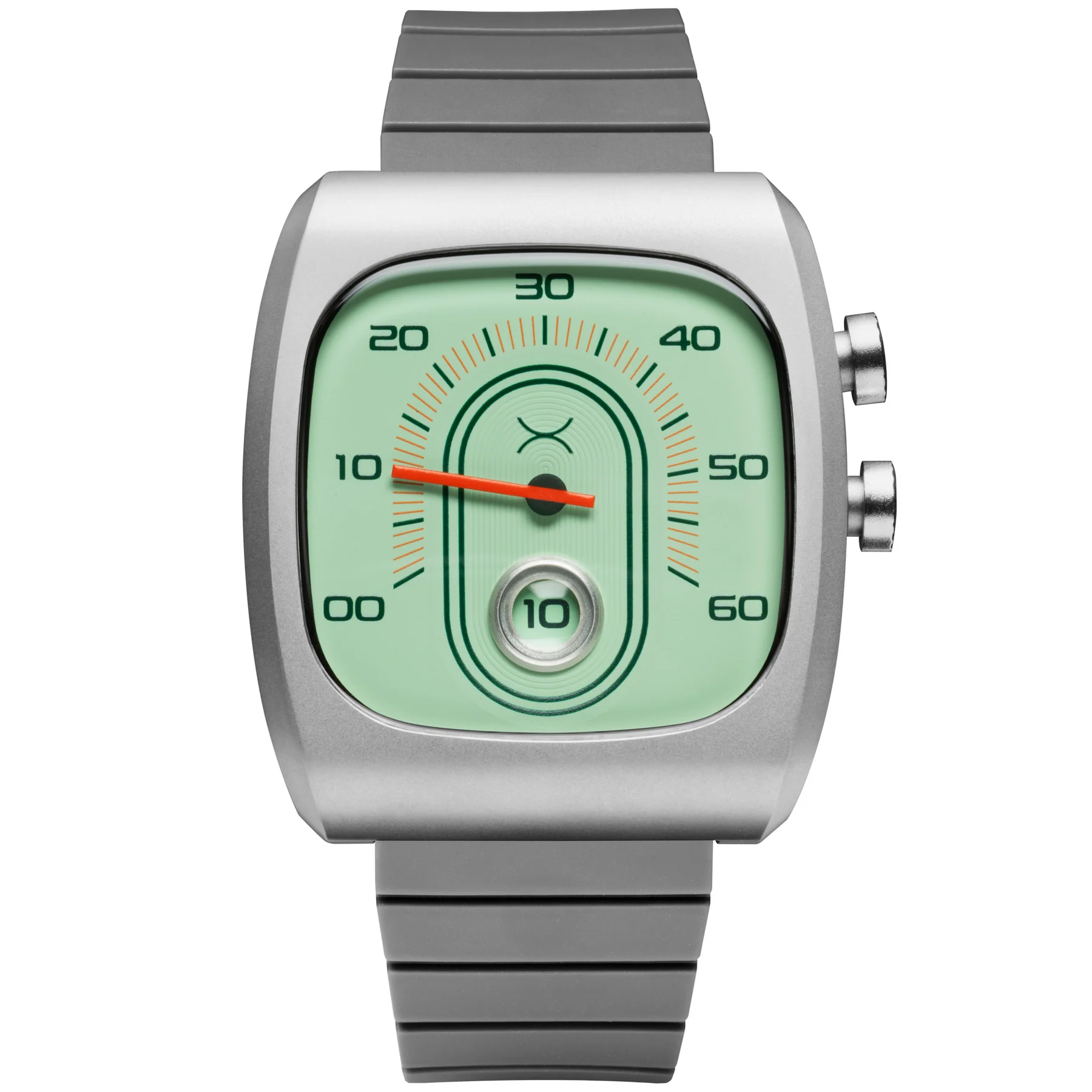
Xeric Watches Review: American Brand Redefining Affordable Mechanical Innovation
Where 1960s-70s retro design meets orbital time displays, inverted movements, and Kickstarter crowdfunding success. Xeric proves affordable mechanical watches under $1,000 can deliver haute horology aesthetics.
Steven Thompson
Independent Watchmaker · 10 Years Experience
Reviewed by Indie Watches
Editorially reviewed for accuracy
⚡ Key Takeaways
- ✓London Portobello Market encounter: Age 30, visiting London, discovered a vintage watch vendor showcasing unusual 1960s-70s timepieces. No British currency remaining, couldn't purchase—but the obsessi
- ✓Chelsea NY flea market: Found similar vintage watches at local New York markets. Began collecting immediately.
- ✓eBay vintage reselling: Started selling vintage watches on eBay as a small side business.
- ✓Vogue Magazine 2000: September issue featured Mitch's curated 1960s-70s watch collection. Article required proper brand identity—Watchismo.com was born.
- ✓Partnership formation: Brother Andrew Greenblatt (successful serial entrepreneur) joined in 2007 facilitating French brand LIP's U.S. market entry.
📑 Table of Contents
Most watch brands follow predictable formulas. Microbrands copy vintage Rolex designs. Affordable mechanical watches use traditional three-hand layouts. Crowdfunded watches promise innovation, deliver mediocrity.
📚 Explore our full watches guide →
Xeric Watches destroys every formula.
Founded in California 2013 by brothers Mitch and Andrew Greenblatt alongside watch industry veteran Danny Hunsaker, Xeric represents watchmaking's most experimental affordable brand—where orbital indicators replace traditional hands, movements flip upside-down exposing rotors from dial side, and double retrograde complications sell for under $600.
Their Halograph Kickstarter raised over $1 million—becoming the most-funded mechanical timepiece in Kickstarter history. Their NASA Trappist-1 features orbiting planetary time displays inspired by space exploration. Their Invertor mounts Miyota movements upside-down requiring custom module development, showing time clockwise while displaying the rotor from front.
The result: Watches looking like $10,000 MB&F or Urwerk haute horology priced $300-700—proving affordable mechanical watches need not copy Submariner dials for the hundredth time.
From Soloscope single-hand minimalism to Halograph split orbital displays to Timeline double retrograde complications, Xeric demonstrates what happens when vintage watch collectors tired of mainstream conservatism decide creating their own brand is easier than waiting for established manufacturers to innovate.
This comprehensive review examines Xeric's complete collection—exploring their unconventional design philosophy, Kickstarter funding model, build quality, movement customization, and whether $300-700 watches delivering haute horology aesthetics justify the hype.
Brand History: From Vintage eBay Reseller to Kickstarter Phenomenon #
The Watchismo Foundation (1998-2013) #
Mitch Greenblatt's watch journey began in 1998:
- London Portobello Market encounter: Age 30, visiting London, discovered a vintage watch vendor showcasing unusual 1960s-70s timepieces. No British currency remaining, couldn't purchase—but the obsession was triggered.
- Chelsea NY flea market: Found similar vintage watches at local New York markets. Began collecting immediately.
- eBay vintage reselling: Started selling vintage watches on eBay as a small side business.
- Vogue Magazine 2000: September issue featured Mitch's curated 1960s-70s watch collection. Article required proper brand identity—Watchismo.com was born.
- Partnership formation: Brother Andrew Greenblatt (successful serial entrepreneur) joined in 2007 facilitating French brand LIP's U.S. market entry.
- New York Times 2011: Style section cover feature showcasing Watchismo's unusual timepiece curation—cementing reputation.
The Gap Identified #
After years offering unique watches from worldwide manufacturers, the brothers recognized a market gap: unusual, affordable mechanical watches with innovative time displays didn't exist at accessible pricing.
Xeric Launch (2013) #
Mitch and Andrew hired Danny Hunsaker (watch manufacturing industry experience) plus Tyler Little. Together they created Xeric Watches. The first Kickstarter campaign launched in 2013 with the Xeriscope model—an unconventional single-hand time display.
Philosophy established:
- Thinking "outside the watch" regarding form/function
- Avoiding sheep mentality (not drowning in the Rolex ocean or Apple Watch waves)
- Celebrating creativity, personal expression, affordable horology
- Offering mechanical complications at prices under $1,000 never seen before
Etymology: "Xeric" derives from Greek "xēros" (dry)—symbolizing the brand's difference from mainstream, thriving in extreme environments where conventional brands perish.
Kickstarter Dominance (2013-Present) #
Unprecedented crowdfunding success: 25+ successful Kickstarter campaigns launched. The Halograph project raised $1+ million—making it the most-funded mechanical timepiece in Kickstarter history at the time.
Crowdfunding advantages:
- Direct customer connection (like-minded individuals appreciating individuality)
- Funding enables affordable pricing despite complex designs
- Validates unconventional concepts before production
- Builds community around experimental horology
Current status: Operates dual brands—Xeric Watches (unconventional mechanicals) and Watches.com (acquired by Watchismo—distinctive modern watches under "Time to Be Different" motto).
Design Philosophy: Retro-Futurism Meets Haute Horology for Everyone #
Inspiration Sources #
Mitch Greenblatt's creative background includes work as an illustrator, television art department work (including Pee-wee's Playhouse whimsical sets), before transitioning from illustration to horology in the late 1990s.
Design influences:
- Vintage American muscle cars (design books, prototypes)
- European concept cars (futuristic automotive thinking)
- Op-art: Victor Vasarely (pioneer)
- Architects & product designers: Eero Saarinen, Dieter Rams
- 1960s-70s watches: Personal collection documented in Retro Watches: The Modern Collector's Guide (Thames & Hudson 2020)
Core Design Principles #
1. Unconventional time display — Rather than traditional hour/minute hands, Xeric employs:
- Orbital indicators: Small wheels/hands rotating along specific paths
- Rotating discs: Hours/minutes shown through apertures
- Single-hand displays: Minimalist time-telling
- Retrograde complications: Arcs with jumping returns
- Inverted movements: Rotor visible from dial side
- Planetary systems: Orbiting elements indicating time
2. 1960s-70s aesthetic revival — Space Age era when watchmakers embraced futuristic thinking, outside-the-box technologies, bold design experimentation, automotive-influenced cases, and Op-art dial treatments.
3. Affordable haute horology aspirations — Mitch's stated goal: "Bridge the gap" between exclusive Swiss independents (Urwerk, MB&F, DeBethune, F.P. Journe, Greubel Forsey) and average enthusiasts. A "gateway drug into horology" for anyone with a few hundred dollars.
Manufacturing Approach #
China-based production with close factory collaboration. Rather than accepting stock movements, Xeric develops proprietary complications:
- Invertor: Flipped upside-down Miyota requiring custom time-display module
- Timeline: Double retrograde with dual snail cams (6 years development)
- Halograph: Orbital time display system
- Soloscope: Single-hand halo complications
The Collection: Complete Xeric Lineup #
Halograph Series — $299-499 #
The most iconic Xeric collection featuring split orbital time display. Rather than traditional hands, Halograph uses an inner circle showing the hour and an outer circle showing minutes—read time inside each circle at the top of the watch.
Signature feature: Super-LumiNova transforms the night display into a traditional hour/minute hand appearance—a dual personality watch.
Halograph III Automatic ($499): Latest iteration with retro-automotive inspiration paying tribute to 1966—the year the first American manufacturer won the 24 Hours of Le Mans. Features Seiko NH36 automatic movement (42-hour power reserve), sapphire crystal with AR coating, exhibition caseback, and American Horween or Italian leather racing straps. Limited edition numbered pieces.
Halograph III Chrono ($299): Chronograph variant adding chronograph complications to the split display system.
Halograph Tourbillon: Aspirational model with tourbillon complication at a significantly higher pricing tier.
Trappist-1 Series — $300-550 #
Space-inspired collection named after TRAPPIST-1, an ultra-cool dwarf star with seven Earth-sized planets. The innovation: orbiting planetary system displays time with an inner luminous planet representing hours, an outer luminous planet showing minutes, and a constellation seconds hand sweeping across the dial like a comet.
NASA Trappist-1 Automatic Sapphire ($500-550): Premium version featuring Miyota 8215 automatic movement, tritium tubes for always-readable nighttime display, case grille resembling the Cupola observatory, domed sapphire crystal, and Italian leather straps inspired by space glove articulated ridgelines. Limited to 1,969 pieces per colorway (honoring the moon landing year).
NASA Trappist-1 Quartz ($299-350): Affordable version with Seiko VH31 high-torque semi-sweeping seconds movement, engraved 50th anniversary Apollo 11 mission patch caseback, and sapphire crystal.
Soloscope II Automatic — $500-700 #
Single-hand minimalist watch featuring a skeletonized hour hand rotating over a luminous background, a halo hand encircling minutes, and an AM/PM indicator. Powered by Miyota 8217 automatic movement with 40-hour power reserve.
"The Jellyfish": When lights go out, Super-LumiNova creates an impressive glowing pattern when the watch is turned on its side. Features anti-reflective sapphire crystal, Horween leather straps with quick-release mechanism, limited to 999 pieces per color.
Invertor Series — $500-700 #
Revolutionary upside-down movement display launched in 2019. Miyota movement flipped upside-down with rotor visible from front. Xeric developed a custom module showing time clockwise. Two years of development bringing haute horology feel (MB&F, Urwerk designs) to affordable pricing.
Kickstarter success: Funded in hours, raising $177,000+ from 373 backers in early days.
Timeline Retrograde — Price TBD #
Double retrograde complication under $1,000—mechanical watches with retrograde minutes AND hours are rare in any price range, and under $1,000 virtually nonexistent. Six years of development with vintage double retrograde examples from Mitch's personal collection used as inspiration.
Design features a 1970s "TV-dial" case shape with Art Deco influences. WatchTime assessed it as "unique on wrist without being excessively eccentric."
Additional Collections #
- Vendetta II/X Automatic: Retrograde indicators, luxurious aesthetic
- Hyperspace Automatic: Space-age design language
- Regulator Automatic: Offset hour/minute displays
- Scrambler Automatic: Vintage motorcycle-inspired
- Triptych Automatic: Triple-display complications
- Wandering Hours: Wandering hour complication
- NASA Apollo 15 Moonphase: NASA collaboration with moonphase complication
- NASA Artemis Chrono/Tumbler: NASA Artemis program tribute
- NASA Voyager Automatic: Voyager space program inspiration
Build Quality & Materials #
What Xeric Uses #
Movements: Japanese Miyota automatic (8215, 8217, 8250), Seiko movements (NH36, VH31), custom rotors with proprietary designs, and custom modules for complications.
Cases: Stainless steel with brushed, polished, and mixed finishes. Some models feature Cerakote ceramic coating. Mid-tier finishing—respectable but not haute horology level.
Crystals: Sapphire standard across most of the collection with AR coating and domed options. Exhibition casebacks in sapphire.
Straps: American Horween leather (premium Chicago-based tannery), Italian leather racing straps, quick-release for tool-less changes.
Water Resistance: Typically 50-100 meters—splash-resistant, not dive watches.
Quality Assessment #
Strengths:
- Sapphire crystals throughout (typically a $500+ feature)
- Horween leather (premium American tannery)
- Japanese movements (reliable, serviceable)
- Custom module development (genuine complications)
- Exhibition casebacks showing mechanical movements
Weaknesses reported:
- Some customer quality control issues
- Chinese manufacturing QC inconsistency
- Not Swiss-level finishing
- Experimental designs sometimes sacrifice durability for aesthetics
Realistic expectations: $300-700 watches won't match $5,000 Swiss finishing. Xeric delivers innovative designs, legitimate mechanical complications, quality materials, and Japanese movement reliability—but with Chinese manufacturing QC variability.
Pricing & Value Proposition #
Current Pricing #
Entry level ($299-350): Halograph Chrono, NASA Trappist-1 Quartz
Mid-range ($499-550): Halograph III Automatic, Soloscope II Automatic (sale), NASA Trappist-1 Automatic
Premium ($500-700+): Invertor series, Timeline Retrograde (estimated $600+)
Xeric frequently runs sales with Kickstarter pre-orders typically 20-30% off retail.
Value Analysis #
For $300-700, Xeric delivers complications rarely seen under $1,000: orbital time displays, double retrograde, inverted movements with rotor display, single-hand halo systems, and orbital planetary displays.
Materials typically found at $500-1,000: sapphire crystals with AR coating, Horween premium leather, exhibition casebacks, Japanese automatic movements.
Design language typically found at $5,000-20,000: MB&F/Urwerk aesthetic inspiration, haute horology visual vocabulary, unconventional time displays, custom complications.
Honest assessment: Xeric delivers 90% of haute horology aesthetics at 5-10% of the price. Finishing and movement quality reflects pricing, but design innovation is genuine.
Who Xeric Is For #
Perfect For #
- Vintage watch enthusiasts — Appreciate 1960s-70s aesthetic revival, understand design references, value retro-futurism
- Independent thinkers — "Like-minded individuals not suffering from sheep mentality, appreciating individuality"
- Mechanical watch newcomers — "Gateway drug into horology" with affordable entry to complications
- Design-forward collectors — Prioritize aesthetics/innovation over Swiss prestige
- Sci-fi/space enthusiasts — NASA collaborations, Trappist-1 planetary systems, space-age design language
- Kickstarter backers — Enjoy crowdfunding participation and early-bird pricing
Not Ideal For #
- Conservative collectors — Prefer traditional three-hand layouts and safe designs
- Swiss Made purists — Insist on Swiss manufacturing regardless of design merits
- Resale-focused buyers — Experimental designs mean uncertain resale market
- Those wanting traditional legibility — Orbital displays and inverted movements require learning curves
- Luxury brand seekers — Want Rolex/Omega prestige rather than design innovation
Criticisms & Concerns #
Quality Control: Some customers report component failures, strap quality issues, finishing inconsistencies, and customer service delays. Chinese manufacturing at $300-700 price points means QC variability is expected.
Legibility Trade-offs: Unconventional displays sacrifice instant readability—Halograph split circles, Soloscope single-hand, Trappist-1 orbital planets, and Invertor rotor display all require familiarization.
Resale Uncertainty: Limited collector base for unconventional watches, no established vintage market (brand only 11 years old), and Kickstarter editions flooding the market.
Movement Limitations: Japanese Miyota/Seiko movements are reliable but not haute horology—basic finishing, no in-house manufacture prestige. Custom modules add complications but are built on workhorse bases.
The Verdict: Affordable Horology's Most Experimental Brand #
Xeric Watches proves mechanical watches under $1,000 need not copy Submariner dials for the hundredth time—demonstrating orbital displays, inverted movements, and double retrograde complications deliver haute horology aesthetics at accessible pricing.
Founded in 2013, Xeric has launched 25+ successful Kickstarter campaigns including the most-funded mechanical timepiece in Kickstarter history (Halograph at $1+ million), creating genuine complications at $300-700 pricing never seen before.
Mitch Greenblatt's vintage watch collection knowledge combined with his television art department background plus retro automotive/Op-art influences equals an authentic design vision rather than market-research-driven mediocrity.
For collectors valuing innovation over tradition, design experimentation over safe conservatism, affordable complications over Swiss prestige, and personal expression over status symbols—Xeric represents the best option under $1,000 for genuinely unconventional mechanical watches.
The brand proves Kickstarter crowdfunding can fund legitimate watch innovation—not just derivative homages seeking quick cash—when founders possess genuine vintage watch knowledge, design vision, and willingness to push manufacturing partners toward tighter tolerances and custom complications.
Where to Buy #
- Xeric official website: xeric.com
- Kickstarter campaigns: Watch for new launches (pre-order discounts 20-30%)
- Authorized retailers: Teddy Baldassarre (select models), Watches.com (Xeric sister brand)
Quick Reference: Xeric Collection Overview #
| Collection | Price Range | Key Innovation | Movement |
|---|---|---|---|
| Halograph III Auto | $499 | Split orbital time display | Seiko NH36 |
| Halograph Chrono | $299 | Orbital + chronograph | Quartz chrono |
| Trappist-1 Auto | $500-550 | Orbiting planets, tritium | Miyota 8215 |
| Trappist-1 Quartz | $299-350 | Orbiting planets | Seiko VH31 |
| Soloscope II Auto | $499-699 | Single-hand halo system | Miyota 8217 |
| Invertor Auto | $500-700+ | Upside-down movement, rotor visible | Modified Miyota |
| Timeline Retrograde | $600+ (est.) | Double retrograde | Custom module |
| Vendetta II/X | Variable | Retrograde indicators | Automatic |
Find Your Perfect Watch
Browse our curated collection of indie and microbrand timepieces.
📚 Related Reading
Handpicked articles from the same topic