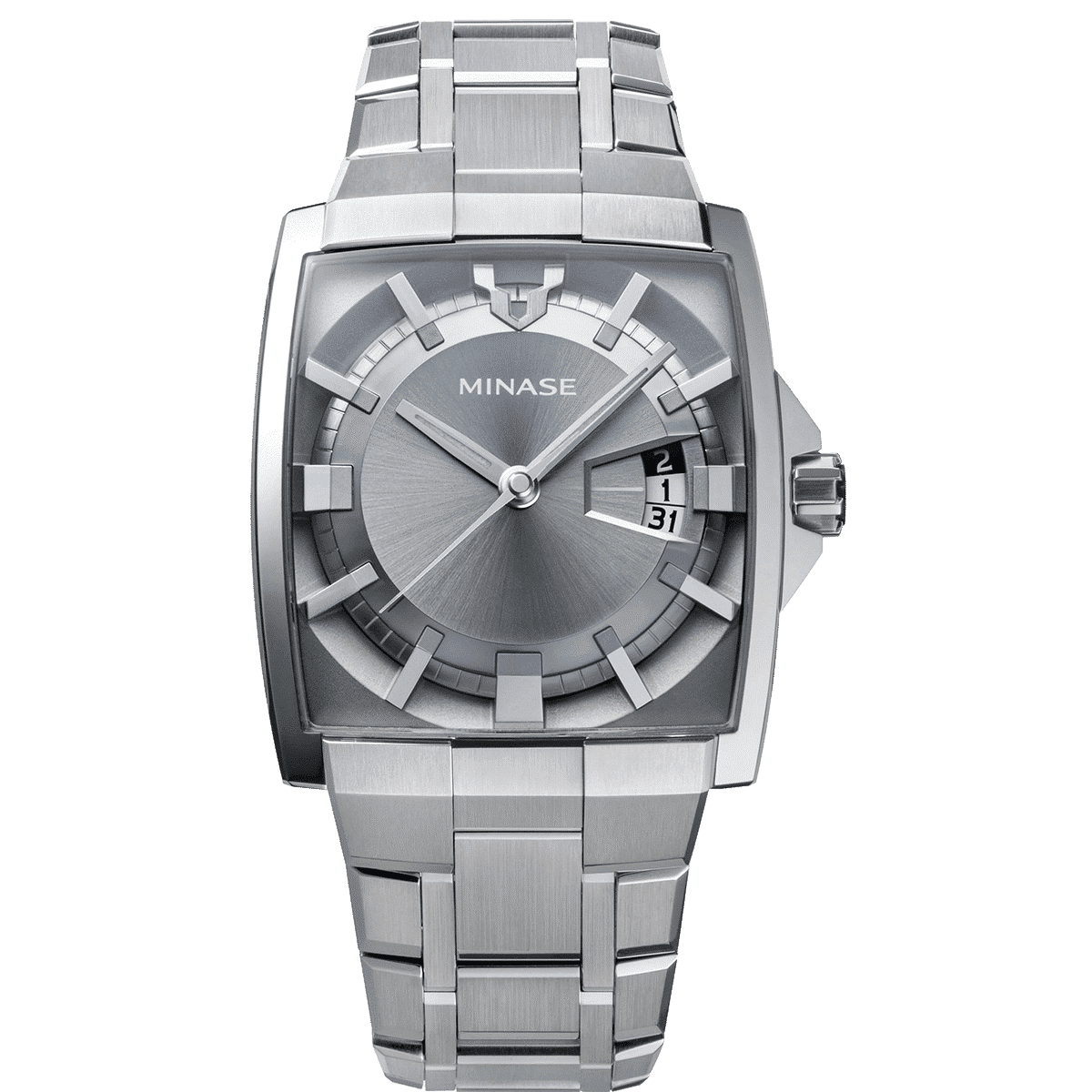
Minase Watches Review: Japanese Polishing Excellence Without Grand Seiko Prices
When a Kyoto jewelry workshop decides to make watches, the result is $2,500-5,000 finishing that rivals $8,000-12,000 Grand Seiko. Minase doesn't advertise, doesn't sponsor athletes, and most enthusiasts have never heard of them—yet they produce some of the most beautifully finished watches in the $2,000-5,000 range.
Steven Thompson
Independent Watchmaker · 10 Years Experience
Reviewed by Indie Watches
Editorially reviewed for accuracy
⚡ Key Takeaways
- ✓Flatness: Surface perfectly flat (no distortion—reflections sharp, clear)
- ✓Depth: Mirror appears three-dimensional (deeper reflections than typical polishing)
- ✓Transitions: Bevels meet polished surfaces with knife-edge precision (no rounding, no blur)
- ✓Distortion-free: Look at reflection in polished surface—see yourself clearly (typical polishing = slight warping)
📑 Table of Contents
When a Kyoto jewelry workshop decides to make watches, the result is $2,500-5,000 finishing that rivals $8,000-12,000 Grand Seiko.
📚 Explore our full watches guide →
Minase doesn't advertise. They don't sponsor athletes. They've never paid an influencer. Most watch enthusiasts have never heard of them.
Yet Minase produces some of the most beautifully finished watches in the $2,000-5,000 range—period.
Walk into any watch forum asking "Which Japanese brand has the best finishing under $5,000?" and you'll hear: "Grand Seiko, obviously." That's the default answer. The safe answer. The answer 95% of people give without thinking.
The 5% who've actually handled Minase know better.
Minase (pronounced "mee-nah-seh") emerged from Kyoto's jewelry-making tradition—not watchmaking. This matters enormously. While Grand Seiko evolved from Seiko's mass-production watch empire (making finishing exceptional while maintaining factory efficiency), Minase emerged from artisans hand-polishing precious metals for wealthy clients who demanded perfection.
Different DNA. Different priorities. Different results.
Grand Seiko optimizes: "How do we achieve 95% of perfect finishing at scale?" (Answer: Zaratsu polishing, automated precision, quality control)
Minase asks: "How do we achieve 100% perfect finishing regardless of scale?" (Answer: Sallaz polishing, hand-finishing, small production)
The result: Minase produces 2,000-3,000 watches annually (vs. Grand Seiko's 50,000+). Each case receives 15-20 hours hand-polishing (vs. Grand Seiko's 2-5 hours machine + hand-finishing). Every facet, every bevel, every mirror surface receives obsessive attention.
And it shows.
Hold a $4,000 Minase next to a $6,000 Grand Seiko. The Grand Seiko is excellent—sharp Zaratsu surfaces, perfect beveling, refined execution. The Minase is better—deeper mirror reflections, crisper transitions, more three-dimensional light play.
This review explores why Minase deserves recognition, what makes their finishing special, which models offer best value, and whether $2,500-5,000 Japanese microbrands can genuinely compete with Swiss luxury.
The Brand: Kyoto Jewelry Meets Watchmaking #
Origins: Not a Watch Company #
Minase founding: 2005
Parent company: Kyowa Co., Ltd. (founded 1963)
Original business: Precious metals jewelry manufacturing for Japanese luxury market
Pivot to watches: 2005, when jewelry craftsmen asked: "What if we applied our polishing techniques to watch cases?"
Key insight: Jewelry polishing standards exceed watch industry standards. Jewelry clients inspect pieces millimeters from face under bright light—imperfections unacceptable. Watch buyers view from arm's length—"good enough" often passes.
Minase rejected "good enough." Applied jewelry-grade polishing to watches. Created brand specifically showcasing this craft.
What "Minase" Means #
Name origin: Japanese "美しい" (utsukushii = beautiful) + "瀬" (se = rapids/current)
Translation: "Beautiful current" or "Beautiful flow"
Philosophy: Watch case surfaces should flow like water—seamless transitions, liquid reflections, dynamic light movement across facets.
This isn't marketing poetry. Pick up a Minase. Tilt it under light. Watch reflections flow across case surfaces like water rippling. That's the "beautiful current" made tangible through metal polishing.
Production Philosophy #
Annual output: ~2,000-3,000 watches (tiny vs. Grand Seiko's 50,000+, Seiko's millions)
Manufacturing location: Akita Prefecture, Japan (northern Honshu island—remote, mountainous, traditional craftsmanship region)
Case finishing: In-house Sallaz polishing (proprietary technique—Minase's secret weapon)
Movements: Miyota (Citizen-owned, Japanese) calibers—mostly modified/enhanced
Assembly: Japan (Japanese assembly, Swiss movements NOT used—staying authentically Japanese)
Quality control: Every watch inspected under magnification, any imperfection rejected (jewelry-grade QC applied to watches)
The Secret: Sallaz Polishing #
What Makes Minase Finishing Special #
The challenge: Watch case polishing typically uses rotating buffers—machine-applied compound on spinning wheel. Fast, efficient, achieves "good" mirror finish. But leaves micro-scratches visible under magnification, creates slight distortions in reflections.
Grand Seiko's solution: Zaratsu polishing—flat rotating tin plate presses against case surface. Creates flatter, more perfect mirror than buffing wheels. Still partially mechanized (allows scale production), still excellent results.
Minase's solution: Sallaz polishing (also called Sallaz grinding)—hand-applied pressure using specialized tools, compound, techniques. Completely manual. Extremely time-consuming. Produces deepest, most distortion-free mirrors possible.
Sallaz Technique Explained #
Origin: Swiss jewelry polishing technique (ironically—Japanese brand using Swiss method)
How it works:
- Case surface ground to precise flatness (foundation for mirror)
- Compound applied (polishing paste)
- Craftsman applies tool at exact angle, exact pressure
- Slow, controlled strokes across surface (no rotation—linear motion)
- Repeated for hours until surface achieves perfect mirror
- Each facet, bevel, transition individually polished (case has 20-50+ surfaces requiring separate polishing)
Time required: 15-20 hours hand-polishing per case (vs. Grand Seiko Zaratsu 2-5 hours machine + hand)
Result:
- Flatness: Surface perfectly flat (no distortion—reflections sharp, clear)
- Depth: Mirror appears three-dimensional (deeper reflections than typical polishing)
- Transitions: Bevels meet polished surfaces with knife-edge precision (no rounding, no blur)
- Distortion-free: Look at reflection in polished surface—see yourself clearly (typical polishing = slight warping)
Visual Comparison (What to Look For) #
Typical watch polishing:
- Mirror surface reflects light
- Under magnification: Micro-scratches visible (swirling patterns from buffing wheel)
- Reflections slightly blurred/distorted
- Bevels somewhat rounded where they meet polished surfaces
Grand Seiko Zaratsu:
- Extremely flat mirror surface
- Under magnification: Minimal micro-scratches (Zaratsu cleaner than typical)
- Sharp reflections (minimal distortion)
- Crisp bevels (machine precision)
Minase Sallaz:
- Impossibly flat mirror surface (looks photoshopped)
- Under magnification: ZERO visible scratching (pristine surface)
- Reflections three-dimensional (deepest mirror depth possible)
- Knife-edge bevels (transitions so sharp they appear CNC-cut but hand-polished)
Real-world test: Hold Minase next to Grand Seiko under bright light. Both excellent. Minase has slightly more depth, slightly crisper transitions. The difference is 95% vs. 98% perfection—but collectors notice.
The Watches: Key Models #
Minase Divido (Five Windows Collection) #
- Price: ~$2,500-3,500 (varies by market, configuration)
- Case size: 37-39mm diameter × 10-11mm thickness
- Movement: Miyota 9015 automatic (modified by Minase—decorated, regulated)
- Water resistance: 100m (10 bar—splash/rain resistant, not serious diving)
- Signature design: "Five Windows" case architecture
Case Features
- Case has five distinct facets per side (geometric, architectural)
- Each facet different angle (creates light play—tilting watch changes which facets reflect)
- All facets Sallaz polished (individually hand-finished)
- Creates "windows" effect (light reflects differently through each facet—hence "five windows")
Dial Options
- White silver dial (sunburst radial brushing)
- Blue dial (deep navy sunburst)
- Black dial (matte or sunburst)
Case Finishing
- Mixed: Polished facets + brushed surfaces (creates contrast, dimension)
- Zaratsu-level or exceeding (depending on who's judging)
Bracelet
- Integrated design (flows from case—no gap between case and bracelet)
- Solid links throughout
- Mixed finishing (polished centers, brushed edges—mirrors case finishing)
- Micro-adjustments in clasp (5-7 positions)
Why It's Special
- Entry Minase pricing (~$2,500 = accessible vs. higher-tier models)
- Five Windows design distinctive (recognizable, architectural, unique)
- Integrated bracelet rare under $3,000 (usually $5,000+ feature—Royal Oak style)
- Miyota 9015 reliable, thin (3.9mm movement = thin case possible)
- 37-39mm sizing perfect for smaller wrists (modern trend toward smaller watches)
Comparison
- Grand Seiko SBGW231 ($4,200): Hand-wound, better movement, comparable finishing, higher price
- Tissot PRX Powermatic 80 ($725): Integrated bracelet budget option, inferior finishing
- Christopher Ward C63 Sealander ($1,195): Integrated bracelet, tool watch aesthetic, less refined finishing
Who Should Buy Divido
- First Minase purchase (entry pricing, showcases finishing)
- Integrated bracelet lovers (Royal Oak aesthetic at $2,500)
- Dress watch seekers (elegant, refined, dressy-casual versatility)
Minase Horizon (Cushion Case Collection) #
Price: ~$3,500-4,500
Case Specifications
Case size: 38-40mm diameter × 11-12mm thickness (cushion shape—rounded square)
Movement: Miyota 9015 or Miyota 9039 (no-date variant)
Water resistance: 100m
Signature design: Cushion case with flowing lugs
Design Features
- Case shape: Cushion (rounded square—vintage 1970s aesthetic)
- Lug design: Flowing, organic curves (no sharp angles—liquid metal appearance)
- Faceting: Multiple beveled facets creating light play
- All surfaces Sallaz polished or brushed (depending on surface function)
Dial Options
- Cream/beige (warm, vintage vibe)
- Blue (electric blue sunburst)
- Black (matte dial, polished indices)
Case Finishing
- Mixed: Polished bevels + brushed surfaces
- Extreme attention to transitions (where polished meets brushed = knife-edge precision)
Bracelet
- H-link style (elegant dress bracelet)
- Mixed finishing throughout
- Solid links, deployant clasp
Why it's Special
- Cushion case rare (most brands stick to round—Horizon distinctive)
- Flowing lug design organic, sculptural (jewelry design DNA visible)
- Vintage 1970s aesthetic without being "retro" (modern interpretation, not reproduction)
- No-date option available (clean dial, symmetrical)
Comparison
- Grand Seiko SBGR311 ($4,000-5,000): Round case, similar finishing quality, higher price
- Cartier Santos ($7,000-8,000): Cushion case, integrated bracelet, luxury brand premium
- Baltic Hermétique ($1,395): Vintage cushion aesthetic, inferior finishing, budget option
Who Should Buy Horizon
- Cushion case lovers (1970s aesthetic appreciation)
- Dress watch collectors (elegant, refined, special occasions)
- People wanting unique case shape (not another round watch)
Minase VM (Vertex Mounted) Series #
Price: ~$4,000-5,500
Case size: 40-41mm diameter × 11-12mm thickness
Movement: Miyota 9015 or modified Miyota chronograph (VM-Chrono variant)
Water resistance: 100-200m (depending on model)
Signature design: "Vertex Mounted" case construction
- Case edges (vertices) deliberately emphasized (sharp, defined corners)
- Creates geometric, architectural appearance
- Multiple facets meeting at precise angles (origami-like folding effect)
- All transitions Sallaz polished
Variants
- VM-Time: Three-hand time-only (hours, minutes, seconds)
- VM-GMT: GMT hand + 24-hour bezel (dual timezone)
- VM-Chrono: Chronograph (stopwatch function, subdials)
Dial options
- White (high contrast, clean)
- Blue (navy to electric blue gradient)
- Black (matte or sunburst)
Case finishing
- Extreme mixed finishing (10+ different surface treatments on single case)
- Polished facets
- Brushed flat surfaces
- Sandblasted accents (some models)
- Every transition hand-finished to knife-edge precision
Why it's special
- Vertex Mounted design most architecturally complex Minase case
- GMT variant offers practical complication (dual timezone utility)
- Chronograph variant rare (few microbrands hand-finish chronograph cases to this level)
- Most finishing variety (showcases Minase's full polishing capabilities)
Comparison
- Grand Seiko Sport GMT SBGM221 ($4,500-5,500): True GMT, superior movement, comparable finishing, similar price
- Zenith Defy Classic ($5,500-7,000): Swiss prestige, inferior finishing (relative to Minase), higher price
- Christopher Ward C63 GMT ($1,595): Budget GMT, tool watch aesthetic, entry-level finishing
Who should buy VM Series
- GMT travelers (VM-GMT practical for international work/travel)
- Chronograph enthusiasts (VM-Chrono rare finishing at this level)
- Architecture/design lovers (Vertex Mounted geometric aesthetic appeals)
- Collectors wanting top-tier Minase (most complex cases, highest finishing)
Minase 7 Windows (Limited Editions) #
Price: ~$5,000-8,000 (limited production, varies by edition)
Case size: 38-40mm
Movement: Miyota (modified, decorated)
Signature: Seven-facet case design (evolution of Five Windows concept)
Why it's special
- Limited production (50-200 pieces per edition)
- Most extreme finishing (even beyond standard Minase—special editions get extra hours hand-polishing)
- Collector-focused (not mass production)
Should you buy
- Only if you're Minase collector completing lineup
- Standard Divido/Horizon/VM offer 95% of experience for 60% price
Finishing Quality: Detailed Assessment #
Case Polishing (The Star Attraction) #
Sallaz polished surfaces:
- Flatness: 10/10 (perfect—no distortion visible even under magnification)
- Reflection depth: 10/10 (deepest mirrors achievable in watchmaking)
- Transitions: 10/10 (bevels meet surfaces with knife-edge precision)
- Consistency: 9/10 (hand-polishing = slight variation piece-to-piece—but still exceptional)
Brushed surfaces:
- Grain consistency: 9/10 (extremely uniform—parallel lines perfectly aligned)
- Directionality: 10/10 (brushing follows case contours organically)
- Contrast with polished: 10/10 (mixed finishing creates dramatic light play)
Overall case finishing: 9.5/10 (rivals $8,000-12,000 Swiss luxury, exceeds most $3,000-5,000 competition)
Dial Finishing #
Sunburst dials:
- Radial brushing: 9/10 (clean, consistent, proper center point)
- Color depth: 8/10 (good but not Grand Seiko-level dial artistry)
- Printing: 8/10 (clean, sharp—not extraordinary but perfectly acceptable)
Applied indices:
- Polishing: 9/10 (hand-polished, crisp)
- Application: 9/10 (perfectly aligned, secure)
Overall dial finishing: 8/10 (good-to-excellent, not world-class like case—dial is acceptable carrier for showcase case)
Bracelet Finishing #
Link finishing:
- Mixed surfaces: 9/10 (polished centers, brushed edges—mirrors case finishing philosophy)
- Transitions: 9/10 (clean separation between finishes)
- Solidity: 9/10 (solid links throughout—substantial, zero rattle)
Clasp:
- Finishing: 8/10 (good but not exceptional—clasp is functional, adequate)
- Micro-adjustments: 8/10 (5-7 positions typical—sufficient)
- Engraving: 7/10 (Minase logo clean but not elaborate)
Overall bracelet: 8.5/10 (excellent quality, not quite case-level perfection—but very good)
Movement Finishing #
Visible through caseback:
- Miyota base: 6/10 (industrial, functional—Miyota doesn't prioritize decoration)
- Minase modifications: 7/10 (some decoration added—custom rotor, Geneva stripes on bridges—but not Grand Seiko level)
Value Proposition: Is Minase Worth It? #
What You're Paying For #
Minase Divido ($2,500):
- Miyota 9015 movement: ~$100 wholesale
- Case (raw material + machining): ~$200-300
- Sallaz polishing (15-20 hours hand-labor): ~$800-1,200 value
- Bracelet: ~$200-300
- Assembly, QC, packaging: ~$200
- Brand operations, distribution: ~$400-600
Total attributable cost: ~$1,900-2,800 (retail $2,500 = fair margin)
Comparison: Grand Seiko SBGW231 ($4,200):
- Hand-wound 9S64 movement: ~$500-800 value (higher-grade than Miyota)
- Case (Zaratsu polishing): ~$600-900 value (machine-assisted polishing faster than Sallaz, still excellent)
- Bracelet: ~$300-400
- Brand prestige, Seiko ecosystem: ~$1,000-1,500
Total attributable cost: ~$2,400-3,600 (retail $4,200 = higher margin reflecting Grand Seiko brand equity)
The Value Equation #
Minase strengths:
- Superior case finishing (Sallaz > Zaratsu in pure polishing terms)
- Lower pricing ($2,500-5,000 vs. Grand Seiko $3,500-8,000)
- Unique designs (Five Windows, Vertex Mounted architectural cases vs. Grand Seiko conservative)
- Integrated bracelets (Divido offers $5,000+ feature at $2,500)
Grand Seiko vs. Minase #
Grand Seiko strengths:
- Superior movements (Spring Drive, Hi-Beat, better finishing/decoration)
- Brand prestige (Seiko legacy, global recognition vs. Minase obscurity)
- Dial artistry (Grand Seiko dials unmatched—Snowflake, Mt. Iwate textures)
- Service network (Seiko global support vs. Minase limited)
Verdict:
- If you prioritize case finishing: Minase wins (best polishing under $5,000)
- If you prioritize overall package: Grand Seiko wins (movement, dial, brand, service)
- If you want best value: Minase wins (more hand-finishing for less money)
- If you want safest investment: Grand Seiko wins (resale, recognition)
Who Should Buy Minase? #
Perfect Buyer Profile #
- Finishing obsessives: You inspect watches under magnification, appreciate hand-polishing nuances
- Japanese watch lovers: You already own Seiko/Grand Seiko, want deeper dive into Japanese independents
- Integrated bracelet seekers: You love Royal Oak aesthetic but can't afford $30,000
- Smaller wrist owners: 37-40mm Minase sizing perfect for 6.5-7.5" wrists (vs. oversized modern trend)
- Design-conscious buyers: Appreciate architectural cases, geometric forms, sculptural watches
- Value hunters: Want $8,000 finishing at $2,500-4,000 pricing
- Collectors wanting rarity: Minase's 2,000-3,000 annual production = genuinely limited (vs. mass-market brands)
- People who hate logos: Minase branding subtle, understated (no giant brand names screaming)
Wrong Buyer Profile #
- Movement enthusiasts: Miyota base movements don't excite (buy Grand Seiko for Spring Drive, Hi-Beat)
- Brand prestige seekers: Nobody recognizes Minase (wear to impress others = buy Rolex, Omega)
- Dive watch needs: 100m WR insufficient for serious diving (buy Seiko Prospex, Omega Seamaster)
- Budget under $2,000: Minase entry $2,500 (buy Seiko Presage, Orient, microbrands if budget-limited)
- Resale value priority: Minase secondary market small (buy Rolex, Omega for resale)
- Service convenience: Limited Minase service network (buy Grand Seiko for global Seiko support)
- People wanting "complete package": If you need movement finishing + case finishing + dial artistry all 10/10, buy Grand Seiko (Minase is 10/10 case, 7/10 movement, 8/10 dial)
Comparisons: Minase vs. Competitors #
Minase vs. Grand Seiko #
When Minase wins:
- Case finishing (Sallaz edges Zaratsu)
- Price (Minase $2,500-5,000 vs. Grand Seiko $3,500-8,000)
- Unique designs (architectural cases vs. conservative GS)
When Grand Seiko wins:
- Movement quality (Spring Drive, Hi-Beat, better decoration)
- Dial artistry (Snowflake, textures unmatched)
- Brand recognition, resale value
- Service network (global Seiko support)
Verdict: Buy Minase for case finishing obsession. Buy Grand Seiko for overall horological excellence.
Minase vs. Swiss Luxury ($3,000-5,000 tier) #
Minase vs. Longines Master Collection ($2,500-4,000):
- Minase: Superior finishing, Japanese craftsmanship, unique designs
- Longines: Swiss Made prestige, ETA movements, global recognition
- Winner: Minase (better finishing for similar money)
Minase vs. TAG Heuer Carrera ($3,500-5,000):
- Minase: Superior case finishing, integrated bracelets, jewelry-grade polishing
- TAG Heuer: Swiss chronographs, brand recognition, sports heritage
- Winner: Depends on priority (Minase = finishing, TAG = Swiss brand/chronograph)
Minase vs. Oris Artelier ($3,000-5,000):
- Minase: Superior finishing, hand-polishing
- Oris: Swiss independent, in-house movements (some), brand heritage
- Winner: Minase (finishing destroys Oris at comparable pricing)
Minase vs. Microbrands #
Minase vs. Christopher Ward C63 Sealander ($1,195):
- CW: Affordable integrated bracelet, true GMT, tool watch
- Minase: 5X better finishing, jewelry-grade polishing, dress elegance
- Winner: Different categories (CW = value sports, Minase = finishing luxury)
Minase vs. Baltic Hermétique ($1,395):
- Baltic: Vintage French design, affordable dress watch
- Minase: Superior finishing in every dimension, more refined execution
- Winner: Minase (finishing justifies 2X price premium)
Buying Minase: Practical Guide #
Where to Buy #
Official Minase retailers:
- Japan: Minase boutique (Kyoto), select authorized dealers (Tokyo, Osaka)
- USA: Limited authorized dealers (Hodinkee Shop occasionally, specialty retailers)
- Europe: Very limited distribution (Germany, UK select retailers)
- Chrono24 (listings appear occasionally)
- Yahoo Auctions Japan (requires proxy service)
- WatchExchange (Reddit—rare but possible)
IndieWatches.store:
- Browse availability: indiewatches.store/marketplace
Recommendation
Buy from authorized dealer if possible (warranty, authenticity guarantee). Gray market acceptable if reputable seller, but verify authenticity.
Pricing Guide #
New retail (USD approximate):
- Divido Five Windows: $2,500-3,500
- Horizon: $3,500-4,500
- VM Series: $4,000-5,500
- Limited editions: $5,000-8,000
Secondary market (used):
- Expect 30-40% discount vs. new (Minase limited secondary market = patient sellers discount)
- Divido: $1,500-2,200
- Horizon: $2,200-3,000
- VM Series: $2,800-4,000
Warning: Minase production limited—availability sporadic. If you find model you want, buy it (may not be available later).
What to Inspect Before Buying #
- Case polishing: Inspect under bright light—should see flawless mirrors, zero micro-scratching
- Bracelet finishing: Check mixed finishing consistency, solid link quality
- Movement accuracy: Request timing info (should be -5/+15 sec/day or better)
- Papers/box: Original packaging, warranty card, documentation (important for authenticity)
- Bracelet sizing: Minase bracelets use screws—ensure seller includes extra links if removed
Final Verdict: Exceptional Finishing, Niche Appeal #
What Minase Gets Right #
- Case finishing best-in-class ($2,500-5,000 range—nothing matches Sallaz polishing)
- Unique architectural designs (Five Windows, Vertex Mounted—distinctive, recognizable)
- Integrated bracelets (accessible luxury feature typically $5,000+ watches)
- Japanese craftsmanship (authentic independent, jewelry heritage, hand-finishing)
- Reasonable pricing ($2,500-5,000 = fair for hand-polishing labor)
- Small production (2,000-3,000 annually = genuinely limited)
What Minase Gets Wrong #
- Movement finishing mediocre (Miyota base = industrial, not decorated—weak point vs. Grand Seiko)
- Dial artistry good not great (acceptable but not Grand Seiko Snowflake-level)
- Limited brand recognition (obscure outside Japan—wear for yourself, not others)
- Service network small (limited global support vs. Seiko/Swiss brands)
- Availability sporadic (limited production = hard to find specific models)
The Recommendation #
Buy Minase if:
- You're watch enthusiast who appreciates finishing (will notice Sallaz polishing superiority)
- You want best case finishing under $5,000 (nothing beats it)
- You love Japanese independents (Minase represents deep craftsmanship tradition)
- You prefer unique designs (architectural cases vs. conservative luxury)
- You have realistic expectations (Miyota movements acceptable, focus is case)
Skip Minase if:
- You want brand recognition (buy Omega, Grand Seiko instead)
- Movement finishing matters equally (buy Grand Seiko—complete package)
- Budget under $2,000 (buy Seiko Presage, Orient, microbrands)
- You need global service network (Minase limited support)
- Resale value priority (Grand Seiko, Rolex safer investments)
The Bottom Line #
Minase produces the best hand-polished watch cases in the $2,500-5,000 range. Period.
Is that enough to justify purchase over Grand Seiko's complete horological excellence? For finishing obsessives, absolutely. For most buyers wanting "best overall watch," Grand Seiko is the safer choice.
But if you hold a Minase Divido, tilt it under light, watch those Sallaz-polished facets create liquid reflections flowing across the case—you'll understand why 5% of Japanese watch enthusiasts choose Minase over the Grand Seiko default answer.
Sometimes the road less traveled rewards those willing to explore.
Find Your Perfect Watch
Browse our curated collection of indie and microbrand timepieces.
📚 Related Reading
Handpicked articles from the same topic