Watch Hands: 14 Most Popular Styles Explained
How tiny pointers define watch aesthetics, brand identity, and $100,000 value differences — from Breguet pomme hands to Rolex Mercedes, Tudor snowflake, and Grand Seiko dauphine.
Steven Thompson
Independent Watchmaker · 10 Years Experience
Reviewed by Indie Watches
Editorially reviewed for accuracy
⚡ Key Takeaways
- ✓Legibility — Can you read time at a glance underwater, in darkness, at angles?
- ✓Brand identity — Rolex Mercedes vs. Tudor Snowflake instant recognition
- ✓Aesthetic character — Sword hands (sporty) vs. feuille hands (elegant dress)
- ✓Value perception — Properly executed hands separate $500 microbrands from $50,000 Swiss manufactures
📑 Table of Contents
A watch can feature the most intricate movement ever engineered, the most elaborately decorated dial ever guilloché-engraved, the most perfectly proportioned case ever machined — yet if the hands are wrong, the entire design collapses.
📚 Explore our full watches guide →
Watch hands represent watchmaking's most visible yet most overlooked component performing dual function: practical time indication and aesthetic brand signature. Mercedes hands instantly identify Rolex Submariners. Snowflake hands scream Tudor Black Bay. Breguet pomme hands define classical haute horology. Dauphine hands signal Grand Seiko refinement.
The choice of hands dramatically impacts:
- Legibility — Can you read time at a glance underwater, in darkness, at angles?
- Brand identity — Rolex Mercedes vs. Tudor Snowflake instant recognition
- Aesthetic character — Sword hands (sporty) vs. feuille hands (elegant dress)
- Value perception — Properly executed hands separate $500 microbrands from $50,000 Swiss manufactures
From Abraham-Louis Breguet's revolutionary 1783 pomme hands defining classical watchmaking to Tudor's 1969 snowflake design developed for French Navy divers, hand styles evolved through centuries balancing legibility, aesthetics, and technical constraints.
This comprehensive guide explores 14 most popular hand styles — examining their history, defining characteristics, famous examples across microbrands and haute horology, and which brands execute each style best.
1. Breguet Hands (Pomme Hands) #
Origin: Invented 1783 by Abraham-Louis Breguet
Defining Characteristics #
- Slender, elongated shafts
- Hollow circular "pomme" (apple) near tip
- Sharp needle-like point extending from pomme center
- Eccentric moon-tip design (hollow circle off-center from shaft)
- Typically thermally blued steel or polished gold
Why "pomme"? French for "apple" — the hollow circular aperture near tip resembles an apple profile. Some collectors call them "moon hands" due to crescent-shaped thickness variation in the hollow circle.
Historical Significance #
Abraham-Louis Breguet (1747–1823) — considered the "Mozart of watchmaking" — revolutionized horology with inventions including the tourbillon (1801), perpetual/self-winding watch (1780), pare-chute shock protection (1790), and Breguet overcoil balance spring. His 1783 hand design became as influential as his mechanical innovations.
Design Philosophy #
Breguet created these hands when watch hands were highly ornate. His design offered elegant simplicity balancing:
- Legibility — Sharp point enables precise time reading
- Refinement — Slender profile suits thin dress watches
- Differentiation — Pomme circle distinguishes hands from dial elements
Who Uses Breguet Hands Best #
Breguet (the brand): Naturally, Breguet watches feature founder's signature hands on Classique and Classique Complications collections. Models like Classique 5157 showcase traditional guilloché dials with blued pomme hands defining the brand's classical aesthetic.
Patek Philippe: Complications Annual Calendar 5205R and various Calatrava references feature Breguet-style hands, demonstrating haute horology's embrace of classical design.
A. Lange & Söhne: German manufacture frequently employs Breguet hands on dress complications, pairing with traditional German silver movements.
Vacheron Constantin: Uses Breguet hands across Patrimony and Traditionnelle collections.
Microbrands:
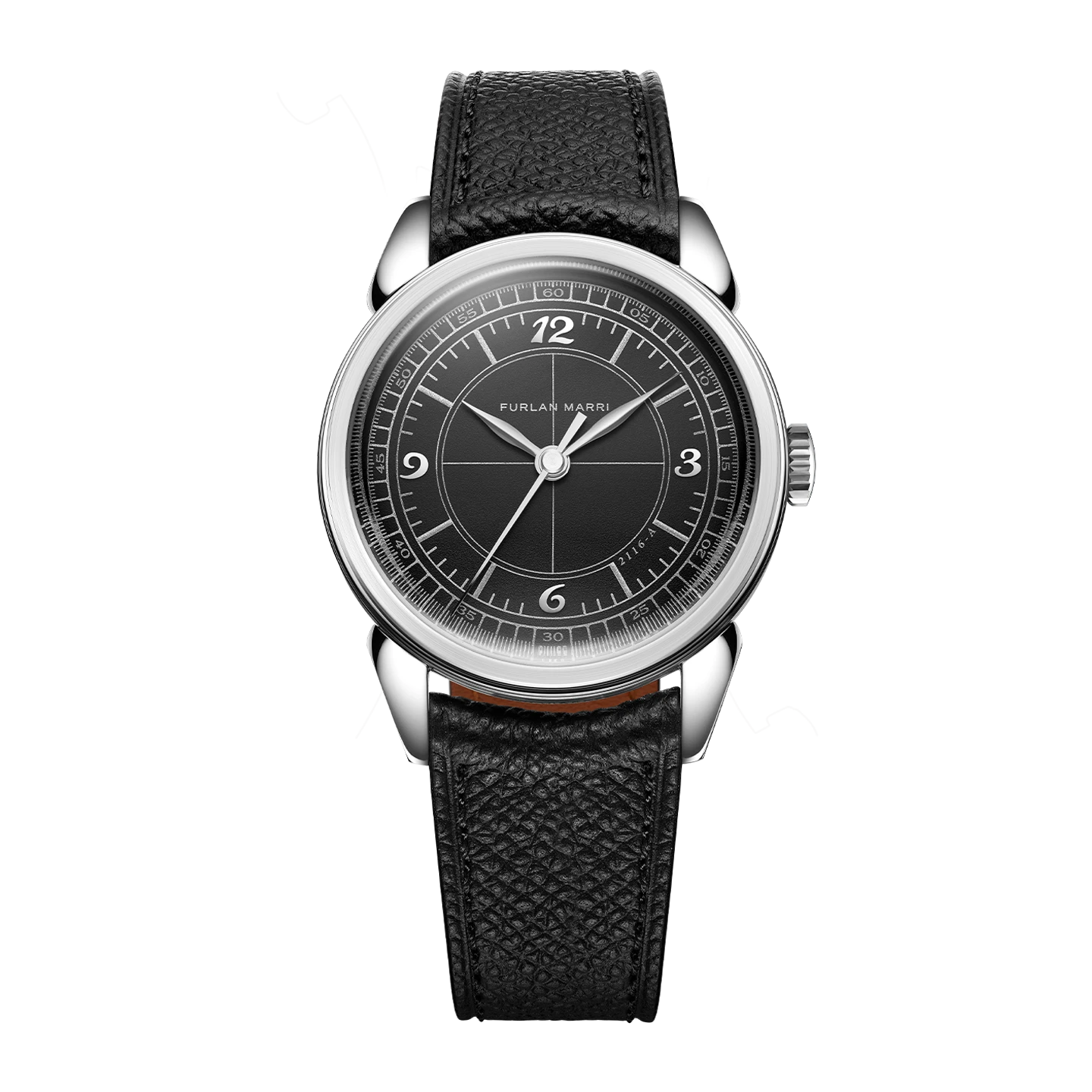
- Furlan Marri Serie 2116: Applied Breguet numerals + curved hands on sector dial
- Sero Watch Company Signature Collection: Engraved Breguet numerals + heat-blued spade hands on dress classics
Current pricing: Breguet Classique $15,000–40,000+ · Patek Philippe Calatrava with Breguet hands $20,000–50,000+ · Microbrands (Sero, Furlan Marri) $300–800
2. Dauphine Hands #
Origin: Emerged 1940s
Etymology: Named after "dauphin" (French for "eldest son of king"). Dauphin's coat-of-arms featured dolphins, connecting both theories.
Defining Characteristics #
- Triangular/diamond shape
- Wide base tapering to sharp point
- Faceted (central ridge creating depth)
- Clean geometric elegance
- Often polished to catch light dramatically
Grand Seiko Mastery #
Grand Seiko arguably executes dauphine hands better than any manufacturer. Their diamond-polished facets create mirror-like reflections rivaling brands costing 3× more.
- Zaratsu case polishing technique applied to hands
- Diamond-milled hand tips (micro-beveled edges)
- Distortion-free mirror finishes
- Approximately 80% of Grand Seiko collection features dauphine hands
Grand Seiko Heritage Snowflake SBGA211: Iconic titanium Spring Drive featuring perfectly executed dauphine hands catching light across faceted surfaces. ~$5,800.
Who Uses Dauphine Hands Best #
- Grand Seiko: SBGA211 Snowflake, various Heritage models. Razor-sharp faceting, flawless polishing.
- Patek Philippe: Calatrava collection, Nautilus (baton-dauphine hybrid). Classical elegance at $20,000–80,000.
- Jaeger-LeCoultre: Reverso and Master Ultra Thin collections. Art Deco refinement.
- Longines: Conquest Heritage series. Accessible Swiss execution $1,500–3,000.
Microbrands: AnOrdain Model 1 features polished baton seconds + Roman numerals on enamel dial (Parisian Blue, etc.)
Why dauphine hands matter: Most versatile hand style transitioning seamlessly between dress watches, sports-elegant watches, and even dive watches when executed wider for lume application. Light plays across facets creating dynamic appearance changing with wrist movement — static photos never capture dauphine hand beauty.
3. Alpha Hands #
Origin: Mid-20th century · Etymology: Named after Greek letter Alpha (Α)
Defining Characteristics #
- Triangular shape with thin tapered neck/stem at base
- Narrow base flaring outward before tapering to sharp point
- Spear-tip profile
- Both hour and minute hands share similar profile (differentiated by size)
Key difference vs. Dauphine: Dauphine has wide base tapering to point (triangle/diamond). Alpha has thin neck at base, flares wider mid-shaft, tapers to point (spear/lance).
Who Uses Alpha Hands Best #
- A. Lange & Söhne: Datograph Perpetual Tourbillon, 1815 Rattrapante chronographs feature exquisitely finished alpha hands.
- IWC: Big Pilot collection, Portuguese line. Alpha hands suit both tool and dress IWC aesthetics.
- Parmigiani Fleurier: Tonda collection features signature alpha hands.
Current pricing: A. Lange & Söhne $25,000–200,000+ · IWC Portuguese $8,000–20,000 · Parmigiani Tonda $10,000–30,000
4. Feuille Hands (Leaf Hands) #
Origin: Classical watchmaking tradition · Etymology: "Feuille" = French for "leaf"
Defining Characteristics #
- Organic leaf/petal shape
- Thin at stem, widens at center, tapers to point at tip
- Often curved (three-dimensional profile)
- Elegant, flowing silhouette
Who Uses Feuille Hands Best #
- Blancpain: Villeret collection, particularly ultra-thin models. Delicate feuille hands on enamel dials.
- IWC: Portofino collection. Curved feuille hands enhancing dress watch elegance.
- Longines: Master Collection, Evidenza line. Accessible Swiss feuille execution.
- H. Moser & Cie: Endeavour Centre Seconds models. Modern interpretation with bold colored dials.
- Omega: Vintage references like Ref. 2292 feature blued feuille hands (highly sought by collectors).
Microbrands:
- Furlan Marri Outback Elegy: Thick tapering leaf/curved domed hands + applied Roman numerals
- Fears Brunswick Collection: Skeletonized leaf/feuille hands + Roman numerals on heritage dial
Current pricing: Blancpain Villeret $10,000–25,000 · IWC Portofino $4,500–12,000 · Longines Master Collection $1,800–4,000 · Furlan Marri $400–800 · Fears Brunswick $1,500–2,500
5. Baton Hands (Stick Hands) #
Origin: Early 20th century · Etymology: "Baton" = stick/rod
Defining Characteristics #
- Simple rectangular shape with straight edges
- Uniform width (or minimal taper)
- Flat or rounded ends
- Minimalist, unfussy design
Philosophy: Maximum simplicity = maximum versatility. No-nonsense time indication without decorative elements.
Who Uses Baton Hands Best #
- Rolex: Datejust and Day-Date collections. Iconic baton hands on jubilee/president bracelets define understated luxury.
- Audemars Piguet: Royal Oak original design (1972) featured distinctive integrated baton hands matching tapisserie dial.
- Patek Philippe: Nautilus uses baton-style hands complementing porthole case design.
Current pricing: Rolex Datejust $8,000–15,000 · Audemars Piguet Royal Oak $25,000–80,000+ · Patek Philippe Nautilus $35,000–150,000+
6. Sword Hands #
Origin: Early 20th century, popularized by Cartier Tank (1918)
Defining Characteristics #
- Straight parallel sides with triangular pointed tip (sword blade profile)
- Often central ridge emphasizing sword motif
- Can be slender or broad
- Frequently skeletonized
Who Uses Sword Hands Best #
- Cartier: Tank collection (1918–present), Santos de Cartier. Blued sword hands define Cartier dress watch aesthetic. $3,000–50,000+.
- Omega: Seamaster 300M features skeletonized sword hands filled with Super-LumiNova. $5,000–8,000.
- Panerai: Submersible and Luminor collections use broad sword hands. Oversized lume-filled execution. $8,000–25,000+.
Microbrands: Furlan Marri Outback Elegy curved domed sword hands · AnOrdain Model 2 rounded sword-like hands on enamel dials
7. Cathedral Hands #
Origin: 1920s–1930s military watches · Etymology: Segmented design resembling Gothic cathedral stained glass windows
Defining Characteristics #
- Bulbous hour hand (bishop's mitre profile)
- Segmented/windowed construction
- Luminous material fills window segments
- Slender pointed minute hand
- Vintage military aesthetic with large surface area for lume
Who Uses Cathedral Hands Best #
- Oris: Big Crown collection extensively features cathedral hands. $1,800–3,500.
- Seiko: Prospex Alpinist series (SPB121, etc.) Japanese interpretation of European military tradition. $700–1,200.
- Hamilton: Khaki Field Mechanical uses cathedral hands evoking vintage military field watches. $400–650.
8. Syringe Hands #
Origin: 1930s · Etymology: Resembles medical hypodermic syringe
Defining Characteristics #
- Straight body section tapering to thin needle-like point
- Sharp, precise tip
- Often wider body holds generous lume
- Functional, utilitarian profile
Who Uses Syringe Hands Best #
- Patek Philippe: Extensively uses syringe hands across Calatrava and Grand Complications (Calatrava 5226G, Grand Complications 5320G). $30,000–300,000+.
- Blancpain: Fifty Fathoms Bathyscaphe series features "cubist syringe hands" on dive watches. $10,000–15,000.
- Sinn: Flieger 103 chronograph uses classic syringe hands. German pilot watch tradition. $1,500–2,500.
Microbrands: AnOrdain Model 1 features skeletonized syringe hour/minute hands + Roman numerals on enamel dial.
9. Mercedes Hands #
Origin: 1950s Rolex · Etymology: Hour hand three-pointed star resembles Mercedes-Benz logo
Defining Characteristics #
- Circular hour hand with three-sectioned design
- Tri-pointed star motif
- Large lume-filled surface area
- Typically paired with sword-shaped minute hand
- Lollipop seconds hand (small luminous circle)
The mystery: No official connection to Mercedes-Benz exists. Likely evolved from cathedral hands for improved underwater legibility, logo resemblance coincidental.
Who Uses Mercedes Hands #
Rolex Professional Collection: Submariner (most iconic), GMT-Master/GMT-Master II, Explorer, Sea-Dweller/Deepsea, Yacht-Master. Only exception: Daytona chronograph doesn't use Mercedes hands.
Current pricing: Rolex Submariner $10,000–20,000 · GMT-Master II $10,000–45,000 · Explorer $7,000–12,000
Why Mercedes hands matter: Instant brand recognition — Mercedes hands = Rolex in watch enthusiast consciousness. Most recognizable hand style in watchmaking. Three-sectioned hour hand provides generous lume application and differentiation from minute hand underwater.
10. Snowflake Hands #
Origin: 1969 Tudor Submariner Refs. 7016 and 7021 · Etymology: Angular diamond-shaped hour hand resembles stylized snowflake
Defining Characteristics #
- Bold square/diamond-shaped hour hand
- Large lume-filled surface area
- Sword-shaped minute hand
- Sometimes snowflake-tipped seconds hand
Historical Development #
Tudor's Rolex shadow (1954–1968): Original Tudor Submariners used Rolex Mercedes hands — virtually identical to Rolex Submariner.
French Navy request (1969): Marine Nationale requested improved underwater legibility. Mercedes hands had insufficient lume visibility in murky conditions. Solution: Large square hour hand = maximum lume surface, paired with square hour markers for instant differentiation.
Modern revival (2012): Tudor reintroduced snowflake hands on Black Bay and Pelagos collections.
Who Uses Snowflake Hands #
Tudor exclusively: Snowflake hands = Tudor signature as definitively as Mercedes = Rolex. 100% of Black Bay and Pelagos collections.
Current models: Black Bay 58 $3,700–4,200 · Black Bay (various) $3,500–5,000 · Black Bay GMT $4,000–4,500 · Pelagos $4,500–5,200
The achievement: Tudor transformed liability (couldn't use Rolex Mercedes hands) into asset — creating more recognizable signature hand than 99% of Swiss brands.
11. Arrow Hands (Broad Arrow Hands) #
Origin: Mid-20th century · Etymology: Large triangular arrow-shaped tip
Most Associated with Omega #
1957 Trilogy: Omega released three legendary tool watches featuring arrow hands: Seamaster 300 (dive watch), Speedmaster (chronograph), Railmaster (anti-magnetic).
Modern Omega arrow hands: Seamaster Planet Ocean $5,500–8,500 · Seamaster 300 Heritage $6,000–7,500
Other brands: Seiko Prospex Turtle $400–600 · Breitling some Superocean models
12. Lollipop Hands #
Origin: Mid-20th century · Etymology: Circular element resembles lollipop candy
Defining Characteristics #
- Circular ball/disc somewhere along hand length
- Almost exclusively used on seconds hand
- Creates distinctive visual element, often luminous
Famous Examples #
- Rolex Explorer Ref. 1655 (1971–1984): Nicknamed "Steve McQueen Explorer" or "Orange Hand." Bright orange lollipop seconds hand. Current values: $20,000–40,000+.
- Omega Heritage Seamaster 300: Vintage-correct lollipop seconds hand. $6,000–7,500.
- Héron Watches Gladiateur MMLXV: Lollipop seconds hand + bold applied Roman numerals. $475–550.
13. Teardrop Hands (Lacrima Hands) #
Origin: Modern design element · Etymology: Teardrop/water droplet shape
Most Associated with Isotope Watches #
British microbrand Isotope Watches (founded 2016) made teardrop/"Lacrima" (Italian for teardrop) their signature design element appearing on hands, logo, lugs, and case details.
- Hydrium dive watches: Signature "i" shaped teardrop hands
- GMT 0° Terra Maris: Rotating Lacrima disc GMT display
- Mercury × Revolution: Teardrop logo at 12 o'clock
Pricing: £800–3,600 ($1,020–4,600)
14. Foundation Hands #
"Foundation hands" is not standard horological terminology. This may refer to "foundational" basic hand styles (baton, dauphine, alpha) representing fundamental hand designs from which variations derive, brand-specific terminology, or regional/alternative naming conventions.
How to Choose Watch Hands: Matching Style to Purpose #
Dress Watches → Refined Hands #
Best choices: Breguet/Pomme (classical haute horology) · Dauphine (versatile elegance) · Feuille/Leaf (organic softness) · Alpha (geometric sophistication) · Syringe (precise refinement)
Dive Watches → High-Legibility Hands #
Best choices: Mercedes (maximum lume, Rolex recognition) · Snowflake (maximum lume, Tudor signature) · Arrow (large lume-filled tip, Omega tradition) · Sword wide (generous lume, Omega/Panerai)
Pilot/Field Watches → Functional Hands #
Best choices: Syringe (German Flieger tradition) · Cathedral (vintage military aesthetic) · Sword (versatile readability) · Arrow (tool watch legibility)
Sports-Elegant Watches → Balanced Hands #
Best choices: Dauphine (Grand Seiko sports models) · Baton (Royal Oak, Nautilus) · Alpha (IWC Portuguese) · Sword (Cartier Santos)
Brand Signatures: Who Owns Which Hands #
- Rolex = Mercedes hands — Submariner, GMT-Master, Explorer, Sea-Dweller
- Tudor = Snowflake hands — 100% of Black Bay and Pelagos
- Omega = Arrow/Broad Arrow hands — Heritage Seamaster 300, Planet Ocean
- Grand Seiko = Dauphine hands — 80% of collection, razor-sharp faceting mastery
- Cartier = Sword hands — Tank, Santos signature blued steel
- Breguet = Pomme hands — Classique collection honoring 1783 invention
- A. Lange & Söhne = Alpha hands — German haute horology signature
- Blancpain = Feuille hands — Villeret ultra-thin dress watches
- Oris = Cathedral hands — Big Crown vintage pilot aesthetic
The Value of Proper Hand Execution #
Why hand finishing separates $500 microbrands from $50,000 manufactures:
Grand Seiko Dauphine Example: Microbrand dauphine hands feature machine-cut triangular shapes with basic polishing — functional but unremarkable. Grand Seiko dauphine hands receive Zaratsu polishing (distortion-free mirror finish), diamond-milled tips (microscopic beveling), and hand-finished facets. Price difference: $500 microbrand vs. $5,800 Grand Seiko justified partly by hand execution quality.
Breguet Pomme Example: Affordable Breguet-style hands feature punched hollow circles with basic bluing. Authentic Breguet hands have hand-finished eccentric pomme apertures, traditional heat-bluing, perfectly balanced weight, and micro-polishing throughout. Price difference: $500 homage vs. $25,000 Breguet Classique.
Conclusion: Tiny Pointers, Massive Impact #
Watch hands represent watchmaking's most visible yet most underappreciated component. From Abraham-Louis Breguet's revolutionary 1783 pomme hands to Tudor's 1969 snowflake design developed for French Navy divers to Rolex's iconic Mercedes configuration — hand styles evolved through centuries balancing legibility, brand identity, and aesthetic refinement.
The right hands enable instant time reading, define brand signature (Mercedes = Rolex, Snowflake = Tudor), establish aesthetic character (sword = sporty, feuille = elegant), and justify pricing. For collectors seeking watches offering superior design execution, understanding hand styles separates informed purchasing from superficial brand-chasing.
Find Your Perfect Watch
Browse our curated collection of indie and microbrand timepieces.
📚 Related Reading
Handpicked articles from the same topic