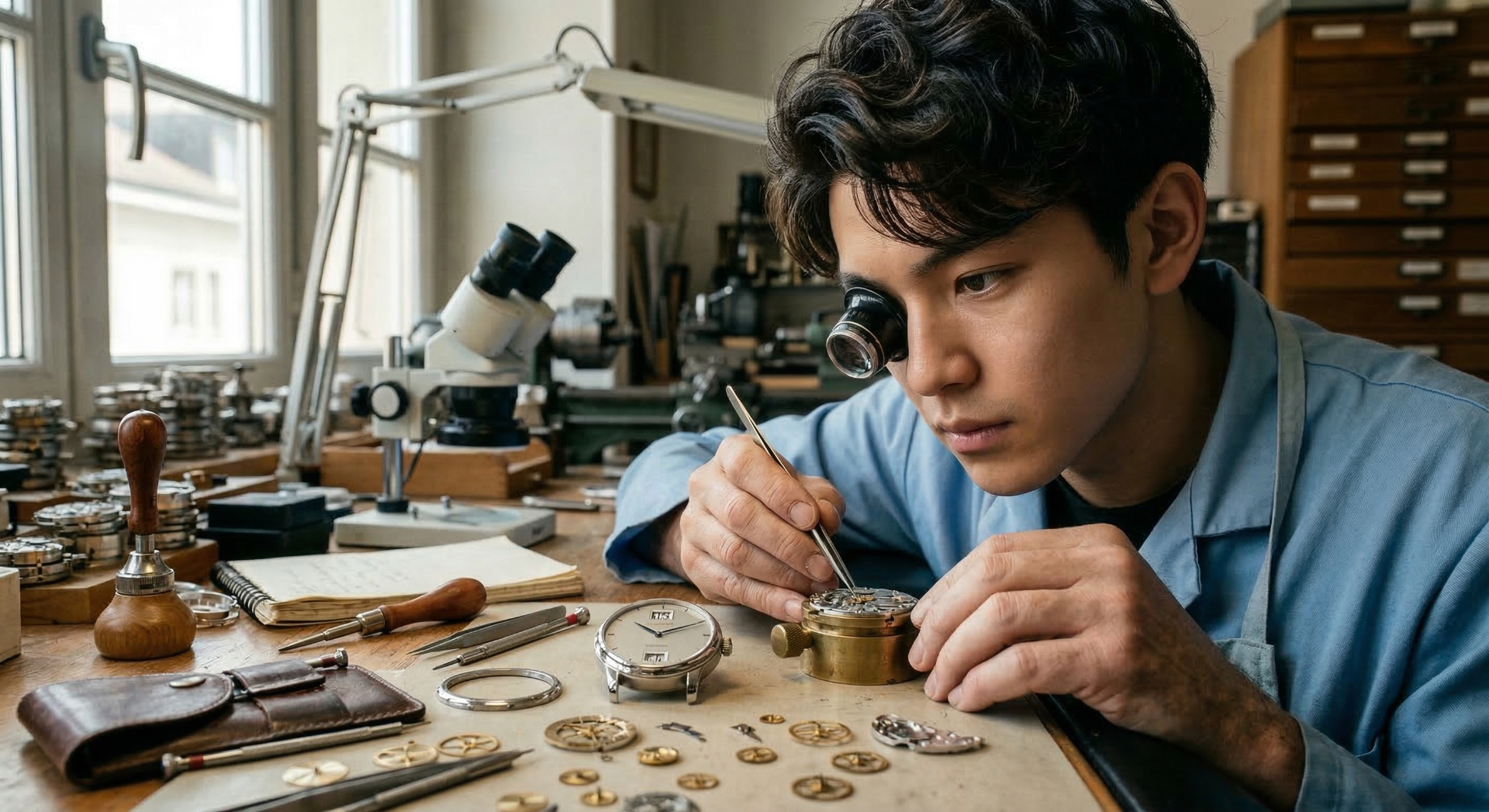
How Much Does It Cost to Launch a Microbrand?
From $20,000 bootstraps to $110,000 proper launches—breaking down every dollar of watch microbrand startup costs with verified manufacturer data, real MOQ pricing, and component-by-component analysis.
Steven Thompson
Independent Watchmaker · 10 Years Experience
Reviewed by Indie Watches
Editorially reviewed for accuracy
⚡ Key Takeaways
- ✓Median startup cost (all watch brands): $8,500—but this includes simple fashion watch operations slapping logos on catalog designs.
- ✓Real microbrand launch (proper execution): $20,000-50,000 minimum—covering design, tooling, MOQ (Minimum Order Quantity), branding, marketing.
- ✓First-year operation (doing it right): ~$110,000—including inventory, marketing, website, photography, customer service, warranty reserves.
📑 Table of Contents
Most aspiring watch brand founders ask the same question: "How much money do I actually need?"
📚 Explore our full watches guide →
The answer from forums, Reddit, and YouTube? "Anywhere from $5,000 to $100,000+." Completely unhelpful.
Here's the truth based on verified manufacturer data, real founder experiences, and industry sources:
- Median startup cost (all watch brands): $8,500—but this includes simple fashion watch operations slapping logos on catalog designs.
- Real microbrand launch (proper execution): $20,000-50,000 minimum—covering design, tooling, MOQ (Minimum Order Quantity), branding, marketing.
- First-year operation (doing it right): ~$110,000—including inventory, marketing, website, photography, customer service, warranty reserves.
The brutal reality: 90% of startups fail. Those succeeding don't chase lowest factory costs—they invest strategically in design, quality components, and marketing differentiating them from 10,000 other microbrands copying vintage Rolex designs.
This comprehensive breakdown examines every single cost launching a microbrand—from trademark registration ($3,000-5,000) to prototype development ($10,000-15,000) to first production run ($24,000-150,000 depending on specs)—using verified manufacturer MOQs, component pricing, and real founder budgets.
No vague ranges. No "it depends" cop-outs. Actual numbers.
Understanding MOQ (Minimum Order Quantity): The Foundation #
What Is MOQ and Why It Matters #
MOQ = Minimum Order Quantity — Smallest number of units a factory requires beginning production.
Why factories require MOQs:
- Economies of scale: Raw materials (stainless steel, sapphire, movements) purchased in bulk
- Tooling/setup costs: Opening molds, plating cases, running assembly lines = fixed costs regardless of 50 or 500 units
- Supplier restrictions: Movement suppliers (Miyota, Seiko, Sellita), dial manufacturers, crystal suppliers have their own MOQs
Standard MOQ Requirements by Watch Type #
Alloy/fashion watches:
- MOQ: 300-500 pieces per design
- Why lower: Alloy easier to work with, less expensive tooling
Stainless steel watches (most microbrands):
- MOQ: 300-500 pieces per design
- Why standard: Advanced tooling required, harder material machining
Titanium/premium materials:
- MOQ: 500+ pieces
- Why higher: Specialized tooling, higher rejection rates, difficult machining
Complexity factors:
- Simple 3-hand quartz: Lower MOQ possible (300 pieces)
- Complicated chronographs, GMTs, skeleton dials: Higher MOQ required (500+ pieces), more supplier dependencies
MOQ Breakdown: How Manufacturers Calculate #
Typical 300-piece MOQ can be split:
- 3 dial colors × 100 pieces each
- 2 strap options × 150 pieces each
- Single design, multiple finishing (brushed, polished, PVD) × 100 each
Can You Negotiate Lower MOQs? #
Some manufacturers offer flexibility:
- 30-50 unit MOQs: Available from specialized microbrand-focused manufacturers but: higher per-unit cost (premium for small batch), limited customization options, longer lead times (not priority production)
- 100-150 unit MOQs: ODM (Original Design Manufacturing) using factory's existing designs. Your logo + minor customizations. Lower barrier to entry but less differentiation.
- 200-300 unit MOQs: Some manufacturers flexible for long-term relationship potential. Must demonstrate serious business plan. Accept higher per-unit pricing.
Reality: For full OEM (Original Equipment Manufacturing) custom design, expect 300-500 pieces standard from reputable manufacturers.
Cost Breakdown by Component #
Movement Costs (Wholesale Pricing) #
Japanese Movements
Seiko NH35 automatic:
- Cost: $35-50 per unit (wholesale)
- Specs: 24 jewels, 41-hour power reserve, hacking seconds, hand-winding
- Market position: Entry-level workhorse—bulletproof reliability
- Used by: Majority of microbrands $300-600 retail
Seiko NH38 automatic (no-date variant):
- Cost: $35-48 per unit
- Specs: Same as NH35 minus date complication
- Advantage: Cleaner dial aesthetics
Miyota 8215 automatic:
- Cost: $30-45 per unit
- Specs: 21 jewels, 40-hour power reserve
- Note: Slightly louder rotor vs. Seiko NH35
Miyota 9015 automatic:
- Cost: $70-90 per unit
- Specs: 24 jewels, 42-hour power reserve, 28,800 vph, better finishing
- Market position: Mid-range sweet spot—thinner movement (3.9mm), smoother operation
- Used by: $400-800 retail microbrands
Seiko VH31 quartz (hybrid sweep):
- Cost: $12-18 per unit
- Specs: Semi-sweeping seconds hand (not traditional quartz tick)
- Advantage: Quartz accuracy, mechanical aesthetics
Swiss Movements
Sellita SW200-1 automatic:
- Cost: $150-200 per unit
- Specs: ETA 2824-2 clone, 26 jewels, 38-hour power reserve
- Market position: "Swiss Made" on dial justifies premium pricing
- Used by: $600-1,500 retail microbrands
Sellita SW210-1 hand-winding:
- Cost: $130-180 per unit
- Specs: ETA Peseux 7001 clone, slim profile
- Used by: Dress watches, anOrdain, others
Ronda quartz:
- Cost: $8-15 per unit
- Advantage: Swiss quartz credibility
Chinese Movements
Seagull ST1901 manual chronograph:
- Cost: $50-80 per unit
- Specs: Column-wheel chronograph (Venus 175 clone)
- Used by: Budget chronograph microbrands
Seagull ST8000 series tourbillon:
- Cost: $300-500 per unit
- Market position: Affordable complication
- Stigma: "Chinese tourbillon" perception issue in luxury market
Movement Choice Impact on Total Budget (300-piece MOQ)
| Movement | Cost per unit | Total movement cost |
|---|---|---|
| Seiko NH35 | $40 | $12,000 |
| Miyota 9015 | $80 | $24,000 |
| Sellita SW200 | $175 | $52,500 |
Difference: $40,500 between Japanese entry vs. Swiss—this alone makes/breaks pricing strategy.
Case & Crystal Costs #
Case Materials (per unit, 300-piece MOQ)
316L stainless steel (standard):
- Simple 3-part case: $15-30 per unit
- Complex multi-link bracelet case: $40-80 per unit
- Finishing quality determines price
316L stainless steel (premium finishing):
- Advanced brushing/polishing: $50-100 per unit
- Zaratsu-style polishing: $80-150 per unit (rarely offered at microbrand MOQs)
Titanium:
- Grade 2/5 titanium case: $60-120 per unit
- Why expensive: Harder to machine, specialized tooling, higher rejection rates
- DLC/Cerakote coating: +$15-30 per unit
Bronze (CuSn8):
- Cast bronze case: $40-80 per unit
- Patina appeal but manufacturing complexity
Forged carbon fiber:
- Cost: $60-120 per unit
- Rejection rate: High (pattern consistency difficult)
Damascus steel:
- Cost: $100-200+ per unit
- Why expensive: Forge-welding multiple steel layers, pattern creation labor-intensive, difficult machining (high tool wear)
Crystal Options (per unit)
Mineral crystal:
- Cost: $2-5 per unit
- Market: Entry-level only ($200-400 retail)
Sapphire crystal (flat):
- Cost: $8-15 per unit
- Standard: Most microbrands $400+ retail
Sapphire crystal (domed):
- Cost: $12-20 per unit
- Aesthetic: Vintage-inspired, distortion
Sapphire with anti-reflective coating:
- Single-sided AR: +$3-5 per unit
- Double-sided AR: +$5-10 per unit
- Critical: Dial legibility, premium perception
Dial & Hands Costs #
Dial Complexity (per unit)
Simple printed dial:
- Cost: $3-8 per unit
- Construction: Brass base, lacquer finish, pad-printed indices/text
Applied indices dial:
- Cost: $8-20 per unit
- Construction: Individual hour markers soldered to dial
- Premium perception
Sunburst/guilloche finish:
- Cost: +$5-15 per unit above base dial
- Manufacturing: Machine-engraved patterns
Enamel dial:
- Cost: $80-300+ per unit
- Why expensive: Multiple 830°C+ firings, hand-application, 30-90% rejection rate
- Reality: Impossible at standard microbrand MOQs unless core competency (anOrdain)
Hands (per set)
Basic hands (simple baton/dauphine):
- Cost: $2-6 per set
- Finish: Polished steel
Luminous hands:
- Cost: $4-10 per set
- Super-LumiNova application: Hand-painted or filled
Thermally blued hands:
- Cost: $8-20+ per set
- Process: Heat-treating achieving blue color
- Quality variation: Cheap vs. proper bluing dramatic difference
Strap & Bracelet Costs #
Leather Straps (per unit)
Basic genuine leather:
- Cost: $3-8 per strap
- Market: Entry-level
Premium leather (Horween, Italian):
- Cost: $12-25 per strap
- Suppliers: Horween Chromexcel, Italian calfskin
- Perception: Significant value add
Exotic leathers (alligator, ostrich):
- Cost: $40-100+ per strap
- Market: Luxury positioning
Rubber/Silicone Straps
Basic FKM rubber:
- Cost: $4-10 per strap
- Dive watch standard
Integrated rubber (complex molding):
- Cost: $15-30 per strap
- Tooling: Custom molds expensive
Metal Bracelets
Folded-link bracelet:
- Cost: $10-20 per bracelet
- Quality: Budget, feels cheap
- Market: Avoid if possible
Solid-link bracelet (basic):
- Cost: $25-50 per bracelet
- Construction: Solid links, basic clasp
Solid-link bracelet (premium):
- Cost: $50-100 per bracelet
- Features: Milled clasp, micro-adjustments, screw links, polished/brushed finishing
- Perception: Dramatically impacts perceived value
Examples:
- Christopher Ward bracelet quality: ~$60-80 manufacturing cost
- Seiko SPB143 "62MAS" bracelet: ~$40-60 cost (retail watch $1,000)
- Tudor Black Bay bracelet: ~$80-120 cost (retail watch $3,500+)
Total Manufacturing Cost Examples (300-Piece MOQ) #
Scenario 1: Budget Entry Microbrand ($200-400 Retail) #
Target: Maximum specs for minimum cash—volume sales
Component breakdown (per unit):
- Movement: Seiko NH35 automatic — $40
- Case: 316L stainless basic brushing — $20
- Crystal: Flat sapphire, single AR — $10
- Dial: Simple printed, minimal indices — $5
- Hands: Basic luminous — $5
- Strap: Genuine leather basic — $6
- Assembly & QC: $8
- Packaging: Basic box — $4
Total manufacturing cost per unit: ~$98
300-piece MOQ total: $29,400
Retail pricing:
- Wholesale (if applicable): $200 (2X markup)
- Direct-to-consumer: $350-450 (3.5-4.5X markup)
Profit margin:
- Retail $400 - $98 cost = $302 gross profit per unit
- But must cover: marketing, website, photography, shipping, returns, warranty
Scenario 2: Mid-Range Enthusiast Microbrand ($400-800 Retail) #
Target: Better specs without luxury pricing—quality-focused collectors
Component breakdown (per unit):
- Movement: Miyota 9015 automatic — $80
- Case: 316L stainless mixed brush/polish — $40
- Crystal: Domed sapphire, double AR — $18
- Dial: Applied indices, sunburst finish — $15
- Hands: Luminous with better finishing — $8
- Bracelet: Solid-link with milled clasp — $60
- Assembly & QC: $12
- Packaging: Premium box with warranty card — $8
Total manufacturing cost per unit: ~$241
300-piece MOQ total: $72,300
Scenario 3: Premium Swiss-Movement Microbrand ($800-1,500 Retail) #
Target: "Swiss Made" credibility, haute horology aesthetics
Component breakdown (per unit):
- Movement: Sellita SW200-1 automatic — $175
- Case: 316L or titanium, premium finishing — $80
- Crystal: Box sapphire, double AR — $22
- Dial: Applied indices, super-lume, complex finishing — $25
- Hands: Thermally blued or high-quality polished — $15
- Bracelet: Premium solid-link, micro-adjust clasp — $85
- Assembly & QC: $18
- Packaging: Luxury presentation box — $15
Total manufacturing cost per unit: ~$435
300-piece MOQ total: $130,500
Retail pricing:
- Wholesale: $870 (2X markup)
- Direct-to-consumer: $1,100-1,500 (2.5-3.4X markup)
Profit margin:
Retail $1,200 - $435 cost = $765 gross profit per unit
Beyond Manufacturing: The Hidden Costs #
Design & Prototyping: $10,000-30,000 #
Design development:
DIY approach (if you have skills):
- CAD software: $500-2,000/year (SolidWorks, Fusion 360)
- Learning curve: Hundreds of hours
- Cost: Time investment
Hire designer:
- Freelance watch designer: $3,000-10,000 per model
- Includes: 2D technical drawings, 3D CAD models, engineering specs
- Critical: CAD files become exact manufacturing blueprints
Prototyping:
Standalone prototype (no production commitment):
- Cost: $10,000-15,000 (American Watch company data)
- Includes: Design, 3D renderings, working prototype
- Purpose: Testing before committing to 300-piece MOQ
Prototype included in production:
- Typical: 1 prototype per variation/color included when ordering 300+ pieces
- Additional prototypes: $1,000-3,000 each
Why prototypes matter: See actual size, weight, proportions, finishing quality before manufacturing 300 units. Skipping prototypes = risking $30,000-130,000 on untested design.
Trademark & Legal: $3,000-8,000 #
Trademark registration (essential):
Minimum markets:
- United States: $750-1,500 (Class 14 - timepieces)
- European Union: €1,000-2,000 (covers 27 countries)
- United Kingdom: £200-500 (post-Brexit separate)
- China: $500-1,000 (manufacturing location)
- Japan: $400-800
- Total minimum: $3,000-5,000
Why critical: Trademark disputes can force complete rebrand—packaging, website, social media, inventory becomes worthless. $3,000 now vs. $50,000 rebranding later.
Business incorporation:
- LLC/Ltd formation: $500-2,000 depending on jurisdiction
- Annual fees: $100-800/year
- Benefits: Liability protection, credibility with suppliers/customers
Design protection (optional but recommended):
- Design patent/registration: $2,000-5,000
- Purpose: Protect unique case design from copies
- Duration: Years of protection depending on jurisdiction
Website & E-Commerce: $2,000-15,000 #
Basic Shopify/WooCommerce setup:
- Platform fees: $29-299/month ($348-3,588/year)
- Theme: $0-300 (one-time)
- Apps/plugins: $50-200/month ($600-2,400/year)
- Total year 1 (DIY): $1,500-6,500
Professional website development:
- Custom design: $3,000-10,000
- Photography integration: Included or +$1,000-3,000
- Features: Product configurators, waitlist systems, email automation
- Total (professional): $5,000-15,000
Essential tools:
- Email marketing: $20-100/month (Klaviyo, Mailchimp)
- Customer service: $50-100/month (Zendesk, Gorgias)
- Analytics: $0-200/month (Google Analytics free, advanced paid)
Photography & Content: $5,000-20,000 #
Professional product photography:
- Basic product shots: $1,500-5,000 — Includes 10-20 images per watch, white background, detail shots
- Lifestyle photography: $3,000-10,000 — Includes on-wrist shots, lifestyle contexts, model fees. Critical: Selling emotional connection, not just specs.
Video production:
- Cost: $2,000-8,000
- Includes: 30-60 second promo video
- Usage: Website header, Instagram, Kickstarter
Content creation:
- Product descriptions: $500-2,000 (professional copywriter)
- Brand story: $1,000-3,000
- About Us, FAQ, etc.: $500-1,500
Total minimum: $5,000 | Total professional: $15,000-20,000
Marketing & Launch: $10,000-50,000 #
Kickstarter/crowdfunding launch:
- Video production: $3,000-10,000 (professional quality essential: Kickstarter success heavily video-dependent)
- Photography: $2,000-8,000 (lifestyle, product, founder shots)
- PR & influencer outreach: Microbrand review sites $500-2,000, YouTube reviewers $500-5,000, Instagram influencers $200-5,000 per post
Kickstarter fees:
- Platform: 5% of funds raised
- Payment processing: 3-5% of funds raised
- Total: 8-10% of campaign total
Example: Raise $50,000 on Kickstarter — Kickstarter takes $2,500, payment processing $1,500-2,500, net $45,000-46,000.
Traditional Marketing (if not crowdfunding):
Paid Advertising (Year 1):
- Facebook/Instagram ads: $3,000-15,000
- Google Ads: $2,000-10,000
- Total: $5,000-25,000
Organic Marketing:
- Social media management: $500-3,000/month (if outsourced)
- Content creation: $1,000-5,000/month
- SEO: $1,000-5,000 (one-time optimization)
PR & Press:
- PR agency: $2,000-10,000/month (3-6 month campaigns)
- DIY PR: Free but time-intensive
Shipping, Logistics & Fulfillment: $5,000-15,000 #
Initial Inventory Shipping (factory to warehouse):
- 300 watches from China to US/EU: $1,500-4,000 (sea freight)
- Insurance: $500-1,500 (10-20% of value)
- Customs/duties: $1,000-3,000 (varies by destination)
Packaging Materials:
- Custom watch boxes: $4-15 per unit (bulk order)
- Outer shipping boxes: $1-3 per unit
- Tissue, cards, inserts: $0.50-2 per unit
- 300-unit packaging total: $1,650-6,000
Fulfillment Options:
Self-fulfillment:
- Shipping supplies: $500-1,500
- Labor: Your time
- Pros: Full control, lower cost
- Cons: Time-consuming, scaling difficult
Third-party logistics (3PL):
- Setup: $500-2,000
- Monthly fees: $200-1,000
- Per-order fees: $3-8 per shipment
- Storage: $50-300/month
- Pros: Scalable, professional
- Cons: Less control, ongoing costs
Warranty & Returns Reserve: $3,000-10,000 #
Industry standard: Set aside 5-10% of revenue for warranty claims, defective units, returns.
300-unit production @ $700 retail = $210,000 gross revenue
- 5% reserve: $10,500
- 10% reserve: $21,000
Why essential:
- Movement failures: 1-3% expected (NH35/Miyota generally reliable)
- Case defects: 1-2%
- Customer returns: 2-5%
- Damaged in shipping: 1-2%
First year: Budget $3,000-10,000 warranty reserve minimum.
Total Startup Cost Breakdown #
Budget Microbrand Launch: $30,000-50,000 #
- Manufacturing (300 units @ $98/unit): $29,400
- Design & prototyping: $2,000 (DIY CAD)
- Trademark registration: $3,000
- Website (Shopify DIY): $2,000
- Photography (basic): $2,000
- Kickstarter campaign: $5,000
- Shipping & logistics: $3,000
- Warranty reserve: $3,000
- Miscellaneous (10% buffer): $5,000
Total: $54,400
Reality check: Cutting corners (DIY everything possible) realistically $30,000-40,000 minimum.
Mid-Range Microbrand Launch: $70,000-100,000 #
- Manufacturing (300 units @ $241/unit): $72,300
- Design & prototyping: $10,000
- Trademark registration: $5,000
- Website (professional): $8,000
- Photography (professional): $8,000
- Marketing (Kickstarter or ads): $10,000
- Shipping & logistics: $6,000
- Warranty reserve: $6,000
- Miscellaneous (10% buffer): $12,500
Total: $137,800
Realistic execution: $70,000-100,000 range.
Premium Microbrand Launch: $150,000-250,000 #
- Manufacturing (300 units @ $435/unit): $130,500
- Design & prototyping: $20,000
- Trademark registration (global): $8,000
- Website (custom development): $15,000
- Photography & video (premium): $20,000
- Marketing (comprehensive): $25,000
- Shipping & logistics: $10,000
- Warranty reserve: $10,000
- PR agency (6 months): $30,000
- Miscellaneous (10% buffer): $25,000
Total: $293,500
Realistic execution: $150,000-250,000.
The First-Year Reality: $110,000 Total #
Based on Chronoscout Founder Data — Year 1 Comprehensive Budget (Doing it Properly):
Pre-launch:
- Design, prototyping, samples: $15,000
- Trademark, legal, incorporation: $5,000
- Website development: $8,000
Production:
- Manufacturing (300 units mid-range): $72,000
Launch:
- Photography, video, content: $12,000
- Kickstarter campaign / marketing: $15,000
Operations:
- Shipping, logistics, fulfillment: $8,000
- Website hosting, tools, software: $3,000
- Customer service, warranty: $5,000
Ongoing:
- Inventory replenishment (if successful): $20,000
- Continued marketing: $10,000
Buffer (unexpected costs): $10,000
Total Year 1: ~$183,000
Median proper launch: $110,000 (Chronoscout data)
How Successful Microbrands Funded Launches #
Kickstarter/Crowdfunding (Most Common) #
Advantages:
- Validation: Proves demand before manufacturing
- Customer acquisition: Backers become brand advocates
- Funding: Cash upfront covering production
- Marketing: Campaign itself generates awareness
Typical structure:
- Campaign goal: $30,000-80,000
- Early bird pricing: 30-40% off retail
- Regular backing: 20-30% off retail
- Retail post-campaign: Full price
Example:
- Goal: $50,000
- Early bird (50 watches): $350 each = $17,500
- Regular (150 watches): $450 each = $67,500
- Total raised: $85,000
- Kickstarter fees (8-10%): -$7,650
- Net: $77,350
- Manufacturing cost (200 units @ $150): -$30,000
- Fulfillment, shipping: -$8,000
- Leftover for marketing, operations: $39,350
Personal Savings (Second Most Common) #
Bootstrapping with personal funds remains the most common path for founders who want full control.
Friends & Family Investment #
Typical structure:
- Amount: $10,000-100,000
- Terms: Equity stake, profit sharing, or loan
- Advantage: Lower pressure than VC
- Disadvantage: Personal relationships at risk
Real example (Button Watch founder): "We collected approximately €30,000 from my parents and siblings to start the business. With that small budget we have had to set up the web, produce the first collection and cover all the marketing costs."
Small Business Loans #
Bank loans:
- Amount: $10,000-100,000+
- Requirements: Business plan, collateral, credit score
- Terms: Interest rates 6-20%
SBA loans (US):
- Amount: Up to $5 million
- Terms: Government-backed, better rates
- Requirements: Detailed business plan, projections
Angel Investors / VC (Rare for Microbrands) #
Reality: Most VCs don't invest in $50,000-100,000 microbrand launches (too small, too niche).
When it happens: Founder has proven track record, unique technology/patent, clear path to $10M+ revenue.
Common Mistakes That Waste Money #
1. Chasing Lowest Factory Cost #
The trap: Finding manufacturer offering $80/unit when competitors quote $150/unit.
Reality: Cheap = cheap materials (mineral crystal, folded bracelet, poor finishing). High rejection rates. Customer complaints. Brand reputation destroyed.
Smart approach: Pay mid-range pricing, demand quality samples, verify materials.
2. Overproducing First Run #
The trap: "500-piece MOQ gets better per-unit cost than 300!"
Reality: Tying up $100,000+ in untested inventory. If design flaws discovered, 500 units affected. Storage costs. Cash flow strangled.
Smart approach: Start 300 pieces, validate market, then scale.
3. Skimping on Photography #
The trap: "I'll use iPhone photos to save $5,000."
Reality: Poor images = poor sales conversion. Unprofessional brand perception. Lost revenue far exceeds $5,000 savings.
Smart approach: Invest $5,000-10,000 professional photography. Critical ROI.
4. Ignoring Trademark Registration #
The trap: "I'll register trademark later when I'm successful."
Reality: Someone else registers your name. Forced rebrand = $50,000+ (new packaging, website, marketing). Lost momentum.
Smart approach: $3,000-5,000 trademark registration before launch. Non-negotiable.
5. Underestimating Marketing Costs #
The trap: "Product so good it'll sell itself."
Reality: 10,000+ microbrands launching annually. Organic reach near zero without paid marketing. Great product + zero awareness = zero sales.
Smart approach: Budget 20-30% of total startup costs for marketing.
Can You Launch For Less Than $20,000? #
Technically yes, but:
Ultra-Budget Approach: $15,000-20,000 #
How:
- ODM (not OEM): Use factory's existing design, add logo
- MOQ: Negotiate 200 units instead of 300
- Movement: Cheapest reliable (Seiko NH35 or Miyota 8215)
- Case: Basic stainless, minimal finishing
- Crystal: Sapphire (non-negotiable)
- Strap: Basic leather, no bracelet
- DIY: All design, website, photography, marketing yourself
| Item | Cost |
|---|---|
| Manufacturing (200 units @ $90) | $18,000 |
| Trademark | $2,000 (US only) |
| Website (Shopify DIY) | $500 |
| Photography (DIY + rented gear) | $500 |
| Marketing (purely organic + $1,000 Facebook ads) | $1,000 |
| Shipping | $2,000 |
| Miscellaneous | $1,000 |
Total: ~$25,000
Realistic minimum cutting every corner: $18,000-22,000.
Trade-offs:
- Limited differentiation (factory design = generic)
- Smaller inventory (200 vs. 300 = less color options)
- DIY everything (hundreds of hours personal time)
- Lower perceived value (affects pricing power)
Who this works for:
- Experienced designers doing own CAD
- Strong existing social media following (free marketing)
- Willing to accept lower margins testing market
The Verdict: How Much You Really Need #
- Absolute bare minimum (cutting every corner): $18,000-25,000 — ODM design, 200-unit MOQ, DIY everything. High risk, limited differentiation.
- Realistic budget microbrand: $30,000-50,000 — Custom OEM design, 300-unit MOQ, professional photography. Kickstarter campaign funding production.
- Properly executed microbrand: $70,000-110,000 — Full custom design, quality components, comprehensive marketing. First-year operations included.
- Premium positioning microbrand: $150,000-250,000 — Swiss movements, premium materials, extensive marketing. Professional operations from day one.
The Real Question: Is It Worth It? #
Success rate: ~10% (90% of startups fail)
Why most fail:
- Underestimated costs (ran out of money)
- Poor differentiation (another Submariner homage)
- Weak marketing (great product, zero awareness)
- Quality issues (cheap manufacturing, customer complaints)
- No clear brand story (why does this exist?)
Who succeeds:
- Baltic: Vintage-inspired designs, strong brand story, quality execution
- Christopher Ward: Swiss movements, in-house complications, value positioning
- Nodus: Clean designs, reliable delivery, community engagement
- Zelos: Innovative materials, limited editions, Kickstarter mastery
- Brew: Unique retro aesthetics, strong visual identity
Common threads:
- Clear differentiation (not generic homages)
- Quality execution (sapphire, decent movements, good finishing)
- Strong marketing (Kickstarter, Instagram, reviews)
- Founder passion (love the process, not just idea of "owning a brand")
- Realistic budgets ($50,000-150,000+ investment)
Should You Launch a Microbrand? #
Launch if:
- ✅ You have $30,000-100,000 available (not borrowed from credit cards)
- ✅ You can afford losing it entirely (90% failure rate)
- ✅ You have unique design vision (not copying Rolex Submariner)
- ✅ You love entire process (manufacturing, marketing, customer service)
- ✅ You have 12-24 months timeline (not get-rich-quick)
Don't launch if:
- ❌ You have $5,000 hoping to "bootstrap"
- ❌ You expect passive income (this is 60-hour weeks)
- ❌ You think "product will sell itself"
- ❌ You're copying established designs
- ❌ You can't afford losing your investment
The brutal truth:
Most microbrands fail. Those succeeding invest $50,000-150,000+, work exhausting hours, face constant challenges, and maybe break even year 2-3.
But for those who succeed: Building something from nothing. Seeing your design on wrists worldwide. Creating community around your brand. Proving Swiss giants don't have monopoly on quality.
If you're passionate enough to risk $100,000 and 2 years of your life, the watch industry has room for genuinely innovative microbrands.
If you're looking for easy money, buy index funds.
❓ Frequently Asked Questions
Q:Can You Negotiate Lower MOQs?
Some manufacturers offer flexibility:
Q:Can You Launch For Less Than $20,000?
Technically yes, but:
Q:The Real Question: Is It Worth It?
Success rate: ~10% (90% of startups fail)
Find Your Perfect Watch
Browse our curated collection of indie and microbrand timepieces.
📚 Related Reading
Handpicked articles from the same topic