Why Are Microbrands Exploding in Popularity Right Now?
The global microbrand market grew 22% annually from 2020-2025. Here's why 2026 feels like a tipping point for independent watch brands.
Steven Thompson
Independent Watchmaker · 10 Years Experience
Reviewed by Indie Watches
Editorially reviewed for accuracy
⚡ Key Takeaways
- ✓73% of Gen Z/Millennial consumers prioritize authenticity over brand prestige (2024 consumer study)
- ✓Only 23% of buyers under 30 say "Swiss Made" matters to them (down from 67% in 2010)
- ✓86% prefer brands with genuine founder stories over corporate marketing
📑 Table of Contents
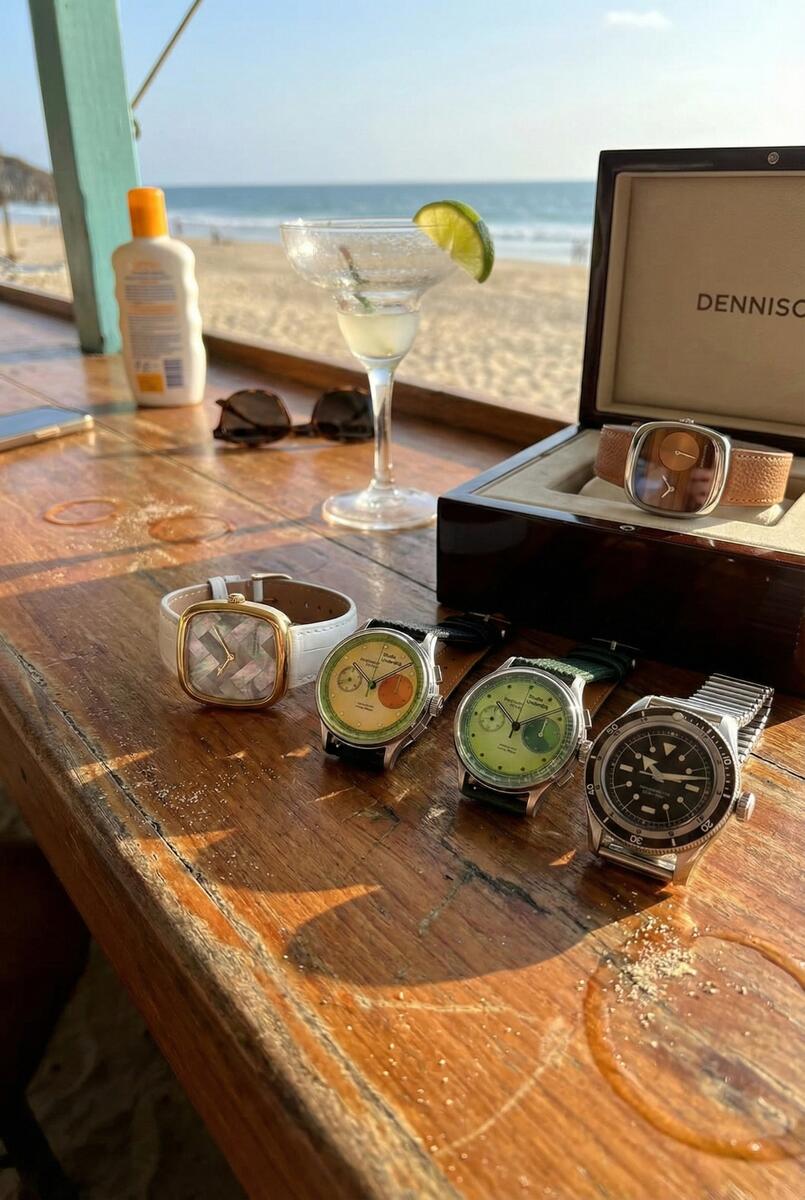
Walk into any watch forum, Instagram feed, or enthusiast gathering in 2026, and you'll notice something striking: people aren't talking about the latest Rolex or Omega as much as they're debating whether to buy a Baltic, Serica, or that new drop from Studio Underd0g. Some microbrand releases sell out in minutes—not hours, minutes—creating a buying frenzy usually reserved for limited-edition luxury watches.
📚 Explore our full watches guide →
The numbers tell the story. The global microbrand market grew 22% annually from 2020–2025, while traditional sub-$2,000 Swiss watches crawled at 5% growth. A 2025 survey found that 68% of first-time mechanical watch buyers under 35 now consider microbrands before looking at established names. And platforms dedicated to microbrands—like indiewatches.store and the Windup Watch Fair—are seeing record traffic and attendance.
Something fundamental has shifted. Microbrands aren't just surviving anymore—they're thriving, innovating, and forcing the entire watch industry to compete on value and creativity. Let's break down exactly why microbrands are exploding in popularity right now, and why 2026 feels like a tipping point.
The Death of Brand Loyalty: Gen Z & Millennials Don't Care About Your Heritage #
The fundamental shift: Younger buyers simply don't value brand heritage the way Boomers and Gen X did.
The Data #
- 73% of Gen Z/Millennial consumers prioritize authenticity over brand prestige (2024 consumer study)
- Only 23% of buyers under 30 say "Swiss Made" matters to them (down from 67% in 2010)
- 86% prefer brands with genuine founder stories over corporate marketing
What This Means for Microbrands #
When a 27-year-old is choosing between a $2,500 TAG Heuer Aquaracer and a $730 Baltic Aquascaphe, they're asking different questions than their parents would:
- Boomer/Gen X question: "Which brand is more prestigious? Will this impress my boss?"
- Millennial/Gen Z question: "Which design is more interesting? Which tells a better story?"
The Baltic wins on both counts. It has a compelling founder story (Étienne Malec's passion for vintage watches led to €500,000 Kickstarter), unique vintage-inspired design, and costs 70% less. The TAG has brand recognition—but to someone who grew up with the internet, brand recognition doesn't automatically equal desirability.
Real Example: Trafford Watch Co. (Austin, Texas) #
Nathan Trafford, originally from Northern England and now based in Austin, Texas, started Trafford Watch Co. in 2020 from a background in graphic design and marketing. His first watch, the S.O.E. Roadster chronograph, was inspired by 20th-century racing drivers-turned-spies. His second, the Crossroads, pays homage to Austin itself.
The Crossroads is a square-cased watch with curved sides representing the horizon, dials named after Texas nature (Agave, Cabernet wine, Bluebonnet flower, Mockingbird eggs), and Arabic numerals resembling hand-painted road signs. Available with either Miyota 9039 automatic ($499 Kickstarter) or Seiko VH31 mecaquartz ($399), it raised $119,283 from 244 backers—exceeding its $35,000 goal 3.4×.
Why did it work? Nathan's story is authentic. He's not a corporation pretending to care about Austin—he lives there, draws inspiration from the city's energy, and created a watch that celebrates a specific place and culture.
Social Media as the Great Equalizer #
The playing field has been leveled. A one-person microbrand in Scotland (anOrdain) can reach the same global audience as a $50 million Swiss company—for free.
Instagram: The Microbrand Launchpad #
Current stats (2026):
- #watchesofinstagram: 5.2 million posts
- #microbrandwatches: 180,000+ posts
- Average microbrand follower count: 8,000–25,000
- Engagement rate: 3–7% (vs 0.5–1% for luxury brands)
Why Instagram Favors Microbrands
- Founder accessibility: The person who designed the watch responds to your DM within hours
- Behind-the-scenes content: See the actual design process, not polished corporate marketing
- Community building: Owners post wrist shots, creating organic advocacy
- Drop announcements: Limited releases create urgency
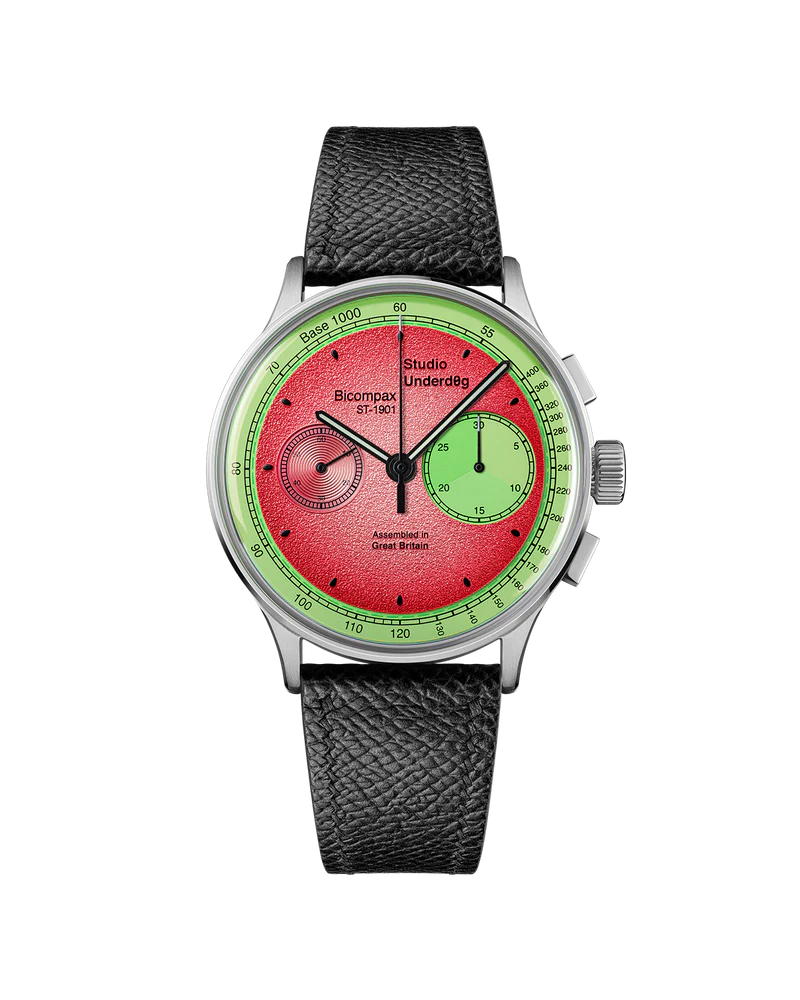
Real impact: When Studio Underd0g launched in 2020 during COVID lockdown, founder Richard Benc had zero budget for marketing. He posted his quirky, colorful watches on Instagram with candid, funny captions. Within 12 months: 25,000 followers. First drop: sold out in 8 minutes.
TikTok: The New Frontier (2024–2026) #
TikTok watch content exploded in 2024. Short-form video showing watches on-wrist, movement close-ups, and "unboxing" content performs exceptionally well.
- Algorithm favors small creators over established brands
- "Undiscovered brand" content goes viral (people love finding hidden gems)
- Younger audience (18–30) discovering mechanical watches through TikTok
- A TikTok video about Zelos' meteorite dial watches got 2.3M views in 2024, selling out their next batch in 90 seconds
The Value Proposition Has Never Been Better #
The brutal math: Microbrands offer 80–90% of the quality at 40–60% of the price.
2026 Spec-for-Spec Comparison #
| Feature | Christopher Ward C60 | Longines HydroConquest | Difference |
|---|---|---|---|
| Movement | Sellita SW200 (Swiss) | ETA/Sellita (Swiss) | Same |
| Water Resistance | 300m | 300m | Same |
The Movement Revolution (2020–2025) #
What's changed in the last 5 years is movement accessibility and quality:
| Movement Tier | Details | Used By / Cost |
|---|---|---|
| Miyota 9039 | No-date, 28,800 vph, 42hr power reserve, smooth sweep | Baltic ($730), Lorier ($499), Halios ($975) · Cost: $60–80 |
| Sellita SW200 | ETA 2824 clone, widely serviceable | Christopher Ward ($850+), Serica ($1,290+) · Cost: $180–280 |
| Soprod Newton M100 | New competitor, COSC-certifiable | Emerging option for premium microbrands |
The result: A $800 microbrand watch in 2025 has better specs than a $1,500 Swiss watch from 2015.
Design Innovation That Big Brands Can't Match #
The corporate design problem: Rolex, Omega, and TAG Heuer are prisoners of their own heritage. They can't radically change design without alienating existing customers. Microbrands have zero legacy constraints.
Current Design Trends Microbrands Are Leading #
1. Shaped Watches (Beyond Round)
- Toledano & Chan B/1 (UK): Asymmetrical case
- Trafford Crossroads (USA): Square with curved horizon sides
- Venezianico (Italy): Art Deco–inspired forms
2. Vibrant Colors
- Farer (UK): Coral, aqua, burgundy dial options
- Studio Underd0g (UK): Playful multi-color dials
- Galvin Watch Co. (Australia): Salmon dial on Loimu model
3. Cultural Specificity
- Echo/Neutra (Italy): 1956 Winter Olympics Cortina d'Ampezzo tribute
- Kurono (Japan): Art Deco 1960s Japanese aesthetic
- Trafford (USA): Texas-specific design elements
4. Material Experimentation
- Zelos (Singapore): Meteorite dials, damascus steel, forged carbon
- Formex (Switzerland): Proprietary suspension system
- anOrdain (Scotland): Grand feu enamel dials at $2,500 (vs $15,000+ from Swiss brands)
Big brands can't do this. Rolex can't suddenly release a coral dial Submariner. Omega can't make an asymmetrical Speedmaster. Their DNA is fixed. Microbrands can pivot instantly—and that agility is a massive competitive advantage.
Community Over Corporation #
When you buy a microbrand watch, you're joining a community, not a customer database.
Real Founder Engagement #
Serica (France)
- Founder Jérôme Burgert personally responds to emails
- Active on WatchUSeek forum answering technical questions
- Posts behind-the-scenes content showing Swiss supplier visits
Baltic (France)
- Étienne Malec reads Reddit r/Watches threads about Baltic watches
- Has modified designs based on forum feedback
- Announces drops personally on Instagram
Compare This to Luxury Brands
- Email TAG Heuer customer service → generic response in 3–5 days
- DM Rolex on Instagram → auto-reply directing you to authorized dealer
- Post question on Omega forum → corporate rep with canned answer
When the founder of your watch brand personally thanks you for your purchase, you become an advocate for life.
The Discord/Forum Effect #
- Christopher Ward: CWardProud community forum (10,000+ members)
- Halios: Dedicated WatchUSeek thread (500+ pages)
- Zelos: Private Facebook group for owners (8,000+ members)
Global Microbrands: A Worldwide Movement #
Microbrands are exploding everywhere, each bringing unique cultural perspectives.
Europe: The Design Powerhouses #
United Kingdom: Christopher Ward, Farer, Studio Underd0g, Fears
Scotland: anOrdain — Grand feu enamel dials, $1,800–$2,500
Italy: Echo/Neutra, Venezianico
Germany: NOMOS Glashütte, Mühle-Glashütte
Switzerland: Formex, Ollech & Wajs
Asia-Pacific: Innovation Hub #
Singapore: Zelos — Exotic materials, 20,000+ sold
Australia: Galvin Watch Co. — First female-led Australian watch brand
Malaysia: Ming — Architectural designs, GPHG finalist
North America: Cultural Storytelling #
United States: Trafford, Monta, Autodromo, Brew, Nodus
Canada: Halios — Cult following, instant sellouts since 2009
Why Geographic Diversity Matters #
| Region | Design DNA | Example Brands |
|---|---|---|
| French | Vintage elegance | Baltic, Serica |
| British | Bold colors & adventure | Farer, Studio Underd0g |
| Italian | Artistic flair & heritage | Echo/Neutra, Venezianico |
| German | Bauhaus minimalism | NOMOS, Dufa |
| Japanese | Art Deco precision | Kurono |
| American | Automotive & regional pride | Autodromo, Trafford |
| Singaporean | Material experimentation | Zelos |
The Technology Stack Enabling Small Brands #
Why microbrands weren't possible in 1995: Technology barriers. In 2025, those barriers are gone.
E-Commerce Platforms #
- Shopify ($29/month): Professional storefront in hours, payment processing, inventory management. Used by Baltic, Zelos, Trafford, Studio Underd0g, Farer.
- WooCommerce (free): Christopher Ward started here in 2004. Full customization, lower fees.
A solo founder can launch a global e-commerce business for $30/month. In 1995, this required $50,000+.
Manufacturing Access #
- Alibaba/Global Sources: Direct connection to case manufacturers. MOQ down to 500 pieces (from 5,000 in 2010).
- Swiss/Japanese movement suppliers: Sellita sells to anyone. Miyota/Seiko through distributors. Soprod emerging.
- Quality improvement: Chinese case manufacturers now producing Rolex-level finishing. CNC machining at $5–10 per case.
Marketing Tools #
- Instagram Ads: $5–10 CPM, ROI of $3–5 per $1 spent
- YouTube/TikTok: Send one watch to influencer → $5,000–$10,000 equivalent exposure
- Email Marketing: 25–40% open rates (vs 2–5% for luxury brands)
Crowdfunding #
- Kickstarter/Indiegogo: Zero upfront capital required. Pre-validate demand. Average successful watch campaign (2024): $125,000.
- The math: $35,000 goal → raise $125,000 → 50–60% profit margin → bootstrapped business with no investor dilution.
Luxury Pricing Fatigue: The Rolex Backlash #
The tipping point: Rolex Submariners went from $8,000 (2019) to $11,000 (2025). People are exhausted.
Luxury Price Increases 2020–2025 #
| Brand | Model | 2020 Price | 2025 Price | Increase |
|---|---|---|---|---|
| Rolex | Submariner Date | $9,150 | $11,100 | +21.3% |
| Omega | Seamaster 300M | $4,500 | $5,900 | +31.1% |
| TAG Heuer | Aquaracer | $2,500 | $3,100 | +24% |
| Longines | HydroConquest | $1,200 | $1,550 | +29.2% |
Meanwhile, Microbrands #
| Brand | Model | 2020 Price | 2025 Price | Increase |
|---|---|---|---|---|
| Baltic | Aquascaphe | $650 | $730 | +12.3% |
| Christopher Ward | C60 | $795 | $850 | +6.9% |
| Serica | 5303 | $1,200 | $1,290 | +7.5% |
The message: Luxury brands are pricing themselves out of the entry-level market. Microbrands are filling that gap.
Authorized Dealer Games #
The frustration with luxury brands:
- Can't buy a Rolex Submariner at retail (3–7 year waitlists)
- Must "build relationship" with AD (buy jewelry you don't want)
- Secondary market adds 30–50% premium
The microbrand alternative: Go to Baltic.com → Add Aquascaphe to cart → Check out → Receive in 1–2 weeks → Done.
Sustainability and Ethical Consumption #
54% of Gen Z consumers say sustainability influences purchasing decisions (2024 study).
What Microbrands Are Doing #
- Transparency: Christopher Ward publishes exact component costs. Baltic shows factory visits on Instagram.
- Sustainable materials: Formex uses recycled steel cases. Several brands offer ocean plastic straps.
- Longevity over disposability: Standard 2–5 year warranties. Repairable with common movements. Encourage servicing vs replacing.
- Small batch production: Less waste. Made-to-order options reducing overproduction.
The ethical pitch: Buy a $800 microbrand watch that lasts 20 years instead of a $200 fashion watch every 2 years.
The Drop Culture Phenomenon #
Limited releases at specific times create urgency and community.
How Drops Work #
- Announcement (2–4 weeks prior): Instagram teaser, email list notified
- Countdown (1 week): Daily posts building hype
- Drop day: Specific time (e.g., Friday 10am PST)
- Sellout: Anywhere from 5 minutes to 5 hours
Notable Drop Examples (2024–2025) #
- Kurono Tokyo: 50–100 pieces, sells out in 3–8 minutes
- Studio Underd0g: 200–300 pieces, sells out in 15–45 minutes
- Halios Seaforth: 400–500 pieces, sells out in 1–3 hours
- Ming: 100–200 pieces, resells for 2× retail
Why Drops Work #
- FOMO: "If I don't buy now, I'll never get one." Secondary market flipping proves scarcity is real.
- Exclusivity: Owning a Kurono means you're one of 100 people globally with that exact watch.
- Business benefits: No inventory costs, guaranteed cashflow, hype compounds with each drop.
Drops make microbrands feel like events, not transactions.
Why This Momentum Will Continue #
Five Reasons Microbrands Will Keep Growing (2025–2030) #
1. Generational Shift Accelerating
Boomers aging out of the buying demographic. Gen Z entering prime earning years (25–35 in 2025–2030), digital natives comfortable buying online, valuing authenticity over prestige.
Prediction: By 2030, 80%+ of sub-$2,000 watch sales will be direct-to-consumer microbrands.
2. Technology Keeps Improving
- AI design tools for generating watch concepts
- Better and cheaper manufacturing access
- AR try-on (see the watch on your wrist before buying)
3. Marketplace Infrastructure Maturing
Curated platforms solving the discovery problem: indiewatches.store, Worn & Wound Wind Up Shop, and Hodinkee Shop. As 500+ microbrands exist, collectors need trusted curation.
4. Graduated Microbrands Paving the Path
- Christopher Ward: Won GPHG 2023, proving microbrands compete at the highest level
- Baltic: 15,000+ watches sold, now recognized globally
- Serica: Premium tier ($1,200–$1,800) succeeding
The signal: Microbrands can evolve into respected independent brands. This attracts more entrepreneurs.
5. Luxury Brands Pricing Themselves Out
- Rolex Submariner will likely hit $12,000–$13,000 by 2027
- Omega Seamaster heading toward $7,000+
- Entry-level Swiss brands raising prices 5–8% annually
As luxury goes up, microbrands hold steady. The value proposition gets better every year.
The Bottom Line: Why Microbrands Are Winning #
It's not one factor—it's convergence:
- ✅ Generational values (authenticity > prestige)
- ✅ Technology (e-commerce, social media, manufacturing access)
- ✅ Value proposition (80% quality at 40–60% price)
- ✅ Design innovation (no legacy constraints)
- ✅ Community (founder access, genuine engagement)
- ✅ Global diversity (French elegance, British boldness, Japanese precision, American storytelling)
- ✅ Sustainability (transparency, longevity, small batch)
- ✅ Drop culture (scarcity, FOMO, events)
- ✅ Pricing fatigue (luxury too expensive, microbrands stable)
All of these factors have reached critical mass simultaneously. The technology is mature. The audience is ready. The value gap is the widest it's ever been. The design innovation is peaking. The community infrastructure exists.
What's happening right now isn't a trend—it's a permanent shift in how watches are designed, marketed, and sold. The microbrand explosion isn't slowing down. It's just getting started.
Discover the best microbrands on our marketplace, explore the brand directory, or read more in our guides: What Is a Microbrand Watch?, Are Microbrands Worth It?, and The History and Rise of Microbrand Watches.
Find Your Perfect Watch
Browse our curated collection of indie and microbrand timepieces.
📚 Related Reading
Handpicked articles from the same topic