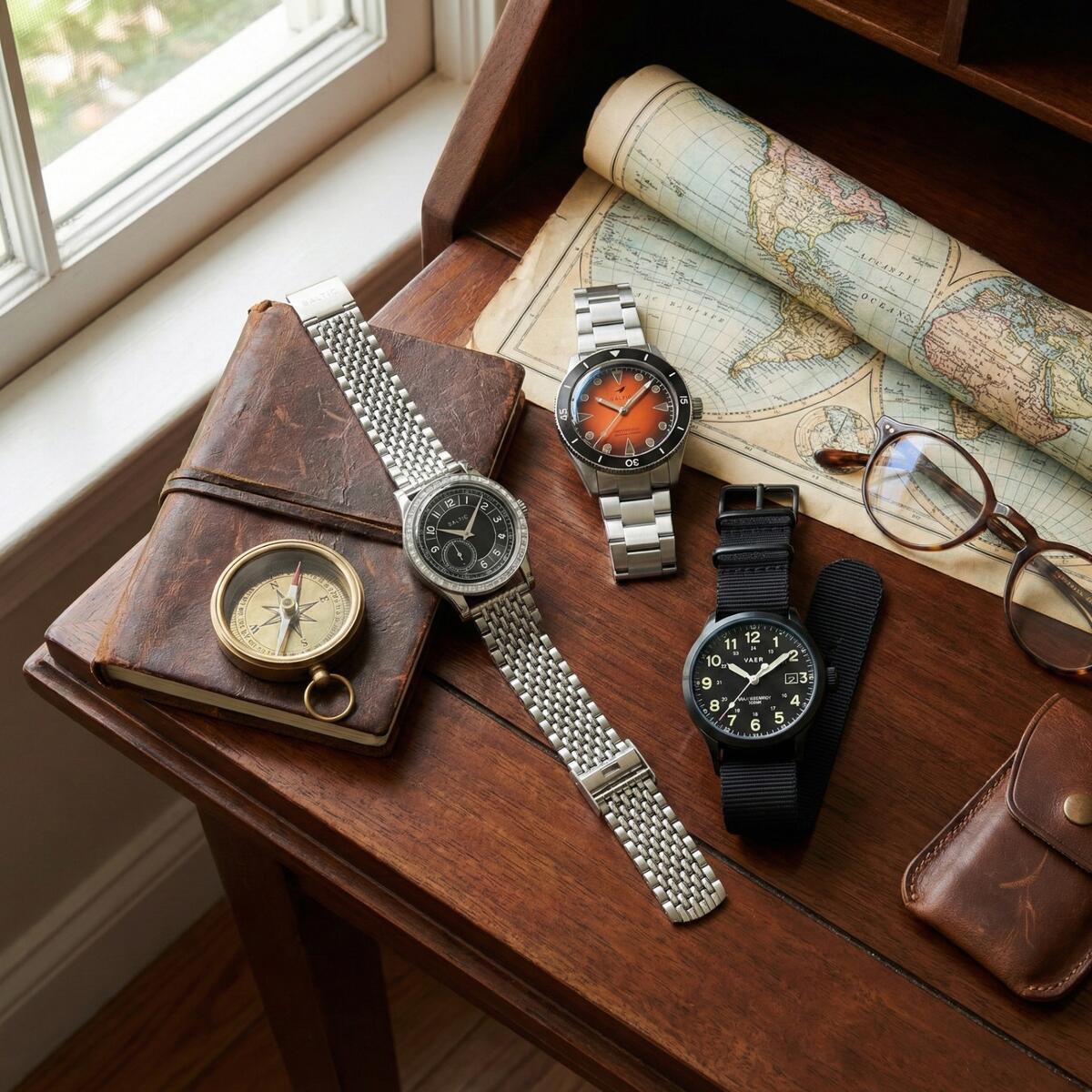
What Is a Microbrand Watch? The Complete Guide (2026)
You're seeing watches on Instagram that look like $5,000 Swiss luxury pieces, but they're priced at $800. What's happening? You've discovered microbrand watches—small independent watchmakers selling directly to consumers at exceptional value.
Steven Thompson
Independent Watchmaker · 10 Years Experience
Reviewed by Indie Watches
Editorially reviewed for accuracy
⚡ Key Takeaways
- ✓✓ Small independent operation (not owned by Swatch Group, Richemont, LVMH, etc.)
- ✓✓ Direct-to-consumer sales model (sold through brand websites, not jewelry stores)
- ✓✓ Outsourced manufacturing (use Swiss/Japanese movements from Miyota, Sellita, Soprod, ETA)
- ✓✓ Limited production runs (hundreds to low thousands per model)
- ✓✓ Price range: $300–$2,500 (sweet spot is $600–$1,500)
📑 Table of Contents
You're seeing watches on Instagram that look like $5,000 Swiss luxury pieces, but they're priced at $800. What's happening? You've discovered microbrand watches—small independent watchmakers selling directly to consumers at exceptional value. This complete guide explains everything you need to know about microbrand watches, from definition to buying advice.
📚 Explore our full watches guide →
Table of Contents #
- What Is a Microbrand Watch? (Quick Definition)
- Microbrand vs Traditional Watch Brands
- How Microbrands Work (Business Model)
- Top Microbrand Watches by Price Range
- Movement Types in Microbrand Watches
- Pros and Cons of Microbrand Watches
- How to Choose a Quality Microbrand Watch
- Red Flags: How to Avoid Microbrand Scams
- Microbrand Watch Service and Warranties
- Are Microbrands Worth It? (Final Verdict)
- Frequently Asked Questions
What Is a Microbrand Watch? (Quick Definition) #
A microbrand watch is a timepiece produced by a small, independent watch company (typically fewer than 10 employees) that operates outside traditional watch manufacturing conglomerates. These brands outsource production to third-party suppliers, sell directly to consumers online, and produce watches in limited quantities—usually 500–5,000 pieces per year.
Key Characteristics of Microbrand Watches #
- ✓ Small independent operation (not owned by Swatch Group, Richemont, LVMH, etc.)
- ✓ Direct-to-consumer sales model (sold through brand websites, not jewelry stores)
- ✓ Outsourced manufacturing (use Swiss/Japanese movements from Miyota, Sellita, Soprod, ETA)
- ✓ Limited production runs (hundreds to low thousands per model)
- ✓ Price range: $300–$2,500 (sweet spot is $600–$1,500)
- ✓ Focus on design and value rather than in-house manufacturing
Microbrand vs Independent Watchmaker vs Luxury Brand #
| Category | Definition | Examples | Price Range | Manufacturing |
|---|---|---|---|---|
| Microbrand | Small company, outsourced production, direct sales | Baltic, Christopher Ward, Serica, Zelos | $300–$2,500 | Third-party components |
| Independent Watchmaker | Artisan making watches/movements in-house | Roger Smith, Hajime Asaoka, F.P. Journe | $20,000–$500,000+ | In-house movements |
| Luxury Conglomerate Brand | Established brand owned by major group | Tissot, Longines, TAG Heuer, Omega | $500–$50,000+ | Mix of in-house and outsourced |
Microbrand vs Traditional Watch Brands: Complete Comparison #
| Feature | Microbrand Example | Traditional Swiss Example | Price Difference |
|---|---|---|---|
| 39mm Dive Watch | Baltic Aquascaphe ($730) | Tudor Black Bay 58 ($3,800) | $3,070 less |
| Sapphire Crystal | Standard on $500+ | Standard on $1,500+ Swiss | $1,000 savings |
| Swiss Movement | Christopher Ward C60 ($850) | Longines HydroConquest ($1,400) | $550 less |
| GMT | Serica 8315 GMT ($1,490) | Tudor Black Bay GMT ($4,200) | $2,710 less |
| Ceramic Bezel | Standard on $800+ | Standard on $2,000+ Swiss | $1,200 savings |
Distribution Model: Where Your Money Goes #
Traditional Swiss Watch ($1,500 retail):
- Manufacturing cost: $300
- Brand markup: $200
- Distributor markup: $250
- Retailer markup: $750
- Your cost: $1,500
Microbrand Watch ($800 retail):
- Manufacturing cost: $300
- Brand markup: $500
- Your cost: $800
Savings: $700 (47% less) for similar specifications
How Microbrands Work: The Business Model Explained #
The Direct-to-Consumer Revolution #
Microbrands eliminate traditional distribution channels:
Traditional: Manufacturer → Distributor → Wholesaler → Retailer → Customer (Each step adds 30–60% markup)
Microbrand: Manufacturer → Brand Website → Customer (Single markup, higher value)
The Drop Strategy: How Microbrands Manage Inventory #
Many successful microbrands use limited releases ("drops") instead of continuous inventory:
Example: Baltic Release Strategy
- Pre-announcement (2–4 weeks): Tease new model on Instagram/email
- Drop date announced: Creates anticipation and scarcity
- Limited quantity released: 500–2,000 pieces
- Sells out in hours/days: Creates secondary market demand
- Re-release in 6–12 months: Maintains hype cycle
Funding Models: How Microbrands Start #
Kickstarter/Crowdfunding (60% of new microbrands):
- Example: Baltic raised €500,000+ from 1,000+ backers in 2017
- Validates demand before manufacturing
- Risk: Delays, quality issues, delivery problems
Self-funded (30%):
- Example: Christopher Ward founders invested own capital (2004)
- More control over quality and timeline
Top Microbrand Watches by Price Range (2024–2025) #
Budget Tier: Under $500 #
| Brand | Best Model | Price | Movement | Key Feature |
|---|---|---|---|---|
| Lorier | Neptune | $499 | Miyota 90S5 | Vintage aesthetic |
| Sternglas | Naos | $349 | Miyota 821A | Bauhaus design |
| Dan Henry | 1970 | $270 | Seiko meca-quartz | Chronograph value |
Mid-Tier: $500–$1,000 #
| Brand | Best Model | Price | Movement | Key Feature |
|---|---|---|---|---|
| Baltic | Aquascaphe | $730 | Miyota 9039 | Vintage diver, sapphire bezel |
| Christopher Ward | C60 Trident Pro 300 | $850 | Sellita SW200 | Light-catcher case, ceramic bezel |
| Zelos | Mako V3 | $699 | Miyota 9015 | Exotic materials (meteorite dials) |
| Farer | Lander IV | $895 | Sellita SW200 | Bold colors, GMT function |
| Halios | Seaforth | $975 | Miyota 9039 | Cult following, hard to get |
| Nodus | Retrospect II | $595 | NH35A | 36mm vintage diver |
Premium Tier: $1,000–$2,000 #
| Brand | Best Model | Price | Movement | Key Feature |
|---|---|---|---|---|
| Serica | 5303 COSC | $1,490 | Soprod Newton (COSC) | Dual bezel, mesh bracelet |
| Echo/Neutra | Cortina | $1,450–$1,650 | Swiss | 1956 Olympics tribute, Italian design |
Movement Types in Microbrand Watches #
Affordable Movements (Entry-Level Tier) #
| Movement | Specs | Price Range | Pros | Cons |
|---|---|---|---|---|
| Miyota 90S5 | 24 jewels, 42hr PR, 21,600 vph | $400–$700 | Affordable, proven | Lower beat rate |
| Seiko NH35/NH36 | 24 jewels, 41hr PR, 21,600 vph | $300–$600 | Hackable, easy service | Lower quality finish |
Swiss Movements (Mid-Premium Tier) #
| Movement | Specs | Price Range | Pros | Cons |
|---|---|---|---|---|
| Sellita SW200-1 | 26 jewels, 38hr PR, 28,800 vph | $700–$1,500 | ETA 2824 clone, reliable | Shorter power reserve |
| Sellita SW300-1 | 25 jewels, 42hr PR, 28,800 vph | $1,000–$2,000 | Slimmer than SW200 | More expensive |
| Soprod Newton (M100) | 25 jewels, 42hr PR, 28,800 vph | $1,200–$1,800 | Modern alternative | Newer, less proven |
| ETA 2824-2 | 25 jewels, 38hr PR, 28,800 vph | $800–$1,800 | Industry standard | Becoming harder to source |
For a deeper dive, see our Complete Guide to Watch Movements and In-House vs Third-Party Movements.
Pros and Cons of Microbrand Watches #
✓ Advantages of Buying Microbrand Watches #
| Advantage | Explanation | Example |
|---|---|---|
| Exceptional Value | 40–60% less than Swiss brands with same specs | Baltic Aquascaphe ($730) vs Tudor BB58 ($3,800) |
| Unique Designs | Bold choices big brands won't make | Echo/Neutra's 1956 Olympics tribute dials |
| Limited Production | Actual exclusivity (not artificial scarcity) | Halios produces ~2,000 watches/year total |
| Community Engagement | Founders respond to emails, active in forums | Christopher Ward redesigned based on forum feedback |
| Direct Sales | No middleman markup | Save $500–$2,000 vs traditional retail |
| Design Innovation | Can take risks mainstream brands can't | Christopher Ward's light-catcher case design |
| Transparency | See exactly what components are used | Most microbrands list movement, crystal type, etc. |
✗ Disadvantages of Buying Microbrand Watches #
| Disadvantage | Explanation | Risk Level |
|---|---|---|
| Poor Resale Value | Lose 30–50% value immediately | HIGH |
| No Brand Prestige | Won't impress non-watch people | MEDIUM |
| Service Uncertainty | Will company exist in 10 years? | MEDIUM-HIGH |
| Quality Control Issues | Small batches = inconsistent QC sometimes | MEDIUM |
| Limited Service Network | Must ship to brand, can't service locally | MEDIUM |
| Crowdfunding Delays | Kickstarter watches often 6–12 months late | HIGH |
The Brutal Truth: Depreciation Comparison #
| Watch Type | Purchase Price | Year 1 Resale | Depreciation |
|---|---|---|---|
| Rolex Submariner | $10,000 | $9,000–$10,500 | -10% to +5% |
| Omega Seamaster | $5,000 | $3,500–$4,000 | -20% to -30% |
| Tudor Black Bay | $3,800 | $2,800–$3,200 | -25% to -35% |
| Baltic Aquascaphe | $730 | $450–$550 | -35% to -40% |
| Christopher Ward C60 | $850 | $550–$650 | -30% to -35% |
| Serica 5303 | $1,490 | $1,000–$1,200 | -25% to -33% |
Bottom Line: Buy microbrands to wear, not as investments.
How to Choose a Quality Microbrand Watch: Buyer's Guide #
Step 1: Define Your Budget and Purpose #
Budget Tiers:
- Under $500: Lorier, Dan Henry, Sternglas
- $500–$1,000: Baltic, Christopher Ward, Zelos, Farer
- $1,000–$2,000: Serica, Monta, Ming, Echo/Neutra
Purpose:
- Daily wearer: Christopher Ward C60 (versatile, durable, 300m WR)
- Dive watch: Baltic Aquascaphe or Serica 5303
- GMT/Travel: Serica 8315 GMT or Farer Lander GMT
- Vintage aesthetic: Baltic anything, Lorier Neptune
Step 2: Check These Critical Specs #
- ✓ Crystal Type: Sapphire only (not mineral glass) — see our crystal comparison guide
- ✓ Water Resistance: Minimum 100m (divers need 200m+)
- ✓ Movement: Miyota 9015/9039 minimum, Sellita preferred
- ✓ Case Material: 316L stainless steel minimum — see our case materials guide
- ✓ Lug-to-Lug: Under 50mm for most wrists
- ✓ Bracelet Quality: Solid links, screw links (not pins)
- ✓ Warranty: Minimum 2 years (3–5 years better)
Step 3: Research the Brand #
Check our Brand Directory for verified reviews and ratings. Brands with 5+ years in business present lower risk: Baltic, Christopher Ward, Serica.
Step 4: Case Sizing Guide #
| Wrist Size | Recommended Diameter | Max Lug-to-Lug |
|---|---|---|
| 6.0"–6.5" (small) | 36–39mm | 46mm |
| 6.5"–7.0" (medium) | 38–42mm | 50mm |
| 7.0"–7.5" (large) | 40–44mm | 52mm |
| 7.5"+ (XL) | 42–46mm | 54mm |
Pro Tip: Lug-to-lug matters more than diameter. Use our Wrist Size Calculator for personalized recommendations.
Red Flags: How to Avoid Microbrand Scams #
🚩 Major Red Flags (Avoid Immediately) #
- No Working Prototype Shown — Only CGI renders or concept drawings
- Unrealistic Specs for Price — "Swiss automatic with sapphire for $99!"
- Stolen Product Images — Reverse image search shows photos from other brands
- No Physical Address or Company Registration
- Founder Has Zero Watch Industry Background
- Vague Manufacturing Claims — "Swiss-made" but no details on what's actually Swiss
🟡 Moderate Red Flags (Proceed With Caution) #
- First-time Kickstarter Creator
- Very Ambitious Timeline (promising delivery in 2–3 months)
- Too Many Variants/Options for first watch
- No Engagement in Watch Community
The "Too Good to Be True" Price Test #
Minimum component costs for a quality microbrand watch:
- Miyota 9015 movement: $60–$80
- Sapphire crystal: $15–$30
- 316L stainless case + bracelet: $50–$100
- Assembly and quality control: $30–$50
- Shipping and packaging: $20–$30
Absolute minimum cost: $175–$290. If someone offers "Swiss automatic with sapphire" for $150, it's either a scam or corners are cut.
Microbrand Watch Service and Warranties #
Warranty Comparison #
| Brand | Warranty Period | Coverage | Service Location |
|---|---|---|---|
| Baltic | 2 years | Manufacturing defects | France (must ship) |
| Christopher Ward | 5 years | Manufacturing defects | UK + authorized centers |
| Serica | 2 years | Manufacturing defects | France (must ship) |
| Echo/Neutra | 2 years | Manufacturing defects | Italy (must ship) |
| Zelos | 2 years | Manufacturing defects | Singapore (must ship) |
| Monta | 5 years | Manufacturing defects | USA |
Service Reality: What Happens After Warranty? #
Best Case (Christopher Ward, Monta): Established service centers, clear pricing ($200–$600), 4–8 week turnaround.
Common Scenario (Baltic, Serica, Zelos): Must ship to brand (international), $150–$500, 6–12 week turnaround.
Worst Case (Failed brands): Brand no longer exists. Must find independent watchmaker. Cost can exceed original purchase price.
Long-Term Service Strategy #
- Miyota/Seiko: Any watchmaker can service. Parts readily available. Best for long-term ownership.
- Sellita/ETA: Most watchmakers can service. Good for long-term.
- Soprod: Newer, fewer experienced watchmakers. Higher risk for long-term.
Pro Tip: Factor in $200–$400 service cost every 5–7 years.
Are Microbrands Worth It? Final Verdict #
Who Should Buy Microbrand Watches? #
✓ Great fit if you:
- Want exceptional value and don't care about brand prestige
- Are building a diverse collection on a budget
- Appreciate unique designs that stand out
- Enjoy supporting small independent businesses
- Plan to wear the watch, not flip it
✗ Skip microbrands if you:
- Need brand recognition for professional/social reasons
- Want an investment that holds value
- Are buying only one watch for life
- Can't handle 30–50% depreciation
Final Recommendation: Best Microbrands by Category #
- 🏆 Best Overall Value: Christopher Ward C60 Trident Pro 300 ($850)
- 🏆 Best Vintage Aesthetic: Baltic Aquascaphe ($730)
- 🏆 Best Premium Microbrand: Serica 5303 COSC ($1,490)
- 🏆 Best for Small Wrists: Lorier Neptune ($499)
- 🏆 Best GMT: Serica 8315 GMT ($1,590)
- 🏆 Best Exotic Materials: Zelos Mako V3 ($699)
- 🏆 Best Design Innovation: Echo/Neutra Cortina ($1,450–$1,650)
Ready to explore? Browse our Marketplace for microbrands for sale, check Price Charts for market trends, or visit the Brand Directory to discover 400+ independent watch brands.
Frequently Asked Questions #
1. What does microbrand watch mean? #
A microbrand watch is a timepiece produced by a small independent company (under 10 employees) that outsources manufacturing, sells directly to consumers online, and produces limited quantities. Microbrands typically cost $300–$2,500 and offer exceptional value compared to traditional Swiss brands.
2. Are microbrand watches worth buying? #
Yes, if you prioritize value over brand prestige. Microbrands offer 40–60% better value than entry-level Swiss brands with similar specifications. However, they depreciate 30–50% immediately and lack worldwide service networks. Read our full analysis: Are Microbrand Watches Worth It?
3. What is the best microbrand watch? #
Best overall: Christopher Ward C60 Trident Pro 300 ($850). Best value: Baltic Aquascaphe ($730). Best premium: Serica 5303 COSC ($1,490). See our full microbrand rankings.
4. Is Christopher Ward a microbrand? #
Christopher Ward started as a microbrand in 2004 but has arguably graduated beyond "micro" status after winning the 2023 Grand Prix d'Horlogerie de Genève. Read our deep dive: Is Christopher Ward a Microbrand?
5. Do microbrand watches hold value? #
No. Microbrands typically depreciate 30–50% in the first year. Buy microbrands to wear, not as investments.
6. What movements do microbrand watches use? #
Most use Japanese Miyota ($300–$900 range), Swiss Sellita ($700–$2,000 range), or Swiss Soprod ($1,200+ range). No microbrands make their own movements. Learn more in our movement guide.
7. How long do microbrand watches last? #
Mechanically, 20–30+ years with proper service every 5–7 years. The bigger risk is brand longevity—buy from brands operating 5+ years.
8. Are Baltic watches worth it? #
Yes. Baltic offers exceptional value with vintage-inspired designs at $730–$1,290. The Aquascaphe features sapphire crystal, sapphire bezel insert, Miyota 9039, and 200m WR—specs costing $2,000+ from traditional Swiss brands.
9. How do I know if a microbrand is legit? #
Check our Brand Directory for verified brands with real customer reviews. Look for 2+ years of operation, clear specs, responsive customer service, and realistic pricing ($500+ for Swiss automatic).
❓ Frequently Asked Questions
Q:Service Reality: What Happens After Warranty?
Best Case (Christopher Ward, Monta): Established service centers, clear pricing ($200–$600), 4–8 week turnaround.
Q:1. What does microbrand watch mean?
A microbrand watch is a timepiece produced by a small independent company (under 10 employees) that outsources manufacturing, sells directly to consumers online, and produces limited quantities. Microbrands typically cost $300–$2,500 and offer exceptional value compared to traditional Swiss brands.
Q:2. Are microbrand watches worth buying?
Yes, if you prioritize value over brand prestige. Microbrands offer 40–60% better value than entry-level Swiss brands with similar specifications. However, they depreciate 30–50% immediately and lack worldwide service networks. Read our full analysis: Are Microbrand Watches Worth It?
Q:3. What is the best microbrand watch?
Best overall: Christopher Ward C60 Trident Pro 300 ($850). Best value: Baltic Aquascaphe ($730). Best premium: Serica 5303 COSC ($1,490). See our full microbrand rankings.
Q:4. Is Christopher Ward a microbrand?
Christopher Ward started as a microbrand in 2004 but has arguably graduated beyond "micro" status after winning the 2023 Grand Prix d'Horlogerie de Genève. Read our deep dive: Is Christopher Ward a Microbrand?
Q:5. Do microbrand watches hold value?
No. Microbrands typically depreciate 30–50% in the first year. Buy microbrands to wear, not as investments.
Q:6. What movements do microbrand watches use?
Most use Japanese Miyota ($300–$900 range), Swiss Sellita ($700–$2,000 range), or Swiss Soprod ($1,200+ range). No microbrands make their own movements. Learn more in our movement guide.
Q:7. How long do microbrand watches last?
Mechanically, 20–30+ years with proper service every 5–7 years. The bigger risk is brand longevity—buy from brands operating 5+ years.
Q:8. Are Baltic watches worth it?
Yes. Baltic offers exceptional value with vintage-inspired designs at $730–$1,290. The Aquascaphe features sapphire crystal, sapphire bezel insert, Miyota 9039, and 200m WR—specs costing $2,000+ from traditional Swiss brands.
Q:9. How do I know if a microbrand is legit?
Check our Brand Directory for verified brands with real customer reviews. Look for 2+ years of operation, clear specs, responsive customer service, and realistic pricing ($500+ for Swiss automatic).
Find Your Perfect Watch
Browse our curated collection of indie and microbrand timepieces.
📚 Related Reading
Handpicked articles from the same topic