What Is a Tourbillon? Complete Guide to Watchmaking's Most Mesmerizing Complication
Complete guide to the tourbillon — watchmaking's most captivating complication. How it works, why it was invented, whether it improves accuracy, and what to know before buying.
Steven Thompson
Independent Watchmaker · 10 Years Experience
Reviewed by Indie Watches
Editorially reviewed for accuracy
⚡ Key Takeaways
- ✓The cage: Lightweight frame (often made from titanium, aluminum, or steel) that holds the escapement components. This entire cage rotates.
- ✓Balance wheel and hairspring: The watch's regulating organ, controlling the rate at which the watch ticks. Normally stationary in the movement, but mounted inside the rotating tourbillon cage.
- ✓Escapement: The mechanism that converts the mainspring's power into regulated impulses. In a tourbillon, the escapement rotates with the cage.
- ✓Fixed fourth wheel: The gear that drives the tourbillon cage rotation while remaining stationary itself—the cage rotates around this fixed wheel.
- ✓Cage bridge/support: Structure supporting the tourbillon cage, often beautifully finished and visible through the dial or caseback.
📑 Table of Contents
Walk into any watch boutique and ask to see their tourbillon pieces. The salesperson's eyes will light up. They'll carefully retrieve a watch from the safe, handle it reverently, and present it with the ceremony typically reserved for fine jewelry or rare art.
📚 Explore our full watches guide →
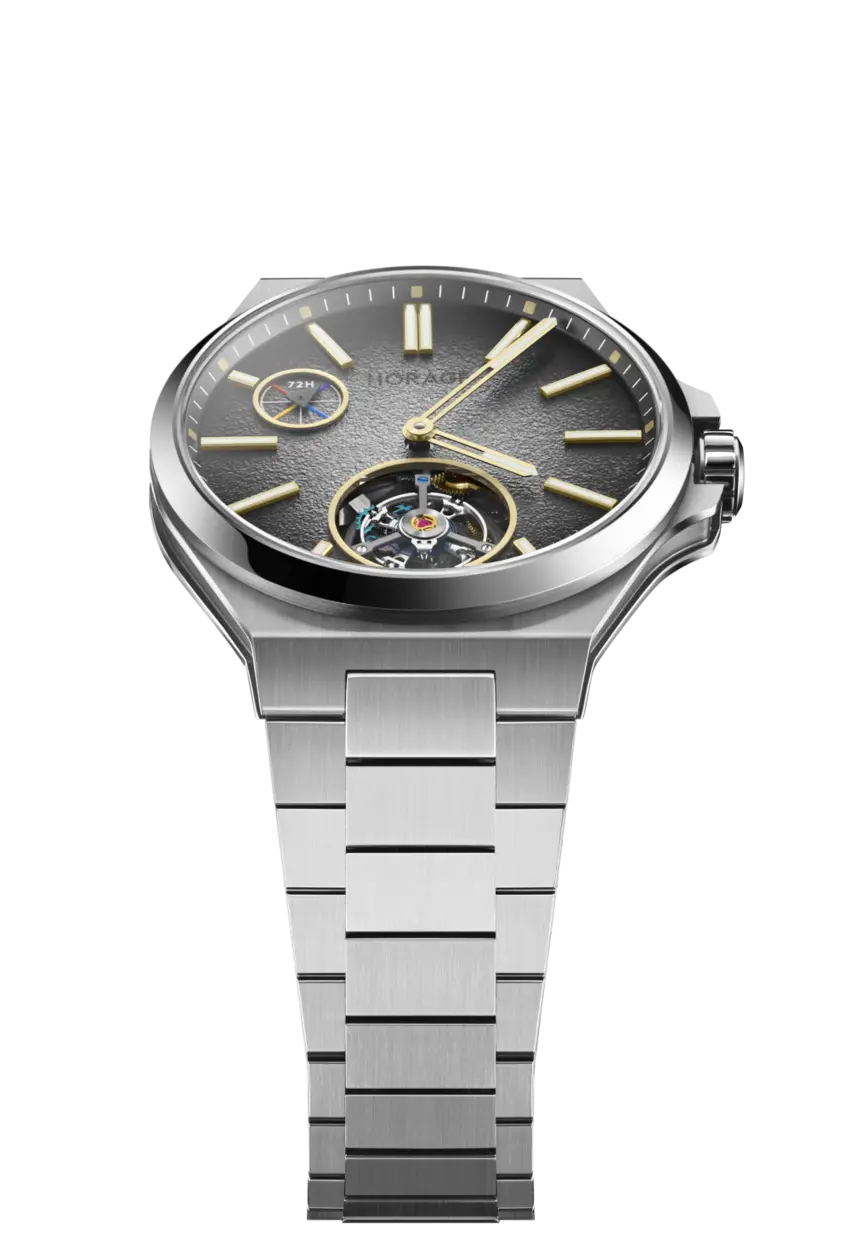
You'll see a small rotating cage visible through the dial, constantly spinning, hypnotically mesmerizing—a miniature mechanical ballet performing endlessly on your wrist.
Then they'll mention the price: $50,000. Or $100,000. Sometimes $500,000 or more.
What exactly are you paying for? And more importantly, what is a tourbillon actually doing inside that watch?
The tourbillon represents one of watchmaking's most impressive technical achievements—a complication so complex that for nearly two centuries, only the most skilled watchmakers could produce them. Even today, with modern manufacturing, creating a proper tourbillon requires exceptional expertise, precision, and hundreds of hours of labor.
But here's the fascinating paradox: the tourbillon was invented to solve a problem that modern watch wearing has made essentially irrelevant.
Originally designed to improve accuracy in pocket watches kept in vertical positions, the tourbillon's practical benefits disappear when watches are worn on wrists that constantly move and change orientation. Today's tourbillons exist primarily as demonstrations of watchmaking artistry, mechanical sculpture, and brands' technical capabilities.
Yet collectors still pay enormous premiums for tourbillon watches—not because they need the complication, but because they appreciate the craft.
What Is a Tourbillon? The Simple Explanation #
The Basic Definition #
A tourbillon is a rotating cage that holds the escapement and balance wheel of a mechanical watch movement.
In simpler terms: the parts of the watch that regulate timekeeping are mounted inside a small cage that continuously rotates—typically completing one full rotation per minute.
Visual description: If you can see the tourbillon (many are displayed prominently on the dial), you'll observe a small rotating assembly, often resembling a miniature Ferris wheel or cage, that spins constantly while the watch runs.
The purpose (originally): By rotating the escapement and balance wheel through all positions, the tourbillon theoretically averages out positional errors that affect accuracy when a watch remains in one position.
The Key Components #
A tourbillon consists of:
- The cage: Lightweight frame (often made from titanium, aluminum, or steel) that holds the escapement components. This entire cage rotates.
- Balance wheel and hairspring: The watch's regulating organ, controlling the rate at which the watch ticks. Normally stationary in the movement, but mounted inside the rotating tourbillon cage.
- Escapement: The mechanism that converts the mainspring's power into regulated impulses. In a tourbillon, the escapement rotates with the cage.
- Fixed fourth wheel: The gear that drives the tourbillon cage rotation while remaining stationary itself—the cage rotates around this fixed wheel.
- Cage bridge/support: Structure supporting the tourbillon cage, often beautifully finished and visible through the dial or caseback.
All of these components must be:
- Extremely lightweight (to minimize power consumption)
- Perfectly balanced (so rotation doesn't introduce new errors)
- Precisely assembled (tolerances measured in microns)
- Beautifully finished (tourbillons are meant to be admired)
The History: Why Was the Tourbillon Invented? #
Abraham-Louis Breguet: The Inventor #
The tourbillon was invented by Abraham-Louis Breguet in 1795, patented in 1801. One of history's greatest watchmakers, Breguet created numerous innovations still used today—the Breguet overcoil hairspring, shock protection systems, and the tourbillon.
The Problem He Was Solving #
In the late 18th century, watches were pocket watches, not wristwatches. They spent most of their time in vertical positions—hanging in waistcoat pockets or resting on bedside tables.
Gravity's effect on accuracy: In vertical positions, gravity pulls on the balance wheel and escapement components unevenly depending on orientation. This creates positional errors—the watch runs at different rates depending on which position it's in (dial up, dial down, crown up, crown down, etc.).
Breguet's solution: If the escapement and balance wheel constantly rotate through all positions, gravity's effects should theoretically average out, improving overall accuracy.
The name: “Tourbillon” is French for “whirlwind”—describing the rotating motion of the cage.
The Golden Age: 19th and Early 20th Century #
For over a century, tourbillons represented the pinnacle of watchmaking achievement.
- Extreme rarity: Creating a tourbillon required exceptional skill. Only master watchmakers at the finest manufactures could produce them.
- Astronomical cost: Even in the 19th century, tourbillon pocket watches cost fortunes—equivalent to years of average wages.
- Accuracy competitions: Tourbillon pocket watches dominated chronometry competitions at observatories.
The Decline: Wristwatches and Quartz #
Two developments made tourbillons less relevant:
Wristwatches replaced pocket watches (early-mid 20th century):
- Wristwatches move constantly, changing positions throughout the day
- This natural movement already averages positional errors
- The tourbillon's advantage largely disappears with wrist wear
Quartz revolution (1970s):
- Quartz watches achieved accuracy far exceeding any mechanical watch
- Mechanical watchmaking nearly died as an industry
- Tourbillon production essentially ceased
By the 1980s, tourbillon production had nearly stopped. The complication seemed destined for history books.
The Renaissance: Mechanical Watches Return #
Starting in the 1980s–90s, mechanical watchmaking experienced revival:
- Collectors rediscovered mechanical watches: Not for accuracy, but for craftsmanship, tradition, mechanical beauty, and artistry.
- Tourbillons became status symbols: Brands realized collectors would pay premiums for tourbillons not because they needed them, but because they represented watchmaking achievement.
- Production increased: Brands like Breguet revived tourbillon production. Other luxury manufacturers followed.
- Innovation emerged: Modern tourbillons explore new designs—flying tourbillons, multi-axis tourbillons, tourbillons as visual centerpieces.
Today, tourbillons are more common than ever—not because watches need them, but because collectors appreciate the craft and visual spectacle.
How Does a Tourbillon Actually Work? #
The Mechanical Principle #
Positional error in vertical positions:
- When a watch sits in one position (e.g., crown up), gravity constantly pulls on the balance wheel in one direction
- This creates consistent error—the watch may run fast or slow in that specific position
- A watch might run +5 seconds/day dial up, but −3 seconds/day crown up
The tourbillon solution:
- Mount the entire escapement and balance wheel in a rotating cage
- Rotate the cage continuously (typically one rotation per minute)
- As the cage rotates, the escapement experiences all positions equally
- Gravity's effects theoretically average out
The Rotation Mechanics #
- Power source: The mainspring powers the entire watch, including tourbillon rotation.
- Fixed fourth wheel: A gear remains stationary while the tourbillon cage rotates around it.
- Cage rotation: The cage is geared to rotate around the fixed fourth wheel, typically completing one full rotation per minute.
- Escapement function: While the cage rotates, the escapement continues functioning normally—releasing power in regulated impulses.
- Balance wheel: Continues oscillating at its regular frequency (typically 28,800 vibrations per hour) while the entire assembly rotates.
The Weight Challenge #
Tourbillon cages must be extremely lightweight:
- The mainspring must rotate the entire cage continuously
- Heavier cages consume more power and reduce power reserve
- Excessive weight increases friction and wear
Weight reduction strategies include using titanium or aluminum cage construction, minimizing component count, and careful engineering of every element.
The Balance Challenge #
Perfect balance is critical:
- Unbalanced rotating mass introduces new errors, defeating the tourbillon's purpose
- Creates additional wear on pivots and bearings
- Requires tolerances measured in microns and careful assembly
An improperly balanced tourbillon performs worse than a simple movement—the complication only helps if executed perfectly.
Types of Tourbillons #
Traditional Tourbillon #
The original design with cage supported from both top and bottom. Upper bridge visible above cage, lower bridge supporting bottom. Cage rotates between two fixed points. Most robust design structurally and still common in modern tourbillons.
Flying Tourbillon #
Cage supported from only one side (cantilevered). Created by Alfred Helwig in 1920. No upper bridge—the cage appears to float. Creates unobstructed view of the rotating cage, dramatically more impressive visually. More difficult to manufacture due to structural challenges. Highly desirable among collectors for visual drama.
Multi-Axis Tourbillons #
Tourbillons rotating on multiple axes simultaneously:
- Double-axis tourbillon: Cage rotates on two perpendicular axes
- Triple-axis tourbillon: Three axes of rotation (extremely rare and complex)
- Gyro-tourbillon: Complex multi-axis systems
No practical benefit for wristwatches, but incredible visual spectacle and technical demonstration. Examples include Jaeger-LeCoultre Gyrotourbillon and Thomas Prescher Triple-Axis Tourbillon. Often six figures due to extreme complexity.
Carrousel #
Similar rotating escapement but with a different mechanism. In a tourbillon, the cage drives its own rotation. In a carrousel, external gearing drives the cage. Looks like a tourbillon to casual observers but uses a different mechanical principle. Some brands create carousels as an alternative to tourbillons.
Does a Tourbillon Actually Improve Accuracy? #
The Uncomfortable Truth #
For wristwatches worn on wrists, tourbillons provide negligible accuracy benefit.
Why the original purpose is obsolete:
- Pocket watches sat in vertical positions for hours; wristwatches naturally move constantly
- Arms swing while walking, wrists rotate during normal activities
- Natural movement already averages positional errors
- Modern regulation techniques and materials reduce gravity's effects
- Many simple three-hand watches achieve COSC chronometer certification without tourbillons
Where tourbillons still help:
- Stationary positions (watch sitting on nightstand)
- Controlled laboratory conditions
- Positions where the watch remains still for extended periods
The paradox: Tourbillons improve accuracy in conditions that don't reflect actual watch wearing.
So Why Do Tourbillons Still Exist? #
- Craftsmanship demonstration: Creating a tourbillon proves watchmaking capability and establishes legitimacy
- Visual appeal: Mesmerizing to watch—constant rotation creates kinetic sculpture on the wrist
- Collector desirability: Collectors appreciate complication regardless of practical benefit
- Brand positioning: Tourbillon capability signals luxury brand status
What Tourbillons Cost #
Entry-Level Tourbillons: $1,000–$5,000 #
Chinese-manufactured tourbillons (typically Sea-Gull or similar movements). Genuine mechanical tourbillon with basic finishing. Functional but not exceptional execution. Buy for the experience, not prestige or resale value.
Swiss Microbrand Tourbillons: $5,000–$15,000 #
Swiss or high-quality Asian movements with better finishing. More refined construction and some brand prestige. Still accessible compared to luxury brands.
Established Luxury Brands: $50,000–$200,000+ #
In-house tourbillon movements with exceptional finishing from brands like Breguet, Jaeger-LeCoultre, A. Lange & Söhne, Vacheron Constantin, and Audemars Piguet. Comprehensive warranties and better resale value consideration.
Ultra-High Complications: $200,000–$1,000,000+ #
Multi-axis tourbillons, grand complications, exceptional artistry, very limited production. From brands like Greubel Forsey, Richard Mille, and independent watchmakers creating unique pieces.
Should You Buy a Tourbillon Watch? #
Reasons to Buy #
- ✅ You appreciate mechanical craftsmanship and view watches as mechanical art
- ✅ You love the visual spectacle—watching a tourbillon rotate is genuinely mesmerizing
- ✅ You want a conversation piece that attracts attention
- ✅ You're building a collection representing different complications
- ✅ You can afford it comfortably without financial strain
- ✅ You want connection to centuries of horological tradition
Reasons NOT to Buy #
- ❌ You're buying it for accuracy—buy quartz or modern high-precision mechanical instead
- ❌ Budget requires significant sacrifice
- ❌ You're hoping for investment/appreciation (most depreciate significantly)
- ❌ You want a low-maintenance watch (expert servicing costs $1,000–$5,000+)
- ❌ You prefer subtle watches—tourbillons are statement pieces
- ❌ You prioritize value and practicality
Practical Considerations for Tourbillon Ownership #
Service and Maintenance #
- Service costs: $1,000–$5,000+ for routine service depending on brand and complexity
- Service intervals: Typically every 3–5 years
- Watchmaker expertise: Not all watchmakers can service tourbillons—requires specialized training
- Parts availability: Replacement parts can be expensive with long lead times
- Service time: Expect weeks to months
Durability and Robustness #
- Daily wear: Modern tourbillons are designed for daily wear and can handle normal activities
- Shock resistance: Avoid extreme impacts—many delicate components
- Magnetism: Can be affected by magnetic fields; some use antimagnetic materials
- Water resistance: Many offer limited water resistance—check specifications
- Power reserve: Rotating the cage consumes power; some have shorter reserves
Resale Value Considerations #
- Established luxury brands: Better retention but still expect significant depreciation from retail
- Microbrand/entry-level: Significant depreciation; buy for enjoyment, not resale
- Ultra-rare independent pieces: May appreciate if from respected independent watchmakers
General advice: Don't buy tourbillons expecting investment returns. Buy because you want to own and enjoy them.
Tourbillon Alternatives: Visual Spectacle Without the Cost #
Open-Heart/Skeleton Watches #
Visible balance wheels without tourbillon complexity. Much more affordable ($300–$2,000 typically), still provides mechanical theater, simpler to service and maintain.
Micro-Rotor Watches #
Visible rotors in slim automatic movements. Continuous rotation similar to tourbillon, generally more affordable, and a practical complication (automatic winding).
Chronographs and Other Complications #
Rather than spending on a tourbillon, consider chronographs, GMT complications, perpetual calendars, or other complications offering practical functionality alongside mechanical interest.
Where to Find Tourbillon Watches #
Established Luxury Brands #
Visit authorized dealers for brands like Breguet, Jaeger-LeCoultre, A. Lange & Söhne, and others. Expect full retail pricing but comprehensive warranties and brand support.
Independent Watchmakers #
Independent watchmakers create exceptional tourbillon pieces, often with innovative designs and personal touches unavailable from large manufacturers.
Microbrands and Direct-to-Consumer #
Some microbrands and direct-to-consumer brands offer tourbillon watches at more accessible price points. Browse IndieWatches.store to discover independent brands, some of which may offer tourbillon or open-heart alternatives providing mechanical spectacle at accessible pricing.
The Bottom Line: Appreciating Tourbillons for What They Are #
Tourbillons represent the pinnacle of mechanical watchmaking craftsmanship—not because modern watches need them for accuracy, but because they demonstrate skill, artistry, and dedication to traditional complications.
The honest reality:
- Tourbillons don't significantly improve wristwatch accuracy
- They're expensive indulgences, not practical necessities
- Service costs and maintenance are higher than simple movements
- Resale values often disappoint compared to retail pricing
But that doesn't diminish their appeal:
- The craftsmanship required is genuinely impressive
- The visual spectacle is mesmerizing
- The connection to watchmaking heritage is meaningful
- The mechanical artistry is worth appreciating
Buy a tourbillon because you appreciate the craft, love the visual drama, and want to own a piece of watchmaking history—not because you need one for accuracy or expect investment returns.
For most collectors, enjoying tourbillon watches at boutiques and exhibitions provides the experience without the expense. But for those who can afford them and appreciate what they represent, tourbillon ownership can be deeply rewarding.
The tourbillon endures not because watches need it, but because collectors appreciate the art.
Find Your Perfect Watch
Browse our curated collection of indie and microbrand timepieces.
📚 Related Reading
Handpicked articles from the same topic