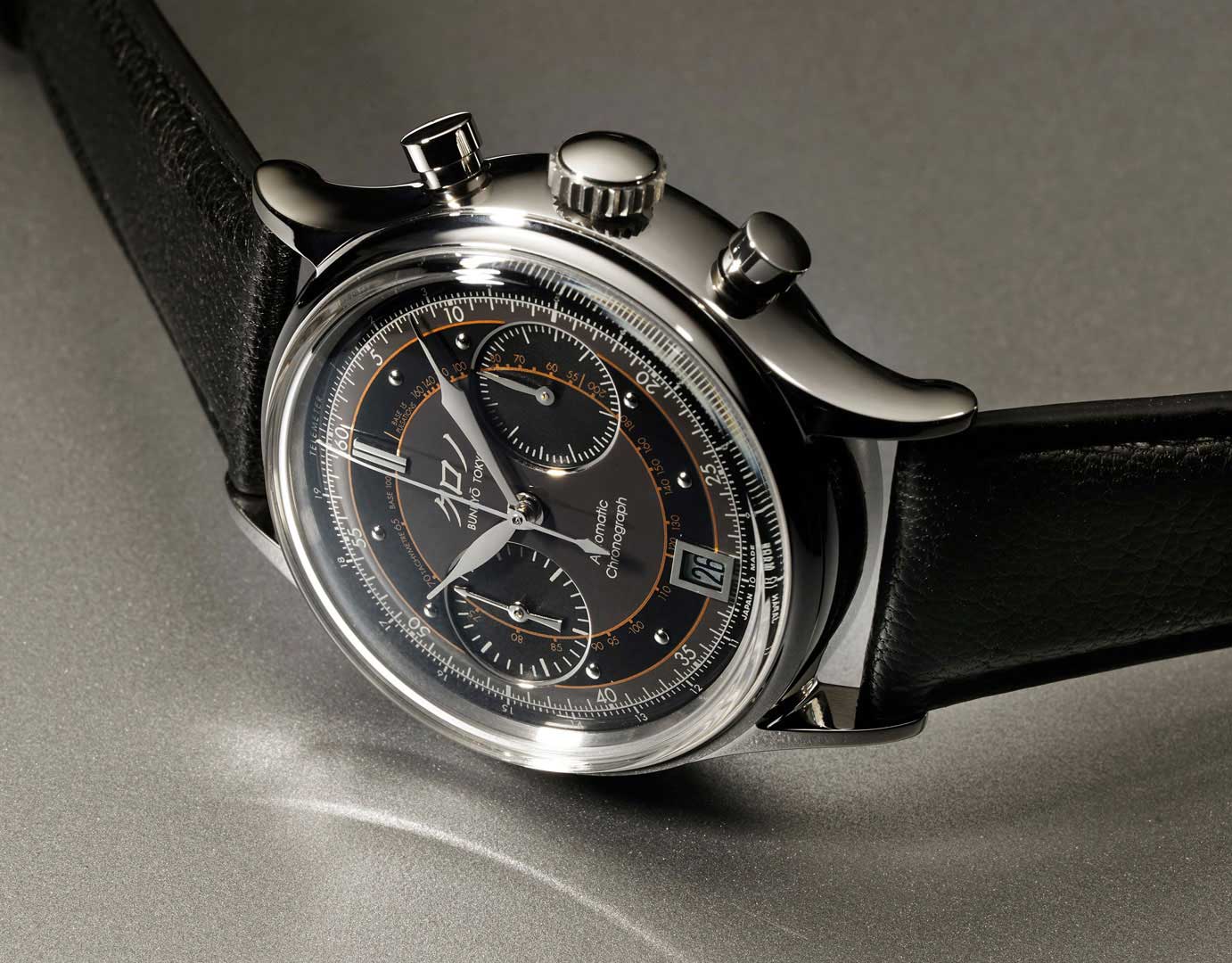
Why Do Watches Use Sapphire Crystals? Complete Guide
Complete guide to watch crystal materials — why sapphire dominates quality watchmaking, how it compares to mineral glass and acrylic, and what to know before buying.
Steven Thompson
Independent Watchmaker · 10 Years Experience
Reviewed by Indie Watches
Editorially reviewed for accuracy
⚡ Key Takeaways
- ✓Practical meaning: Extremely resistant to scratching from normal materials
- ✓What can scratch it: Diamond, silicon carbide, tungsten carbide (rare in daily life)
- ✓What cannot scratch it: Keys, coins, steel, glass, ceramic, most materials encountered daily
📑 Table of Contents
When you look at your watch, the first thing you see isn't the dial, hands, or case. It's the crystal—the transparent cover protecting everything underneath. Yet most people never think about this critical component until it gets scratched, cracked, or needs replacement.
📚 Explore our full watches guide →
The crystal choice fundamentally affects your watch ownership experience.
A scratched crystal ruins dial visibility, diminishes aesthetic appeal, and signals neglect. A quality crystal maintains clarity for decades, protects the dial from damage, and preserves the watch's appearance and value.
Sapphire crystal has become the gold standard for quality watches—from affordable microbrands to six-figure luxury pieces. When brands want to signal quality and durability, they specify sapphire crystals. When collectors evaluate watches, crystal type appears in the first few specifications they check.
But what exactly is sapphire crystal? Why is it superior to alternatives? When does it make sense to choose other materials? And what should you know about sapphire crystal before buying your next watch?
This comprehensive guide explains everything you need to know about watch crystals—the materials, the science, the trade-offs, and the practical implications for watch ownership.
What Is Sapphire Crystal? #
The Science Behind the Material #
Sapphire crystal is synthetic sapphire—the same material as natural gemstone sapphire, just grown in laboratories.
Chemical composition: Aluminum oxide (Al₂O₃) in crystalline form, identical to natural sapphire aside from origin.
Creation process: Grown in controlled laboratory conditions using methods like the Verneuil process (flame fusion) or Czochralski process (crystal pulling). This produces pure, flawless sapphire without the inclusions and irregularities found in natural stones.
Why “crystal”? In watchmaking terminology, “crystal” refers to the transparent watch cover regardless of material. The term predates modern materials—early watches used actual rock crystal (quartz). Today it's industry standard terminology for the protective cover, whether sapphire, mineral glass, or acrylic.
Physical Properties #
Hardness: 9 on the Mohs scale (only diamond rates higher at 10)
- Practical meaning: Extremely resistant to scratching from normal materials
- What can scratch it: Diamond, silicon carbide, tungsten carbide (rare in daily life)
- What cannot scratch it: Keys, coins, steel, glass, ceramic, most materials encountered daily
Transparency: Excellent optical clarity when properly polished
- Light transmission: Very high, allowing clear dial visibility
- Distortion: Minimal when properly manufactured
- Aging: Doesn't yellow or degrade over time like some plastics
Brittleness: While extremely scratch-resistant, sapphire can shatter from hard impacts
- Trade-off: Hardness comes with brittleness
- Real-world impact: More resistant to scratches than impacts compared to acrylic
- Protection needed: Still vulnerable to extreme force (dropping on concrete, hard impacts)
Chemical resistance: Unaffected by most chemicals, solvents, or environmental exposure
- Durability: Won't degrade from sweat, water, cleaning products
- Longevity: Maintains properties indefinitely under normal conditions
Why Watches Use Sapphire Crystal #
Scratch Resistance: The Primary Benefit #
The single biggest reason for sapphire crystal: it resists scratches that ruin other materials.
Real-world scenarios that scratch mineral glass or acrylic:
- Brushing against concrete walls
- Setting watch down on rough surfaces
- Accidental contact with sandy beach materials
- Keys or coins in pockets (especially relevant for pocket watches)
- Desk diving (watch rubbing against desk surfaces during computer work)
- General daily wear over months and years
With sapphire crystal, these common scenarios don't create scratches. The crystal maintains clarity and appearance for decades of normal wear.
Why this matters:
- Dial visibility: Scratches obscure dial, making time reading difficult
- Aesthetic preservation: Maintains watch appearance indefinitely
- Value retention: Scratched crystals reduce resale value significantly
- User experience: No worrying about scratches from normal activities
- Long-term ownership: Watch looks new decades later
For collectors investing in quality watches, scratch resistance justifies sapphire crystal cost immediately. Replacing scratched mineral glass crystals multiple times over a watch's lifetime exceeds the initial sapphire premium.
Clarity and Optical Quality #
Sapphire provides superior optical properties:
- Light transmission: Sapphire allows excellent light passage, creating clear, bright dial visibility. Properly polished sapphire is nearly invisible—you see the dial, not the crystal.
- Minimal distortion: High-quality sapphire crystals don't distort dial view. Colors appear accurate, markers remain crisp, hands show clearly.
- Anti-reflective (AR) coating compatibility: Sapphire accepts AR coatings beautifully. These coatings reduce reflections dramatically, further improving dial visibility.
- Aging stability: Unlike some plastics that can yellow, haze, or degrade over decades, sapphire maintains optical properties indefinitely.
Durability and Longevity #
Sapphire crystal effectively lasts forever under normal conditions:
- No degradation: Doesn't yellow, crack from age, or deteriorate from environmental exposure
- Chemical resistance: Unaffected by sweat, water, cleaning products, solvents
- UV stability: Doesn't degrade from sunlight exposure like some plastics
- Practical longevity: Barring catastrophic impact, sapphire crystal never needs replacement
Value Signaling and Quality Perception #
Sapphire crystal signals quality and manufacturer commitment:
- Industry standard for quality: Any watch aspiring to quality uses sapphire crystal
- Collector expectation: Watch enthusiasts expect sapphire in watches over $300–400
- Resale value: Watches with sapphire crystals maintain value better
- Brand positioning: Premium brands use sapphire exclusively
Sapphire vs. Mineral Glass vs. Acrylic #
Mineral Glass (Hardened Glass) #
Tempered glass similar to everyday glass but heat-treated for increased hardness and shatter resistance. Approximately 5–6 on Mohs scale.
Advantages:
- Significantly cheaper than sapphire
- Less brittle than sapphire (shatters less easily from impacts)
- Adequate for budget watches or watches subject to extreme impacts
- Inexpensive to replace when scratched
Disadvantages:
- Scratches accumulate over time from normal use
- Less prestigious—signals budget positioning
- Requires eventual replacement
- Generally lower optical quality than sapphire
When it makes sense: Budget watches under $300, tool watches subject to extreme abuse, watches where replacement cost matters more than scratch resistance.
Acrylic (Plastic/Plexiglass) #
Polymethyl methacrylate (PMMA)—essentially hard plastic used in vintage watches and some budget modern pieces. Approximately 3 on Mohs scale.
Advantages:
- Very resistant to shattering (bounces rather than breaks)
- Appropriate for vintage watch restoration
- Scratches can be polished out with plastic polish
- Cheapest crystal option
- Some collectors prefer the “warm” look of acrylic
Disadvantages:
- Scratches easily from any rough contact
- Requires periodic polishing to maintain clarity
- Can yellow or haze over decades
- Signals low-cost construction in modern watches
When it makes sense: Vintage watch restoration, extreme tool watches where shattering absolutely cannot happen, very tight budget.
Comparison Table #
| Property | Sapphire | Mineral Glass | Acrylic |
|---|---|---|---|
| Scratch Resistance | Excellent (9 Mohs) | Moderate (5-6 Mohs) | Poor (3 Mohs) |
| Impact Resistance | Moderate (can shatter) | Good | Excellent |
| Optical Clarity | Excellent | Good | Moderate |
| Cost | High | Moderate | Low |
| Longevity | Lifetime | Years (needs replacement) | Years (needs polishing) |
| Maintenance | None | None (replace when scratched) | Periodic polishing |
| Typical Use | Quality watches $400+ | Budget watches $100-400 | Vintage, extreme budget |
Anti-Reflective (AR) Coating #
What AR Coating Does #
Anti-reflective coating reduces glare and reflections dramatically. Uncoated crystals reflect light, creating glare that obscures dial visibility.
How it works: Microscopically thin coating (typically multiple layers) creates interference that cancels reflected light. This allows more light to pass through to the dial while reducing surface reflections.
Visual result: Dial appears more vibrant, colors more saturated, details more visible. The crystal seems nearly invisible.
AR Coating Placement #
Underside coating (interior surface):
- Advantage: Protected from scratches and wear
- Disadvantage: Can create slight “milky” ring at crystal edges at angles
- Most common AR coating placement
Top surface coating (exterior):
- Advantage: No milky edge ring, maximizes anti-reflective effect
- Disadvantage: Coating exposed to wear and potential scratching
- Premium watches willing to accept coating vulnerability
Double-sided coating (both surfaces):
- Advantage: Maximum anti-reflective effect
- Disadvantage: Both coating vulnerabilities, higher cost
- High-end watches prioritizing ultimate visibility
Blue AR Coating #
Some AR coatings have a distinctive blue tint caused by optical interference in the coating layers. This is an aesthetic characteristic, not a functional one—clear AR coatings exist and perform equally well. It's purely a matter of aesthetic preference.
AR Coating Durability #
Coatings are microscopically thin. While durable, they can be damaged by abrasive cleaning, impacts, or extreme wear over many years. With normal care (soft cloths, gentle cleaning), AR coating lasts many years. AR coating can be stripped and reapplied by watchmakers if damaged.
Sapphire Crystal Shapes and Styles #
Flat Crystals #
Standard flat sapphire—simplest to manufacture, excellent clarity with minimal distortion, easy to apply AR coating uniformly. Most common in modern watches, especially minimalist or contemporary designs.
Domed (Box) Crystals #
Curved sapphire with vintage bubble appearance. References 1950s–60s watches, creates interesting visual effect with slight dial magnification, and adds distinctive character. More expensive to manufacture and can create slight distortion at edges. Common in vintage-inspired and dress watches.
Double-Domed Crystals #
Curved on both exterior and interior surfaces. Creates pronounced bubble effect referencing 1940s–50s watches. Difficult to produce in sapphire and therefore expensive. Used in vintage reproductions and specialty pieces.
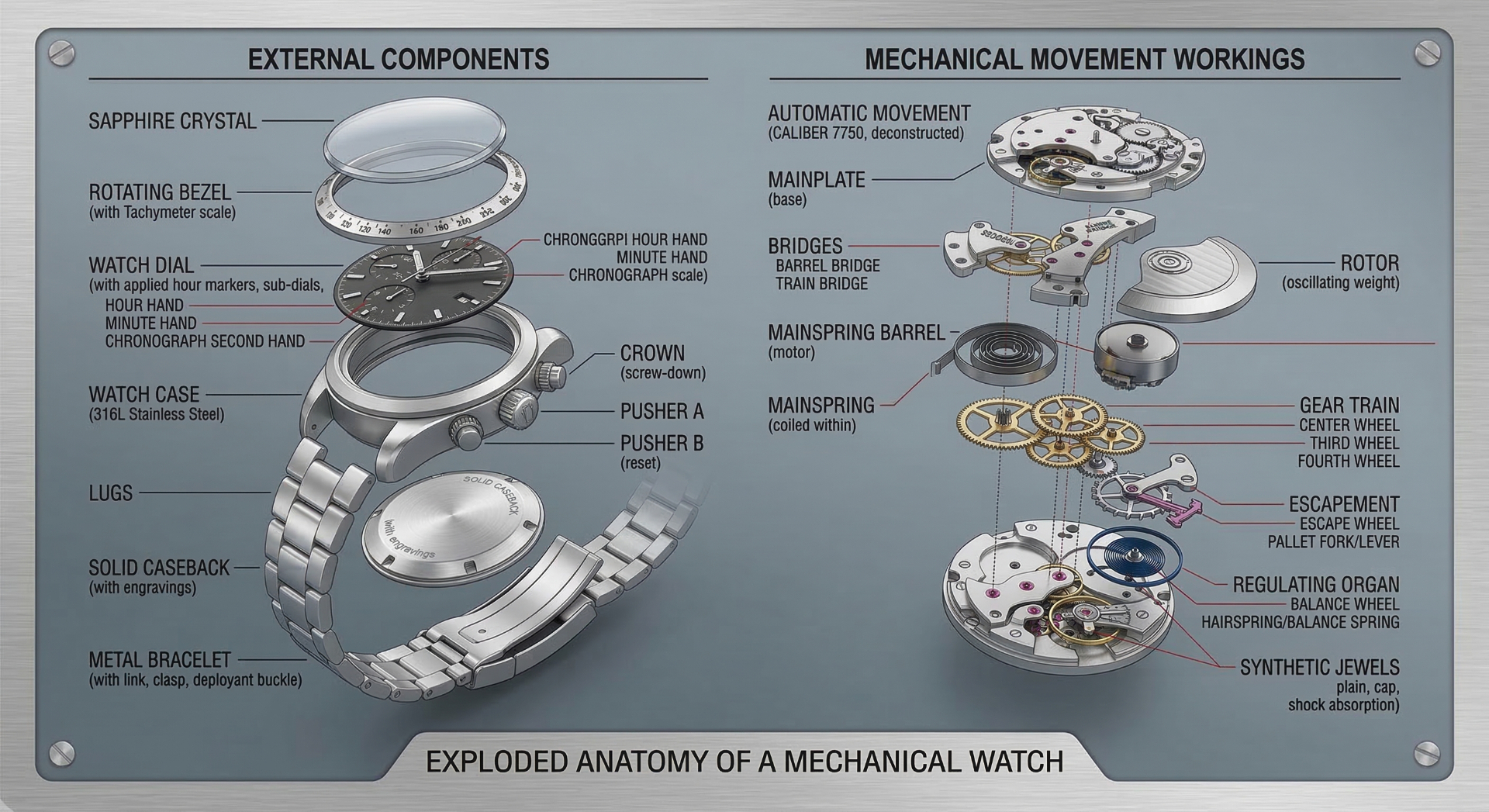
Display Casebacks #
Sapphire is also used for rear exhibition windows, allowing viewing of the movement through the case back. Same scratch resistance and clarity benefits apply. Common in quality automatic watches showcasing movement finishing.
Cost Considerations #
Why Sapphire Costs More #
Manufacturing complexity (growing, cutting, shaping require specialized equipment), extensive polishing for optical clarity, and AR coating application all contribute to higher cost. Sapphire crystal typically costs $50–150+ for replacement, versus $10–30 for mineral glass.
Price Impact on Watches #
- Budget watches ($100–300): Sapphire adds $50–100 to manufacturing cost, translating to $100–200+ retail difference. This is why budget watches typically use mineral glass.
- Mid-range watches ($300–1,000): Sapphire expected and factored into pricing. Cost impact is smaller percentage of total price.
- Luxury watches ($1,000+): Sapphire is non-negotiable standard.
Value Proposition #
For long-term ownership: Absolutely worth it. Over 5–10 years, sapphire's scratch resistance and longevity justify the initial premium.
For budget constraints: If choosing between sapphire on an inferior watch versus mineral glass on a better watch, prioritize the better watch. Crystal can be upgraded later.
For daily wear: Strongly recommended. Daily watches encounter countless scratch opportunities.
For occasional wear: Less critical if watch sees limited wear in careful contexts.
Caring for Sapphire Crystals #
What Can Damage Sapphire #
- Impacts can shatter: Dropping watch on hard surfaces (concrete, tile) can crack or shatter sapphire despite scratch resistance
- Diamond can scratch: Diamond rings or diamond-tipped tools can scratch sapphire
- Silicon carbide: Some industrial abrasives harder than sapphire (rare in normal life)
- Extreme force: Impacts from extreme activities can damage sapphire
Proper Cleaning #
Recommended method:
- Soft microfiber cloth (eyeglass cleaning cloths work perfectly)
- Warm water with mild soap if needed
- Gentle wiping—no pressure necessary
- Dry with clean microfiber cloth
Avoid:
- Abrasive cleaners (unnecessary)
- Paper towels (can contain wood fibers)
- Harsh chemicals (unnecessary)
- Ultrasonic cleaners without professional guidance
Scratch Reality Check #
If your sapphire crystal appears scratched, the scratch is probably on the AR coating, not sapphire itself. Try cleaning thoroughly—many apparent “scratches” are surface debris. AR coating can be stripped and reapplied. Sapphire itself cannot be polished if deeply scratched—replacement is required.
When to Choose Different Crystal Types #
Choose Sapphire When: #
- Buying a quality watch for long-term ownership
- Daily wear watch subject to normal environmental hazards
- Watch investment where resale value matters
- Desire low-maintenance, worry-free ownership
- Budget allows (typically watches $400+)
Choose Mineral Glass When: #
- Budget constraints make sapphire cost-prohibitive
- Tool watch subject to extreme impacts
- Replacement cost more important than scratch resistance
- Temporary watch not intended for long-term ownership
Choose Acrylic When: #
- Restoring vintage watch where authenticity matters
- Extreme tool watch where shattering absolutely cannot happen
- Enjoying maintenance ritual of polishing scratches
- Very tight budget
- Collecting vintage watches where acrylic is period-correct
Buying Watches with Sapphire Crystals #
What to Look For #
When evaluating watches, verify:
- Crystal specification: Confirm listing explicitly states “sapphire crystal” rather than just “crystal” or “mineral crystal”
- AR coating: Check whether AR coating is included, and whether it's single or double-sided
- Quality indicators: Sapphire crystal presence signals manufacturer's quality commitment
- Price reasonability: At $400+, sapphire should be standard
Where to Buy Quality Watches with Sapphire Crystals #
IndieWatches.store features quality microbrands that prioritize sapphire crystals as standard specification. The platform ensures quality vetting, specification clarity, fair pricing, and customer protection.
The Bottom Line: Sapphire Crystal Is Worth It #
For quality watches intended for long-term ownership, sapphire crystal is worth every penny of premium cost.
The scratch resistance alone justifies the investment. Over years of daily wear, sapphire crystal maintains clarity and appearance that mineral glass cannot match. The watch looks new decades later instead of accumulating scratches that ruin aesthetics and dial visibility.
The additional benefits—optical clarity, AR coating compatibility, longevity, quality signaling, value retention—make sapphire crystal the obvious choice for watches above the budget tier.
Understanding crystal materials helps make informed watch purchases. When evaluating watches, crystal type should rank among the top specifications to verify. It fundamentally affects ownership experience, maintenance needs, and long-term satisfaction.
Sapphire crystal isn't just marketing—it's a genuine material advantage that preserves watch appearance and functionality for a lifetime of ownership.
Find Your Perfect Watch
Browse our curated collection of indie and microbrand timepieces.
📚 Related Reading
Handpicked articles from the same topic